LEADER 01893namaa22003258a44500
001 736393
003 TR_AnAIT
005 20250627042522
006 ad|||e |||| 001 0d
007 ta
008 250611 ne d|||g |||| 001 ||
020 |a9789004714151|q(hardback)
020 |a9789004714168|q(e-book)
040 |aTTK
041 |aeng
049 |aTürk Tarih Kurumu Kütüphanesi
090 |aA.IX/9785
100 1 |aBruweleit, Stefan.
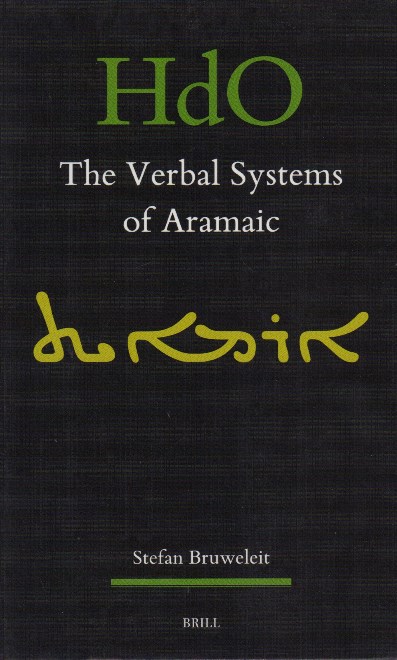
245 10|aThe verbal systems of Aramaic /|cby Stefan Bruweleit.
260 |aLeiden ;|aBoston :|bBrill,|c2025.
300 |axix, 849 sayfa :|btablo ;|c24 cm.
490 1 |aHandbook of Oriental Studies =|aHandbuch der Orientalistik. Section one. The Near and Middle East,|x0169-9423 ;|vvolume 187
500 |aİndeks s. [845]-849.
504 |aBibliyografik bilgi içerir.
520 |a“In The Verbal Systems of Aramaic, Bruweleit analyses the Aramaic verbal systems from Old Aramaic to the modern dialects. He examines whether the verb forms are to be analysed as aspectual, temporal or modal and decides whether the verbal systems are to be regarded as aspect-, tense- or mood-prominent. On a diachronic level, the study investigates which conclusions the verbal systems allow regarding the classification and history of Aramaic. The work offers a hypothesis that explains the intricate use of the participle in Biblical Aramaic and shows that the North-Eastern Neo-Aramaic (NENA) dialects can be traced back to a common proto-dialect that split into at least four branches from which in turn the modern NENA dialects emerged“--|cYayıncı.
650 4|aAramice dili|xFiil.
830 0|aHandbook of Oriental Studies. Section 1, The Near and Middle East ;|vvolume 187.
830 0|aHandbuch der Orientalistik. Section 1, The Near and Middle East ;|vvolume 187.
830 0|aHdO. I ;|vvol. 187.