LEADER 02148naaaa2200337aa54500
001 736399
003 TR_AnAIT
005 20250627042508
006 ad|||e |||| 001 0d
007 ta
008 250612s2025 ne d|||e |||| 001 0deng c
020 |a9789004529168|q(hardback)
020 |a9789004535312|q(e-book)
040 |aTTK
041 |aeng
049 |aTürk Tarih Kurumu Kütüphanesi
090 |aA.IX/9787
100 1 |aPeschl, Benedikt.
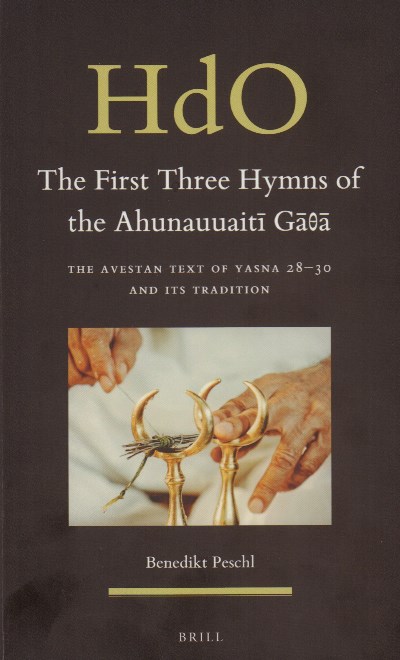
245 10|aThe first three hymns of the Ahunauuaitī Gāthā :|bthe Avestan text of Yasna 28-30 and its tradition /|cby Benedikt Peschl.
260 |aLeiden ;|aBoston :|bBrill,|c2025.
300 |axix, 552 sayfa :|btablo ;|c24 cm.
490 1 |aHandbook of Oriental Studies =|aHandbuch der Orientalistik. Section two. South Asia,|x2588-882X ;|vvolume 32/4.|aCorpus Avesticum
500 |aİndeks s. [542]-552.
504 |aBibliyografya s. [515]-541.
520 |a“At the center of this book stands a text-critical edition of three chapters of the Gathas, exemplifying the editorial methodology developed by the “Multimedia Yasna“ (MUYA) project and its application to the Old Avestan parts of the Yasna liturgy. Proceeding from this edition, the book explores aspects of the transmission and ritual embedding of the text, and of its late antique exegetical reception in the Middle Persian (Pahlavi) tradition. Drawing also on a contemporary performance of the Yasna that was filmed by MUYA in Mumbai in 2017, the book aims to convey a sense of the Avestan language in its role as a central element of continuity around which the Zoroastrian tradition has evolved from its prehistoric roots up to the modern eralect that split into at least four branches from which in turn the modern NENA dialects emerged“--|cArka kapak.
650 4|aZerdüştlük|xİlahiler.
650 4|aZerdüştlük|xKutsal kitaplar.
830 0|aHandbook of Oriental Studies. Section 2, South Asia ;|vvolume 32/4.|pCorpus Avesticum.
830 0|aHandbuch der Orientalistik. Section 2, South Asia ;|vvolume 32/4.|pCorpus Avesticum.
830 0|aHdO. II ;|vvol. 32/4.