LEADER 03089naaaa2200373aa54500
001 783487
003 TR_AnAIT
005 20250718140442
006 aal||e |||| 001 0d
007 ta
008 250711s2018 enko|||e |||| 001 0deng c
020 |a9781478000389|q(hardcover: alk. paper)
020 |a9781478000518|q(pbk.: alk. paper)
020 |a9781478008408|q(ebook)
040 |aTTK
041 |aeng
049 |aTürk Tarih Kurumu Kütüphanesi
090 |aA.IX/9827
100 1 |aDai, Jinhua,|d1959-
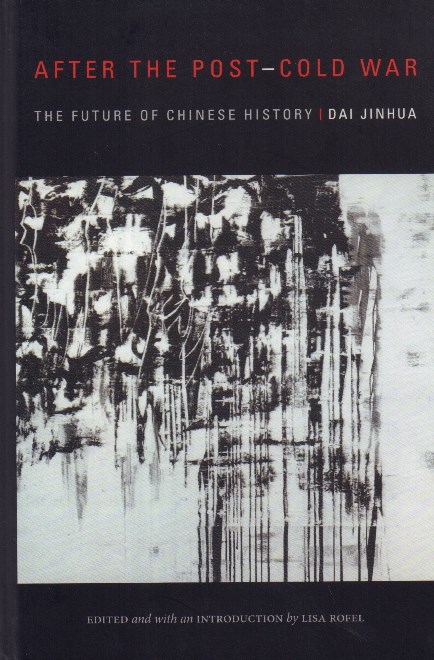
245 10|aAfter the Post-Cold War :|bthe future of Chinese history /|cDai Jinhua ; edited and with an introduction by Lisa Rofel.
246 1 |aThe future of Chinese history
260 |aDurham ;|aLondon :|bDuke University Press,|c2018.
300 |axxiv, 199 sayfa :|bresim ;|c23 cm.
490 0 |aSinotheory
500 |aİndeks s. [191]-199.
504 |aBibliyografya s. [183]-188.
504 |aBibliyografik notlar s. [167]-179.
505 |tIntroduction /|rtranslated by Jie Li --|gPART I.|tTRAUMA, EVACUATED MEMORIES, AND INVERTED HISTORIES.|tI want to be human : a story of China and the human /|rtranslated by Shuang Shen --|tHero and the invisible tianxia /|rtranslated by Yajun Mo --|gPART II.|tCLASS, STILL LIVES, AND MASCULINITY.|tTemporality, nature morte, and the filmmaker : a reconsideration of still life /|rtranslated by Lennet Daigle --|tThe piano in a factory : class, in the name of the father /|rtranslated by Jie Li --|gPART III.|tTHE SPY GENRE.|tThe spy-film legacy : a preliminary cultural analysis of the spy film /|rtranslated by Christopher Connery --|tIn vogue : politics and the nation-state in lust, caution and the lust, caution phenomenon in China /|rtranslated by Erebus Wong and Lisa Rofel --|tFinale : history, memory, and the politics of representation /|rtranslated by Rebecca Karl --|tInterview with Dai Jinhua, July 2014 /|rLisa Rofel.
520 |a“In After the Post-Cold War eminent Chinese cultural critic Dai Jinhua interrogates history, memory, and the future of China as a global economic power in relation to its socialist past, profoundly shaped by the Cold War. Drawing on Marxism, post-structuralism, psychoanalysis, and feminist theory, Dai examines recent Chinese films that erase the country's socialist history to show how such erasure resignifies socialism's past as failure and thus forecloses the imagining of a future beyond that of globalized capitalism. She outlines the tension between China's embrace of the free market and a regime dependent on a socialist imprimatur. She also offers a genealogy of China's transformation from a source of revolutionary power into a fountainhead of globalized modernity. This narrative, Dai contends, leaves little hope of moving from the capitalist degradation of the present into a radical future that might offer a more socially just world.” --|cArka kapak.
650 4|aSinema filmleri|zÇin|xTarih.
651 4|aÇin|xMedeniyet|y21. yy.
651 4|aÇin|xTarih|y2002-
700 1 |aRofel, Lisa,|d1953-|eeditör,|egirişi yazan.