LEADER 03134naaaa2200445aa54500
001 783575
003 TR_AnAIT
005 20250718144643
006 aal||e |||| 001 0d
007 ta
008 250714s2015 ohuoabde |||| 001 0deng c
020 |a9780821421819|q(hardcover : acid-free paper)
020 |a9780821421826|q(paperback : acid-free paper)
020 |a9780821445402|q(PDF)
040 |aTTK
041 |aeng
049 |aTürk Tarih Kurumu Kütüphanesi
090 |aA.IX/9861
100 1 |aReilly, Benjamin,|d1971-
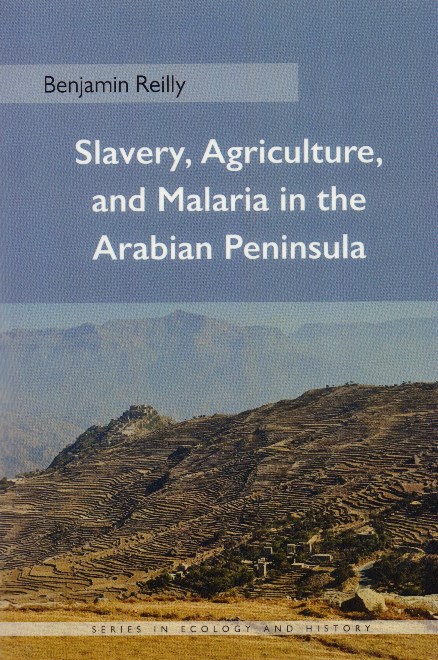
245 10|aSlavery, agriculture, and malaria in the Arabian Peninsula /|cBenjamin Reilly.
260 |aAthens :|bOhio University Press,|c©2015.
300 |ax, 211 sayfa :|bresim, çizim, şekil, harita, grafik, tablo ;|c23 cm.
490 0 |aOhio University Press series in ecology and history
500 |aSözlük s. [181]-183.
500 |aİndeks s. [207]-211.
504 |aBibliyografya s. [185]-205.
504 |aBibliyografik notlar s. [157]-180.
505 |tTraditional Arabian Agriculture --|tDiggers and Delvers : African Servile Agriculture in the Arabian Peninsula --|tCase Study : Khaybar --|tOasis Fever : Malaria as a Factor in Arabian Agricultural Slavery --|tArabian Agricultural Slavery in the Longue Durée.
520 |a“In Slavery, Agriculture, and Malaria in the Arabian Peninsula, Benjamin Reilly illuminates a previously unstudied phenomenon: the large-scale employment of people of African ancestry as slaves in agricultural oases within the Arabian Peninsula. The key to understanding this unusual system, Reilly argues, is the prevalence of malaria within Arabian Peninsula oases and drainage basins, which rendered agricultural lands in Arabia extremely unhealthy for people without genetic or acquired resistance to malarial fevers. In this way, Arabian slave agriculture had unexpected similarities to slavery as practiced in the Caribbean and Brazil. This book synthesizes for the first time a body of historical and ethnographic data about slave-based agriculture in the Arabian Peninsula. Reilly uses an innovative methodology to analyze the limited historical record and a multidisciplinary approach to complicate our understandings of the nature of work in an area that is popularly thought of solely as desert. This work makes significant contributions both to the global literature on slavery and to the environmental history of the Middle East--an area that has thus far received little attention from scholars“ --|cYayıncı.
650 4|aKölelik|zArap Yarımadası|xTarih.
650 4|aAfrikalılar|zArap Yarımadası|xTarih.
650 4|aKöleler|zArap Yarımadası|xTarih.
650 4|aTarım işçileri|zArap Yarımadası|xTarih.
650 4|aSıtma|xSosyal yönler|zArap Yarımadası|xTarih.
650 4|aTarım|xSağlık yönleri|zArap Yarımadası|xTarih.
650 4|aTarım|xSosyal yönler|zArap Yarımadası|xTarih.
650 4|aTarım|xÇevresel yönler|zArap Yarımadası|xTarih.
650 4|aVahalar|zArap Yarımadası|xTarih.
651 4|aArap Yarımadası|xÇevresel durum|xTarih.