LEADER 02001naaaa2200325aa54500
001 783577
003 TR_AnAIT
005 20250718144906
006 aob||e |||| 000 0d
007 ta
008 250716s2021 ne ob||e |||| 000 0deng c
020 |a9789004504462|q(paperback)
020 |a9789004504479|q(e-book)
040 |aTTK
041 |aeng
049 |aTürk Tarih Kurumu Kütüphanesi
090 |aA.IX/9862
100 1 |aAznar Gómez, Mariano J.,|d1965-
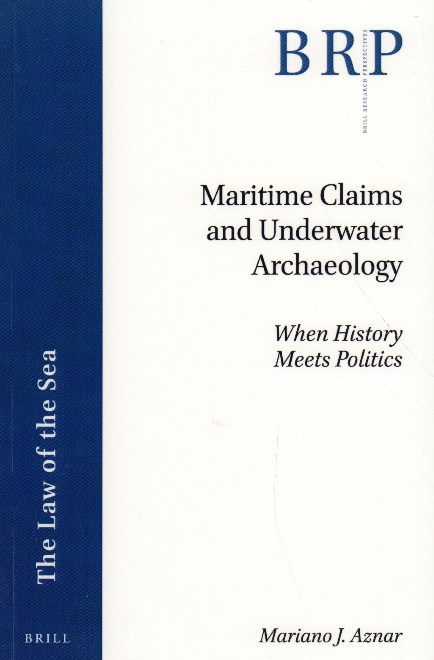
245 10|aMaritime claims and underwater archaeology :|bwhen history meets politics /|cby Mariano J. Aznar.
246 1 |aWhen history meets politics
260 |aLeiden ;|aBoston :|bBrill,|c©2021.
300 |a131 sayfa :|bresim, harita (renkli) ;|c23 cm.
490 |aThe law of the sea ;|v4.1-2
504 |aBibliyografya s. 105-131.
505 |tMaritime Claims and Underwater Archaeology : When History Meets Politics /|rMariano J. Aznar --|tIntroduction --|tThe Underwater Cultural Heritage and the Law of the Sea --|tThe (Ab)Uses of Underwater Archaeology and the Law of the Sea --|tSome Concluding Remarks : On Law, Politics, and Ethics.
520 |a“To what extent can underwater archaeology and underwater cultural heritage support a State’s maritime claim? Many States have plausibly extended their maritime legislative and executive jurisdiction to the outer limit of the contiguous zone to better protect underwater cultural heritage. However, some States - such as Canada in the Arctic, China in the South China Sea, or Russia in Crimea - are going further, claiming sovereignty over disputed maritime areas or even the high seas. Maritime Claims and Underwater Archaeology, aimed at internationalists and archaeologists, critically assesses these recent practices, reviewing this search for buried sovereignty from a legal, historical, and ethical perspective.” --|cArka kapak.
650 4|aDeniz hukuku.
650 4|aSualtı arkeolojisi.
650 4|aKültürel miras|xSualtı.