LEADER 02234naaaa2200373aa54500
001 784052
003 TR_AnAIT
005 20250811105705
006 a||||e |||| 001 0d
007 ta
008 250723s2021 ne ||||e |||| 001 0deng c
020 |a9789004448735|q(hardback)
020 |a9789004468764|q(e-book)
040 |aTTK
041 |aeng
049 |aTürk Tarih Kurumu Kütüphanesi
090 |aA.IX/9918
100 1 |aHalper, Yehuda.
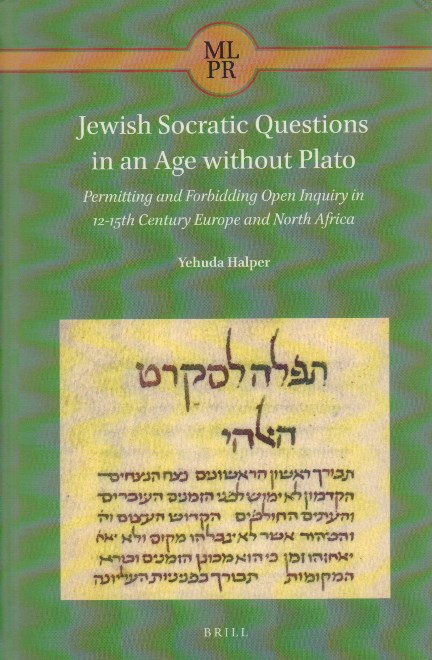
245 10|aJewish Socratic questions in an age without Plato :|bpermitting and forbidding open-inquiry in 12-15th century Europe and North Africa /|cby Yehuda Halper.
246 1 |aPermitting and forbidding open-inquiry in 12-15th century Europe and North Africa
260 |aLeiden ;|aBoston :|bBrill,|c2021.
300 |ax, 266 sayfa :|bşekil ;|c24 cm.
490 1 |aMaimonides library for philosophy and religion,|x2666-8777 ;|vvol. 1
500 |aİndeks s. [255]-266.
504 |aBibliyografya s. [231]-254.
520 |a“Yehuda Halper examines Jewish depictions of Socrates and Socratic questioning of the divine among European and North African Jews of the 12th-15th centuries. Without direct access to Plato, their understanding of Socrates is indirect, based on legendary material, on fragmentary quotations from Plato, or on Aristotle. Out of these sources, Jewish authors of this period formed two distinct views of Socrates: one as a wise, ascetic, monotheist, and the other as a vocal skeptic. The latter view has its roots in Plato's Apology where Socrates describes his divine mandate to question all knowledge, including knowledge of the divine. After exploring how this and similar questions arise in the works of Judah Halevi and the Hebrew Averroes, Halper traces how such open-questioning of the divine arises in the works of Maimonides, Jacob Anatoli, Gersonides, and Abraham Bibago.“ --|cArka kapak.
600 04|aSokrates, MÖ 469-399|xEtkiler.
650 4|aYahudi felsefesi|xTarih|y1500'e kadar.
650 4|aFelsefe, antik|xEtkiler.
650 4|aYahudiler|xMedeniyet|xYunan etkileri.
650 4|aYahudilik ve felsefe.
830 0|aMaimonides library for philosophy and religion ;|vvol. 1.
830 0|aMLPR ;|v1.