

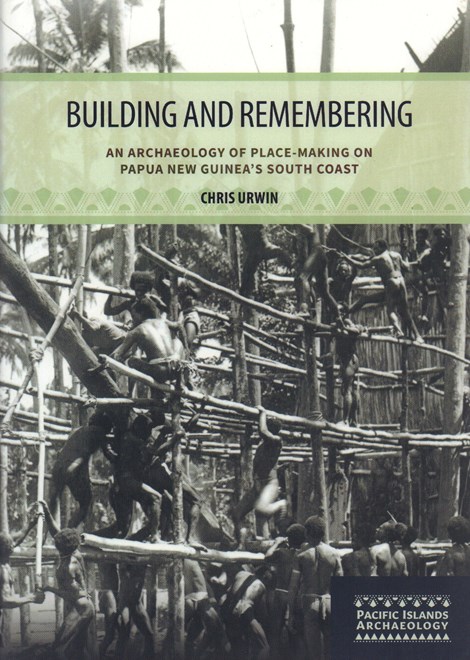
Building and remembering : an archaeology of place-making on Papua New Guinea's south coast / Chris Urwin.
Yer Numarası
B.II/0453
ISBN
9780824891886 (hardback)
9780824893422 (pdf)
9780824893439 (epub)
9780824893446 (kindle edition)
9780824893422 (pdf)
9780824893439 (epub)
9780824893446 (kindle edition)
Dil Kodu
İngilizce
Kütüphane
Türk Tarih Kurumu Kütüphanesi
Yazar
Eser Adının Farklı Biçimi
An archaeology of place-making on Papua New Guinea's south coast
Yayın Bilgisi
Honolulu : University of Hawaiʻi Press, 2022.
Fiziksel Niteleme
xiii, 246 sayfa : resim, çizim, harita, grafik, tıpkıbasım, tablo ; 26 cm.
Dizi
Pacific islands archaeology
Genel Not
İndeks s. 239-246.
Bibliyografi, vb. Notu
Bibliyografya s. 223-238.
İçindekiler Notu
A Social History of Orokolo Bay -- Archaeologies of the Gulf of Papua and Beyond -- Building, Dwelling, and Remembering Place -- An Ethnography of Ancestral Place in Orokolo Bay -- Central Popo : The Popo Uku and Marea Ita Estates -- “Surrounding Sites“ : The Maivipi and Miruka Estates -- Expanding Westward : The Aitae Hiru and Koavaipi Estates -- Bookends of Popo: Mak'Aki and Mirimua Mapoe -- Understanding Place-Making in Orokolo Bay through Archaeological Chronologies -- Memory at Work in Orokolo Bay -- Memory Transformed.
Özet, vb.
“Building and Remembering is a multidisciplinary study of how memory works in relation to the material past. Based on collaborative ethnoarchaeological research carried out in Orokolo Bay (Papua New Guinea), Chris Urwin explores oral traditions maintained and produced in relation to artifacts and stratigraphy. He shows how cultivation and construction bring people from Orokolo Bay into regular contact with pottery sherds and thin layers of black sand. Both the pottery and the sand are forms of material evidence that remind people of the movements and activities of their ancestors, and they help sustain stories of origins and connections. The sherds remind people of the layout of their ancestors' villages, and of the annual maritime visits by Motu people who came from 400 km to the east. The black sand evokes events of the distant past when their ancestors created the land through magic. Villagers in Orokolo Bay have intimate knowledge of the contents of the subsurface, and places where people work and dig more regularly are thought of as especially ancient. Here, people conduct their own form of “archaeology“ as part of everyday life. This book interweaves such community constructions of the past with the emergence of large coastal villages in Orokolo Bay and across a broader span of the south coast of Papua New Guinea. The villages housed dense populations and hosted elaborate masked ceremonies that could span decades. When Sir Albert Maori Kiki--the former Deputy Prime Minister--moved to Orokolo Bay in the mid-1930s, he was mesmerized by the place, which appeared like “a modern metropolis ... buzzing with noise and activity.“ Yet little is known of when these villages originated or how they developed. In this book archaeological digs and radiocarbon dating are used to gain insight into how several Orokolo Bay sites developed, focusing on the key origin and migration village of Popo. Village elders share their understandings of ancestral places during surveys and through oral traditions. People lived in Popo for some five hundred years, moving to, through, and from the estates, expanding and at times shifting the village to access the social and subsistence benefits of coastal village life“ -- Yayıncı.
Konu
Eseri Alıntıla
Referansları kullanmadan önce gözden geçirmeniz ve varsa gerekli düzeltmeleri yapmanız önerilir.
Dijital Kaynak
MARC Görünümü
LEADER 04251naaaa2200385aa54500
001 784091
003 TR_AnAIT
005 20250811102917
006 aoabde |||| 001 0d
007 ta
008 250724s2022 hiuoabde |||| 001 0deng c
020 |a9780824891886|q(hardback)
020 |a9780824893422|q(pdf)
020 |a9780824893439|q(epub)
020 |a9780824893446|q(kindle edition)
040 |aTTK
041 |aeng
049 |aTürk Tarih Kurumu Kütüphanesi
090 |aB.II/0453
100 1 |aUrwin, Chris,|d1991-
245 10|aBuilding and remembering :|ban archaeology of place-making on Papua New Guinea's south coast /|cChris Urwin.
246 1 |aAn archaeology of place-making on Papua New Guinea's south coast
260 |aHonolulu :|bUniversity of Hawaiʻi Press,|c2022.
300 |axiii, 246 sayfa :|bresim, çizim, harita, grafik, tıpkıbasım, tablo ;|c26 cm.
490 0 |aPacific islands archaeology
500 |aİndeks s. 239-246.
504 |aBibliyografya s. 223-238.
505 |tA Social History of Orokolo Bay --|tArchaeologies of the Gulf of Papua and Beyond --|tBuilding, Dwelling, and Remembering Place --|tAn Ethnography of Ancestral Place in Orokolo Bay --|tCentral Popo : The Popo Uku and Marea Ita Estates --|t“Surrounding Sites“ : The Maivipi and Miruka Estates --|tExpanding Westward : The Aitae Hiru and Koavaipi Estates --|tBookends of Popo: Mak'Aki and Mirimua Mapoe --|tUnderstanding Place-Making in Orokolo Bay through Archaeological Chronologies --|tMemory at Work in Orokolo Bay --|tMemory Transformed.
520 |a“Building and Remembering is a multidisciplinary study of how memory works in relation to the material past. Based on collaborative ethnoarchaeological research carried out in Orokolo Bay (Papua New Guinea), Chris Urwin explores oral traditions maintained and produced in relation to artifacts and stratigraphy. He shows how cultivation and construction bring people from Orokolo Bay into regular contact with pottery sherds and thin layers of black sand. Both the pottery and the sand are forms of material evidence that remind people of the movements and activities of their ancestors, and they help sustain stories of origins and connections. The sherds remind people of the layout of their ancestors' villages, and of the annual maritime visits by Motu people who came from 400 km to the east. The black sand evokes events of the distant past when their ancestors created the land through magic. Villagers in Orokolo Bay have intimate knowledge of the contents of the subsurface, and places where people work and dig more regularly are thought of as especially ancient. Here, people conduct their own form of “archaeology“ as part of everyday life. This book interweaves such community constructions of the past with the emergence of large coastal villages in Orokolo Bay and across a broader span of the south coast of Papua New Guinea. The villages housed dense populations and hosted elaborate masked ceremonies that could span decades. When Sir Albert Maori Kiki--the former Deputy Prime Minister--moved to Orokolo Bay in the mid-1930s, he was mesmerized by the place, which appeared like “a modern metropolis ... buzzing with noise and activity.“ Yet little is known of when these villages originated or how they developed. In this book archaeological digs and radiocarbon dating are used to gain insight into how several Orokolo Bay sites developed, focusing on the key origin and migration village of Popo. Village elders share their understandings of ancestral places during surveys and through oral traditions. People lived in Popo for some five hundred years, moving to, through, and from the estates, expanding and at times shifting the village to access the social and subsistence benefits of coastal village life“ --|cYayıncı.
650 4|aAntikalar, tarih öncesi|zPapua Yeni Gine|zOrokolo Körfezi Bölgesi.
650 4|aTopluluk arkeolojisi|zPapua Yeni Gine|zOrokolo Körfezi Bölgesi.
650 4|aEtnoarkeoloji|zPapua Yeni Gine|zOrokolo Körfezi Bölgesi.
650 4|aToplu hafıza|zPapua Yeni Gine|zOrokolo Körfezi Bölgesi.
651 4|aOrokolo Körfezi Bölgesi (Papua Yeni Gine)|xEski eserler.
001 784091
003 TR_AnAIT
005 20250811102917
006 aoabde |||| 001 0d
007 ta
008 250724s2022 hiuoabde |||| 001 0deng c
020 |a9780824891886|q(hardback)
020 |a9780824893422|q(pdf)
020 |a9780824893439|q(epub)
020 |a9780824893446|q(kindle edition)
040 |aTTK
041 |aeng
049 |aTürk Tarih Kurumu Kütüphanesi
090 |aB.II/0453
100 1 |aUrwin, Chris,|d1991-
245 10|aBuilding and remembering :|ban archaeology of place-making on Papua New Guinea's south coast /|cChris Urwin.
246 1 |aAn archaeology of place-making on Papua New Guinea's south coast
260 |aHonolulu :|bUniversity of Hawaiʻi Press,|c2022.
300 |axiii, 246 sayfa :|bresim, çizim, harita, grafik, tıpkıbasım, tablo ;|c26 cm.
490 0 |aPacific islands archaeology
500 |aİndeks s. 239-246.
504 |aBibliyografya s. 223-238.
505 |tA Social History of Orokolo Bay --|tArchaeologies of the Gulf of Papua and Beyond --|tBuilding, Dwelling, and Remembering Place --|tAn Ethnography of Ancestral Place in Orokolo Bay --|tCentral Popo : The Popo Uku and Marea Ita Estates --|t“Surrounding Sites“ : The Maivipi and Miruka Estates --|tExpanding Westward : The Aitae Hiru and Koavaipi Estates --|tBookends of Popo: Mak'Aki and Mirimua Mapoe --|tUnderstanding Place-Making in Orokolo Bay through Archaeological Chronologies --|tMemory at Work in Orokolo Bay --|tMemory Transformed.
520 |a“Building and Remembering is a multidisciplinary study of how memory works in relation to the material past. Based on collaborative ethnoarchaeological research carried out in Orokolo Bay (Papua New Guinea), Chris Urwin explores oral traditions maintained and produced in relation to artifacts and stratigraphy. He shows how cultivation and construction bring people from Orokolo Bay into regular contact with pottery sherds and thin layers of black sand. Both the pottery and the sand are forms of material evidence that remind people of the movements and activities of their ancestors, and they help sustain stories of origins and connections. The sherds remind people of the layout of their ancestors' villages, and of the annual maritime visits by Motu people who came from 400 km to the east. The black sand evokes events of the distant past when their ancestors created the land through magic. Villagers in Orokolo Bay have intimate knowledge of the contents of the subsurface, and places where people work and dig more regularly are thought of as especially ancient. Here, people conduct their own form of “archaeology“ as part of everyday life. This book interweaves such community constructions of the past with the emergence of large coastal villages in Orokolo Bay and across a broader span of the south coast of Papua New Guinea. The villages housed dense populations and hosted elaborate masked ceremonies that could span decades. When Sir Albert Maori Kiki--the former Deputy Prime Minister--moved to Orokolo Bay in the mid-1930s, he was mesmerized by the place, which appeared like “a modern metropolis ... buzzing with noise and activity.“ Yet little is known of when these villages originated or how they developed. In this book archaeological digs and radiocarbon dating are used to gain insight into how several Orokolo Bay sites developed, focusing on the key origin and migration village of Popo. Village elders share their understandings of ancestral places during surveys and through oral traditions. People lived in Popo for some five hundred years, moving to, through, and from the estates, expanding and at times shifting the village to access the social and subsistence benefits of coastal village life“ --|cYayıncı.
650 4|aAntikalar, tarih öncesi|zPapua Yeni Gine|zOrokolo Körfezi Bölgesi.
650 4|aTopluluk arkeolojisi|zPapua Yeni Gine|zOrokolo Körfezi Bölgesi.
650 4|aEtnoarkeoloji|zPapua Yeni Gine|zOrokolo Körfezi Bölgesi.
650 4|aToplu hafıza|zPapua Yeni Gine|zOrokolo Körfezi Bölgesi.
651 4|aOrokolo Körfezi Bölgesi (Papua Yeni Gine)|xEski eserler.
Materyaller
Depodan talep edilen materyal sadece kütüphane içerisinde kullanılmaktadır.
Materyal dışarıya ödünç verilmemektedir.
Materyal dışarıya ödünç verilmemektedir.
