

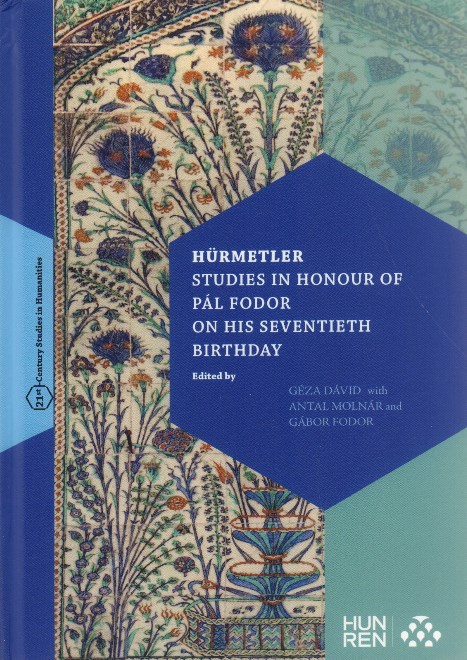
Hürmetler : studies in honour of Pál Fodor on his seventieth birthday / edited by Géza Dávid with Antal Molnár and Gábor Fodor ; translation Alan Campbell.
Yer Numarası
A.IX/9949
ISBN
9789634164784
Dil Kodu
İngilizce, Türkçe
Kütüphane
Türk Tarih Kurumu Kütüphanesi
Yayın Bilgisi
Budapest : HUN-REN Research Centre for the Humanities, 2025.
Fiziksel Niteleme
514 sayfa : resim, minyatür, harita, tıpkıbasım, tablo ; 24 cm.
Dizi
21ˢᵗ-century studies in humanities, 2630-8827
Bibliyografi, vb. Notu
Bibliyografik bilgi içerir.
İçindekiler Notu
Seventy Years Old / Pál Fodor -- Saruca, Orban and the Bombards of Constantinople / Gábor Ágoston -- The Esztergom Campaign of 1543 : Military Mobilization, Logistics and Financial Expenditures / Göksel Baş -- XIV-XVII. Yüzyıllarda Osmanlı İmparatorluğu’nda Köy-Altı Yerleşmeler / Sadık Müfit Bilge -- Polturas in Ottoman Hungary and the Principality of Transylvania / János Buza -- Kaza and Nahiye in Ottoman Hungary / Géza Dávid -- Sheep Tax in Ottoman Finances : Some Remarks on Its Legal Justification in Ottoman Sources / Feridun M. Emecen -- “What Is a Dagger Good For?” : From Weapon to Fashion Accessory / Suraiya Faroqhi -- The Term Haric ez Defter as a Tool for Administering Abandoned Settlements in the Sancak of Szeged and the Regime of Unregistered Settlements on the Ottoman-Hungarian Frontier / Miklós Fóti, Éva Sz. Simon -- A Castle in Hungary : Gyula Through Ottoman Eyes / Ibolya Gerelyes -- Did Ayn Ali Write a Work on Astronomy? / Douglas A. Howard -- Apostasy : a Lurking Threat to Ottoman Marriages / Colin Imber -- A New-Old Source on the 1683 Siege of Vienna : Ahvâl-i Muhasâra-i Beç / Mária Ivanics -- Habib Ağa, Hungarian Interpreter in Buda / Gábor Kármán -- The Background to Financial Decision-Making in the Kingdom of Hungary and the Habsburg Monarchy in the Sixteenth and Seventeenth Centuries : From “Budgets” to “Secret Instructions” / István Kenyeres -- Ferenc i Rákóczi’s Election to the Transylvanian Throne and the Sublime Porte (1652) / Özgür Kolçak -- “Eastern Flanders“ : Spanish old Tercios in Hungary, 1526-1556 / Zoltán Korpás -- Ragusan Merchants in Ottoman South Transdanubia : Trade Relations between Pécs and the Balkans in the Second Half of the Sixteenth Century / Antal Molnár -- Enemy or Protector : Remarks on Queen Isabella’s Relations with Sultan Süleyman in the 1540s / Teréz Obarni -- İran Merkezli İlhanlı-Timurlu Tarih Yazımı Geleneğini Osmanlı’ya Taşıyan Müellif : İdris-i Bitlisî / Abdülkadir Özcan -- Heirs to the Throne of Buda : The Ottoman Conquest and the Capital Cities of Central Europe / Géza Pálffy -- Szigetvár : a Memorial Landscape : Remembrance of the Ottoman Age / Norbert Pap -- A Preliminary Report on Recent Discovery : The Earliest-Dated Collection of Poems by Kanunî Sultan Süleyman “Muhibbî“ / Benedek Péri -- Enmity and Truce, Tradition, Religion and Death : Some Remarks on Süleyman the Magnificent’s Letter of Condolence to Maximilian II on the Occasion of His Father’s Death (1564) / Claudia Römer -- Lessons from a Defter of Appointments About the Elite of the North-Western Border Region of the Ottoman Empire in the Mid-1640s / Balázs Sudár -- Descendants of the Last Pasha of Buda in France? : Contribution to the History of the Aly Family / Ferenc Tóth.
Özet, vb.
“Pál Fodor is renowned in his own country and internationally as a scholar of Ottoman history. His works are essential reading for anyone aiming to understand the empire of the “Turks“ and how it developed at every stage. His studies on the ideology of the holy war, the selfdefinition
of the Ottoman elite, stability and change in the history of the sultanate, and the empire's late-sixteenth-century financial crisis and the attempts to resolve it all display the depth of his erudition and the great breadth of his sources. He has actively participated in investigations to find the burial place of Süleyman I near Szigetvár and to locate and reconstruct the events of the Battle of Mohács in 1526. His friends and colleagues have produced this Festschrift on the occasion of his 70th birthday to express their personal gratitude and their great respect for his activity as a scholar and as an academic leader.” -- Arka kapak.
Emeği Geçenler
Campbell, Alan 1958- çeviren.
Dávid, Géza 1949- editör.
Molnár, Antal 1969- işbirliği.
Fodor, Gábor, işbirliği.
Dávid, Géza 1949- editör.
Molnár, Antal 1969- işbirliği.
Fodor, Gábor, işbirliği.
Dizi Ek Girişi- Tek Biçim Başlık
21ˢᵗ-century studies in humanities.
Eseri Alıntıla
Referansları kullanmadan önce gözden geçirmeniz ve varsa gerekli düzeltmeleri yapmanız önerilir.
Dijital Kaynak
MARC Görünümü
LEADER 05043naaaa2200337aa54500
001 784307
003 TR_AnAIT
005 20260914111028
006 aobd|e |||| 000 0d
007 ta
008 250805s2025 hu obd|e |||| 000 0dmul c
020 |a9789634164784
040 |aTTK
041 |aeng|atur
049 |aTürk Tarih Kurumu Kütüphanesi
090 |aA.IX/9949
245 00|aHürmetler :|bstudies in honour of Pál Fodor on his seventieth birthday /|cedited by Géza Dávid with Antal Molnár and Gábor Fodor ; translation Alan Campbell.
260 |aBudapest :|bHUN-REN Research Centre for the Humanities,|c2025.
300 |a514 sayfa :|bresim, minyatür, harita, tıpkıbasım, tablo ;|c24 cm.
490 1 |a21ˢᵗ-century studies in humanities,|x2630-8827
504 |aBibliyografik bilgi içerir.
505 |tSeventy Years Old /|rPál Fodor --|tSaruca, Orban and the Bombards of Constantinople /|rGábor Ágoston --|tThe Esztergom Campaign of 1543 : Military Mobilization, Logistics and Financial Expenditures /|rGöksel Baş --|tXIV-XVII. Yüzyıllarda Osmanlı İmparatorluğu’nda Köy-Altı Yerleşmeler /|rSadık Müfit Bilge --|tPolturas in Ottoman Hungary and the Principality of Transylvania /|rJános Buza --|tKaza and Nahiye in Ottoman Hungary /|rGéza Dávid --|tSheep Tax in Ottoman Finances : Some Remarks on Its Legal Justification in Ottoman Sources /|rFeridun M. Emecen --|t“What Is a Dagger Good For?” : From Weapon to Fashion Accessory /|rSuraiya Faroqhi --|tThe Term Haric ez Defter as a Tool for Administering Abandoned Settlements in the Sancak of Szeged and the Regime of Unregistered Settlements on the Ottoman-Hungarian Frontier /|rMiklós Fóti, Éva Sz. Simon --|tA Castle in Hungary : Gyula Through Ottoman Eyes /|rIbolya Gerelyes --|tDid Ayn Ali Write a Work on Astronomy? /|rDouglas A. Howard --|tApostasy : a Lurking Threat to Ottoman Marriages /|rColin Imber --|tA New-Old Source on the 1683 Siege of Vienna : Ahvâl-i Muhasâra-i Beç /|rMária Ivanics --|tHabib Ağa, Hungarian Interpreter in Buda /|rGábor Kármán --|tThe Background to Financial Decision-Making in the Kingdom of Hungary and the Habsburg Monarchy in the Sixteenth and Seventeenth Centuries : From “Budgets” to “Secret Instructions” /|rIstván Kenyeres --|tFerenc i Rákóczi’s Election to the Transylvanian Throne and the Sublime Porte (1652) /|rÖzgür Kolçak --|t“Eastern Flanders“ : Spanish old Tercios in Hungary, 1526-1556 /|rZoltán Korpás --|tRagusan Merchants in Ottoman South Transdanubia : Trade Relations between Pécs and the Balkans in the Second Half of the Sixteenth Century /|rAntal Molnár --|tEnemy or Protector : Remarks on Queen Isabella’s Relations with Sultan Süleyman in the 1540s /|rTeréz Obarni --|tİran Merkezli İlhanlı-Timurlu Tarih Yazımı Geleneğini Osmanlı’ya Taşıyan Müellif : İdris-i Bitlisî /|rAbdülkadir Özcan --|tHeirs to the Throne of Buda : The Ottoman Conquest and the Capital Cities of Central Europe /|rGéza Pálffy --|tSzigetvár : a Memorial Landscape : Remembrance of the Ottoman Age /|rNorbert Pap --|tA Preliminary Report on Recent Discovery : The Earliest-Dated Collection of Poems by Kanunî Sultan Süleyman “Muhibbî“ /|rBenedek Péri --|tEnmity and Truce, Tradition, Religion and Death : Some Remarks on Süleyman the Magnificent’s Letter of Condolence to Maximilian II on the Occasion of His Father’s Death (1564) /|rClaudia Römer --|tLessons from a Defter of Appointments About the Elite of the North-Western Border Region of the Ottoman Empire in the Mid-1640s /|rBalázs Sudár --|tDescendants of the Last Pasha of Buda in France? : Contribution to the History of the Aly Family /|rFerenc Tóth.
520 |a“Pál Fodor is renowned in his own country and internationally as a scholar of Ottoman history. His works are essential reading for anyone aiming to understand the empire of the “Turks“ and how it developed at every stage. His studies on the ideology of the holy war, the selfdefinition
of the Ottoman elite, stability and change in the history of the sultanate, and the empire's late-sixteenth-century financial crisis and the attempts to resolve it all display the depth of his erudition and the great breadth of his sources. He has actively participated in investigations to find the burial place of Süleyman I near Szigetvár and to locate and reconstruct the events of the Battle of Mohács in 1526. His friends and colleagues have produced this Festschrift on the occasion of his 70th birthday to express their personal gratitude and their great respect for his activity as a scholar and as an academic leader.” --|cArka kapak.
600 14|aFodor, Pál, 1955-|vArmağan kitaplar.
651 4|aOsmanlı İmparatorluğu|xTarih.
700 1 |aCampbell, Alan|d1958-|eçeviren.
700 1 |aDávid, Géza|d1949-|eeditör.
700 1 |aMolnár, Antal|d1969-|eişbirliği.
700 1 |aFodor, Gábor,|eişbirliği.
830 0|a21ˢᵗ-century studies in humanities.
001 784307
003 TR_AnAIT
005 20260914111028
006 aobd|e |||| 000 0d
007 ta
008 250805s2025 hu obd|e |||| 000 0dmul c
020 |a9789634164784
040 |aTTK
041 |aeng|atur
049 |aTürk Tarih Kurumu Kütüphanesi
090 |aA.IX/9949
245 00|aHürmetler :|bstudies in honour of Pál Fodor on his seventieth birthday /|cedited by Géza Dávid with Antal Molnár and Gábor Fodor ; translation Alan Campbell.
260 |aBudapest :|bHUN-REN Research Centre for the Humanities,|c2025.
300 |a514 sayfa :|bresim, minyatür, harita, tıpkıbasım, tablo ;|c24 cm.
490 1 |a21ˢᵗ-century studies in humanities,|x2630-8827
504 |aBibliyografik bilgi içerir.
505 |tSeventy Years Old /|rPál Fodor --|tSaruca, Orban and the Bombards of Constantinople /|rGábor Ágoston --|tThe Esztergom Campaign of 1543 : Military Mobilization, Logistics and Financial Expenditures /|rGöksel Baş --|tXIV-XVII. Yüzyıllarda Osmanlı İmparatorluğu’nda Köy-Altı Yerleşmeler /|rSadık Müfit Bilge --|tPolturas in Ottoman Hungary and the Principality of Transylvania /|rJános Buza --|tKaza and Nahiye in Ottoman Hungary /|rGéza Dávid --|tSheep Tax in Ottoman Finances : Some Remarks on Its Legal Justification in Ottoman Sources /|rFeridun M. Emecen --|t“What Is a Dagger Good For?” : From Weapon to Fashion Accessory /|rSuraiya Faroqhi --|tThe Term Haric ez Defter as a Tool for Administering Abandoned Settlements in the Sancak of Szeged and the Regime of Unregistered Settlements on the Ottoman-Hungarian Frontier /|rMiklós Fóti, Éva Sz. Simon --|tA Castle in Hungary : Gyula Through Ottoman Eyes /|rIbolya Gerelyes --|tDid Ayn Ali Write a Work on Astronomy? /|rDouglas A. Howard --|tApostasy : a Lurking Threat to Ottoman Marriages /|rColin Imber --|tA New-Old Source on the 1683 Siege of Vienna : Ahvâl-i Muhasâra-i Beç /|rMária Ivanics --|tHabib Ağa, Hungarian Interpreter in Buda /|rGábor Kármán --|tThe Background to Financial Decision-Making in the Kingdom of Hungary and the Habsburg Monarchy in the Sixteenth and Seventeenth Centuries : From “Budgets” to “Secret Instructions” /|rIstván Kenyeres --|tFerenc i Rákóczi’s Election to the Transylvanian Throne and the Sublime Porte (1652) /|rÖzgür Kolçak --|t“Eastern Flanders“ : Spanish old Tercios in Hungary, 1526-1556 /|rZoltán Korpás --|tRagusan Merchants in Ottoman South Transdanubia : Trade Relations between Pécs and the Balkans in the Second Half of the Sixteenth Century /|rAntal Molnár --|tEnemy or Protector : Remarks on Queen Isabella’s Relations with Sultan Süleyman in the 1540s /|rTeréz Obarni --|tİran Merkezli İlhanlı-Timurlu Tarih Yazımı Geleneğini Osmanlı’ya Taşıyan Müellif : İdris-i Bitlisî /|rAbdülkadir Özcan --|tHeirs to the Throne of Buda : The Ottoman Conquest and the Capital Cities of Central Europe /|rGéza Pálffy --|tSzigetvár : a Memorial Landscape : Remembrance of the Ottoman Age /|rNorbert Pap --|tA Preliminary Report on Recent Discovery : The Earliest-Dated Collection of Poems by Kanunî Sultan Süleyman “Muhibbî“ /|rBenedek Péri --|tEnmity and Truce, Tradition, Religion and Death : Some Remarks on Süleyman the Magnificent’s Letter of Condolence to Maximilian II on the Occasion of His Father’s Death (1564) /|rClaudia Römer --|tLessons from a Defter of Appointments About the Elite of the North-Western Border Region of the Ottoman Empire in the Mid-1640s /|rBalázs Sudár --|tDescendants of the Last Pasha of Buda in France? : Contribution to the History of the Aly Family /|rFerenc Tóth.
520 |a“Pál Fodor is renowned in his own country and internationally as a scholar of Ottoman history. His works are essential reading for anyone aiming to understand the empire of the “Turks“ and how it developed at every stage. His studies on the ideology of the holy war, the selfdefinition
of the Ottoman elite, stability and change in the history of the sultanate, and the empire's late-sixteenth-century financial crisis and the attempts to resolve it all display the depth of his erudition and the great breadth of his sources. He has actively participated in investigations to find the burial place of Süleyman I near Szigetvár and to locate and reconstruct the events of the Battle of Mohács in 1526. His friends and colleagues have produced this Festschrift on the occasion of his 70th birthday to express their personal gratitude and their great respect for his activity as a scholar and as an academic leader.” --|cArka kapak.
600 14|aFodor, Pál, 1955-|vArmağan kitaplar.
651 4|aOsmanlı İmparatorluğu|xTarih.
700 1 |aCampbell, Alan|d1958-|eçeviren.
700 1 |aDávid, Géza|d1949-|eeditör.
700 1 |aMolnár, Antal|d1969-|eişbirliği.
700 1 |aFodor, Gábor,|eişbirliği.
830 0|a21ˢᵗ-century studies in humanities.
Materyaller
Depodan talep edilen materyal sadece kütüphane içerisinde kullanılmaktadır.
Materyal dışarıya ödünç verilmemektedir.
Materyal dışarıya ödünç verilmemektedir.
