

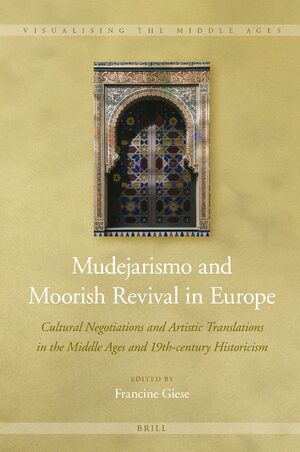
Mudejarismo and Moorish Revival in Europe : Cultural Negotiations and Artistic Translations in the Middle Ages and 19th-century Historicism / edited by Francine Giese.
Erişim Adresi
ISBN
9789004448582 (electronic book)
9789004448209 (print)
9789004448209 (print)
Yer Numarası
DK/5860
Eser Adının Farklı Biçimi
Cultural Negotiations and Artistic Translations in the Middle Ages and 19th-century Historicism
Yayın Bilgisi
Leiden; Boston : BRILL, 2021.
Fiziksel Niteleme
1 online resource.
Dizi
Visualising the Middle Ages ; 13
Late Antiquity and Medieval Studies E-Books Online, Collection 2021, ISBN: 9789004441149
Late Antiquity and Medieval Studies E-Books Online, Collection 2021, ISBN: 9789004441149
Bibliyografi, vb. Notu
Includes bibliographical references and index.
İçindekiler Notu
Acknowledgments -- Abbreviations -- List of Figures -- Notes on Contributors -- Introduction: Towards a Comprehensive Understanding of Interconnected Realities -- Francine Giese -- PART 1 Between Fascination and Conflict -- 1 Where Does Mudéjar Architecture Belong? -- Francine Giese -- 2 When Warriors Become Teachers -- Alfonso x's Cultural Endeavors and the Crusade Ideology -- Michael A. Conrad -- 3 "Ennobling Muslims and Jews"? The Instrumentalization of Mudéjar under the House of Trastámara 1369-1474 -- Michael A. Conrad -- 4 Reassessing the Moorish Revival in 19th- Century Europe -- Francine Giese -- PART 2 -- Agents and Networks -- 5 "Oh, You Seeker of Knowledge! This is Its Gate Opened Wide." The Transcultural Networks of Patrons, Artists, Scholars, Writers and Diplomats Between Medieval Iberia and North Africa in the 14th Century -- Michael A. Conrad -- 6 Beyond Kings and Sultans -- Vertical Diffusion and the Patrons of Urban Palaces in 14th-Century Toledo -- Michael A. Conrad -- 7 Spanish Intellectuals of the 19th Century and Their Role for Knowledge Exchange Across Europe -- Christian M. Schweizer -- 8 Mentors, Patrons and Social Networks -- The Trajectories of Architects in a Globalized Century -- Francine Giese -- 9 Il Gusto Moresco -- Amateurs and Artists in Florence and Rome during the Second Half of the 19th Century -- Ariane Varela Braga -- PART 3 -- Artisans and Architects as Protagonists of Transcultural Exchange and Artistic Transfer -- 10 An Interconnected World -- Mudéjar Artisans and the Aristocracy in 15th-Century Castile -- Luis Araus Ballesteros -- 11 Reproducing the Alhambra -- Monument Conservators and Artisans in Granada -- Francine Giese and Alejandro Jiménez Hernández -- 12 Learning from Casts and Models -- Schools and Academies in 19th-Century Europe and the Specific Case of the Alhambra Collection in St. Petersburg -- Katrin Kaufmann, Ekaterina Savinova and Ariane Varela Braga -- PART 4 -- Artistic Translations between Imagination, Politics and Ideology -- 13 The Limits of Otherness -- Decoding the Entangled Heritage of Medieval Iberia -- Francine Giese and Sarah Keller.
14 Political Ruptures and Artistic Continuities -- Pedro I, Enrique II and the First Trastámara Architecture in Context -- Elena Paulino Montero -- 15 Oriental Carpets a -- nd Gothic Windows -- Stained Glass in Neo-Moorish Architecture -- Sarah Keller -- 16 The Alhambra as a Historicist Matrix for Museum Displays -- Francine Giese and Ariane Varela Braga -- 17 Stylistic Eclecticism and Its Oriental Languages Alhambrismo in St. Petersburg -- Katrin Kaufmann -- PART 5 -- Transmitting Islamic Aesthetics Across Centuries -- 1 -- Architectural Transformation -- 18 The Fortune of the Court of the Lions and the Court of the Dolls -- Artistic Translations and Processes of Decontextualization -- Francine Giese and Ariane Varela Braga -- 19 Domes Reinvented -- Changing Meanings and Artistic Translations of Ibero-Islamic Rib and Muqarnas Vaults -- Francine Giese -- 20 The Hybridization of Sebka Ornament -- Francine Giese and Ariane Varela Braga -- 2 -- Transmateriality -- 21 Revisiting the Alhambra -- Transmediality and Transmateriality in 19th-Century Italy -- Ariane Varela Braga -- 22 Neo-Moorish Ceilings -- On the Models and Materiality of Russian Alhambrismo -- Katrin Kaufmann -- 23 Illuminating Transennae - A Technical Reinterpretation -- Sarah Keller -- PART 6 -- Epilogue -- 24 An Endangered Heritage -- Mudéjar and Neo-Moorish Architecture in 20th-Century Europe -- Francine Giese and Laura Álvarez Acosta -- Appendix -- 1 Catalogue of 19th-Century Alhambra Casts and Models at the Scientific-Research Museum of the Russian Academy of Arts in St. Petersburg -- Ekaterina Savinova -- Bibliography -- Index.
14 Political Ruptures and Artistic Continuities -- Pedro I, Enrique II and the First Trastámara Architecture in Context -- Elena Paulino Montero -- 15 Oriental Carpets a -- nd Gothic Windows -- Stained Glass in Neo-Moorish Architecture -- Sarah Keller -- 16 The Alhambra as a Historicist Matrix for Museum Displays -- Francine Giese and Ariane Varela Braga -- 17 Stylistic Eclecticism and Its Oriental Languages Alhambrismo in St. Petersburg -- Katrin Kaufmann -- PART 5 -- Transmitting Islamic Aesthetics Across Centuries -- 1 -- Architectural Transformation -- 18 The Fortune of the Court of the Lions and the Court of the Dolls -- Artistic Translations and Processes of Decontextualization -- Francine Giese and Ariane Varela Braga -- 19 Domes Reinvented -- Changing Meanings and Artistic Translations of Ibero-Islamic Rib and Muqarnas Vaults -- Francine Giese -- 20 The Hybridization of Sebka Ornament -- Francine Giese and Ariane Varela Braga -- 2 -- Transmateriality -- 21 Revisiting the Alhambra -- Transmediality and Transmateriality in 19th-Century Italy -- Ariane Varela Braga -- 22 Neo-Moorish Ceilings -- On the Models and Materiality of Russian Alhambrismo -- Katrin Kaufmann -- 23 Illuminating Transennae - A Technical Reinterpretation -- Sarah Keller -- PART 6 -- Epilogue -- 24 An Endangered Heritage -- Mudéjar and Neo-Moorish Architecture in 20th-Century Europe -- Francine Giese and Laura Álvarez Acosta -- Appendix -- 1 Catalogue of 19th-Century Alhambra Casts and Models at the Scientific-Research Museum of the Russian Academy of Arts in St. Petersburg -- Ekaterina Savinova -- Bibliography -- Index.
Özet, vb.
Mudejarismo and Moorish Revival in Europe examines key aspects related to the reception of Ibero-Islamic architecture in medieval Iberia and 19th-century Europe. It challenges prevalent readings of architecture and interiors whose creation was the result of cultural encounters. As Mudéjar and neo-Moorish architecture are closely connected to the Islamic world, concepts of identity, nationalism, religious and ethnic belonging, as well as Orientalism and Islamoscepticism significantly shaped the way in which they have been perceived over time. This volume offers art historical and socio-cultural analysis of selected case studies from Spain to Russia and opens the door to a better understanding of interconnected cultural and artistic phenomena.
Konu
Art and history.
Diğer Yazarlar
Eseri Alıntıla
Referansları kullanmadan önce gözden geçirmeniz ve varsa gerekli düzeltmeleri yapmanız önerilir.
Dijital Kaynak
MARC Görünümü
LEADER 06420nam a22004451i 4500
001 784694
003 TR_AnAIT
005 20250821173811
006 m d
007 cr un uuuua
008 201130s2021 ne sb 001 0 eng d
020 |a9789004448582|q(electronic book)
020 |a9789004448209|q(print)
024 7 |a10.1163/9789004448582|2DOI
035 |z(OCoLC)1200198054
040 |aNL-LeKB|cNL-LeKB|erda
049 |aTürk Tarih Kurumu Kütüphanesi
050 4|aN72.S6
072 7|aHB|2bicssc
072 7|aHIS|x000000|2bisacsh
082 04|a701.03|223
090 |aDK/5860
245 00|aMudejarismo and Moorish Revival in Europe :|bCultural Negotiations and Artistic Translations in the Middle Ages and 19th-century Historicism /|cedited by Francine Giese.
246 3 |aCultural Negotiations and Artistic Translations in the Middle Ages and 19th-century Historicism
264 1|aLeiden; |aBoston :|bBRILL, |c2021.
300 |a1 online resource.
336 |atext|btxt|2rdacontent
337 |acomputer|bc|2rdamedia
338 |aonline resource|2rdacarrier
490 1 |aVisualising the Middle Ages ;|v13
490 1 |aLate Antiquity and Medieval Studies E-Books Online, Collection 2021, ISBN: 9789004441149
504 |aIncludes bibliographical references and index.
505 0 |aAcknowledgments -- Abbreviations -- List of Figures -- Notes on Contributors -- Introduction: Towards a Comprehensive Understanding of Interconnected Realities -- Francine Giese -- PART 1 Between Fascination and Conflict -- 1 Where Does Mudéjar Architecture Belong? -- Francine Giese -- 2 When Warriors Become Teachers -- Alfonso x's Cultural Endeavors and the Crusade Ideology -- Michael A. Conrad -- 3 "Ennobling Muslims and Jews"? The Instrumentalization of Mudéjar under the House of Trastámara 1369-1474 -- Michael A. Conrad -- 4 Reassessing the Moorish Revival in 19th- Century Europe -- Francine Giese -- PART 2 -- Agents and Networks -- 5 "Oh, You Seeker of Knowledge! This is Its Gate Opened Wide." The Transcultural Networks of Patrons, Artists, Scholars, Writers and Diplomats Between Medieval Iberia and North Africa in the 14th Century -- Michael A. Conrad -- 6 Beyond Kings and Sultans -- Vertical Diffusion and the Patrons of Urban Palaces in 14th-Century Toledo -- Michael A. Conrad -- 7 Spanish Intellectuals of the 19th Century and Their Role for Knowledge Exchange Across Europe -- Christian M. Schweizer -- 8 Mentors, Patrons and Social Networks -- The Trajectories of Architects in a Globalized Century -- Francine Giese -- 9 Il Gusto Moresco -- Amateurs and Artists in Florence and Rome during the Second Half of the 19th Century -- Ariane Varela Braga -- PART 3 -- Artisans and Architects as Protagonists of Transcultural Exchange and Artistic Transfer -- 10 An Interconnected World -- Mudéjar Artisans and the Aristocracy in 15th-Century Castile -- Luis Araus Ballesteros -- 11 Reproducing the Alhambra -- Monument Conservators and Artisans in Granada -- Francine Giese and Alejandro Jiménez Hernández -- 12 Learning from Casts and Models -- Schools and Academies in 19th-Century Europe and the Specific Case of the Alhambra Collection in St. Petersburg -- Katrin Kaufmann, Ekaterina Savinova and Ariane Varela Braga -- PART 4 -- Artistic Translations between Imagination, Politics and Ideology -- 13 The Limits of Otherness -- Decoding the Entangled Heritage of Medieval Iberia -- Francine Giese and Sarah Keller.
505 0 |a14 Political Ruptures and Artistic Continuities -- Pedro I, Enrique II and the First Trastámara Architecture in Context -- Elena Paulino Montero -- 15 Oriental Carpets a -- nd Gothic Windows -- Stained Glass in Neo-Moorish Architecture -- Sarah Keller -- 16 The Alhambra as a Historicist Matrix for Museum Displays -- Francine Giese and Ariane Varela Braga -- 17 Stylistic Eclecticism and Its Oriental Languages Alhambrismo in St. Petersburg -- Katrin Kaufmann -- PART 5 -- Transmitting Islamic Aesthetics Across Centuries -- 1 -- Architectural Transformation -- 18 The Fortune of the Court of the Lions and the Court of the Dolls -- Artistic Translations and Processes of Decontextualization -- Francine Giese and Ariane Varela Braga -- 19 Domes Reinvented -- Changing Meanings and Artistic Translations of Ibero-Islamic Rib and Muqarnas Vaults -- Francine Giese -- 20 The Hybridization of Sebka Ornament -- Francine Giese and Ariane Varela Braga -- 2 -- Transmateriality -- 21 Revisiting the Alhambra -- Transmediality and Transmateriality in 19th-Century Italy -- Ariane Varela Braga -- 22 Neo-Moorish Ceilings -- On the Models and Materiality of Russian Alhambrismo -- Katrin Kaufmann -- 23 Illuminating Transennae - A Technical Reinterpretation -- Sarah Keller -- PART 6 -- Epilogue -- 24 An Endangered Heritage -- Mudéjar and Neo-Moorish Architecture in 20th-Century Europe -- Francine Giese and Laura Álvarez Acosta -- Appendix -- 1 Catalogue of 19th-Century Alhambra Casts and Models at the Scientific-Research Museum of the Russian Academy of Arts in St. Petersburg -- Ekaterina Savinova -- Bibliography -- Index.
520 |aMudejarismo and Moorish Revival in Europe examines key aspects related to the reception of Ibero-Islamic architecture in medieval Iberia and 19th-century Europe. It challenges prevalent readings of architecture and interiors whose creation was the result of cultural encounters. As Mudéjar and neo-Moorish architecture are closely connected to the Islamic world, concepts of identity, nationalism, religious and ethnic belonging, as well as Orientalism and Islamoscepticism significantly shaped the way in which they have been perceived over time. This volume offers art historical and socio-cultural analysis of selected case studies from Spain to Russia and opens the door to a better understanding of interconnected cultural and artistic phenomena.
588 |aDescription based on print version record.
650 0|aArt and history.
700 1 |aGiese, Francine,|eeditor.
776 08|iPrint version:|tMudejarismo and Moorish Revival in Europe : Cultural Negotiations and Artistic Translations in the Middle Ages and 19th-century Historicism, |dLeiden ; Boston : BRILL, 2021|z9789004448209
830 0|aVisualising the Middle Ages ;|v13.
830 0|aLate Antiquity and Medieval Studies E-Books Online, Collection 2021, ISBN: 9789004441149.
856 4 |zDOI: |uhttp://dx.doi.org/10.1163/9789004448582
001 784694
003 TR_AnAIT
005 20250821173811
006 m d
007 cr un uuuua
008 201130s2021 ne sb 001 0 eng d
020 |a9789004448582|q(electronic book)
020 |a9789004448209|q(print)
024 7 |a10.1163/9789004448582|2DOI
035 |z(OCoLC)1200198054
040 |aNL-LeKB|cNL-LeKB|erda
049 |aTürk Tarih Kurumu Kütüphanesi
050 4|aN72.S6
072 7|aHB|2bicssc
072 7|aHIS|x000000|2bisacsh
082 04|a701.03|223
090 |aDK/5860
245 00|aMudejarismo and Moorish Revival in Europe :|bCultural Negotiations and Artistic Translations in the Middle Ages and 19th-century Historicism /|cedited by Francine Giese.
246 3 |aCultural Negotiations and Artistic Translations in the Middle Ages and 19th-century Historicism
264 1|aLeiden; |aBoston :|bBRILL, |c2021.
300 |a1 online resource.
336 |atext|btxt|2rdacontent
337 |acomputer|bc|2rdamedia
338 |aonline resource|2rdacarrier
490 1 |aVisualising the Middle Ages ;|v13
490 1 |aLate Antiquity and Medieval Studies E-Books Online, Collection 2021, ISBN: 9789004441149
504 |aIncludes bibliographical references and index.
505 0 |aAcknowledgments -- Abbreviations -- List of Figures -- Notes on Contributors -- Introduction: Towards a Comprehensive Understanding of Interconnected Realities -- Francine Giese -- PART 1 Between Fascination and Conflict -- 1 Where Does Mudéjar Architecture Belong? -- Francine Giese -- 2 When Warriors Become Teachers -- Alfonso x's Cultural Endeavors and the Crusade Ideology -- Michael A. Conrad -- 3 "Ennobling Muslims and Jews"? The Instrumentalization of Mudéjar under the House of Trastámara 1369-1474 -- Michael A. Conrad -- 4 Reassessing the Moorish Revival in 19th- Century Europe -- Francine Giese -- PART 2 -- Agents and Networks -- 5 "Oh, You Seeker of Knowledge! This is Its Gate Opened Wide." The Transcultural Networks of Patrons, Artists, Scholars, Writers and Diplomats Between Medieval Iberia and North Africa in the 14th Century -- Michael A. Conrad -- 6 Beyond Kings and Sultans -- Vertical Diffusion and the Patrons of Urban Palaces in 14th-Century Toledo -- Michael A. Conrad -- 7 Spanish Intellectuals of the 19th Century and Their Role for Knowledge Exchange Across Europe -- Christian M. Schweizer -- 8 Mentors, Patrons and Social Networks -- The Trajectories of Architects in a Globalized Century -- Francine Giese -- 9 Il Gusto Moresco -- Amateurs and Artists in Florence and Rome during the Second Half of the 19th Century -- Ariane Varela Braga -- PART 3 -- Artisans and Architects as Protagonists of Transcultural Exchange and Artistic Transfer -- 10 An Interconnected World -- Mudéjar Artisans and the Aristocracy in 15th-Century Castile -- Luis Araus Ballesteros -- 11 Reproducing the Alhambra -- Monument Conservators and Artisans in Granada -- Francine Giese and Alejandro Jiménez Hernández -- 12 Learning from Casts and Models -- Schools and Academies in 19th-Century Europe and the Specific Case of the Alhambra Collection in St. Petersburg -- Katrin Kaufmann, Ekaterina Savinova and Ariane Varela Braga -- PART 4 -- Artistic Translations between Imagination, Politics and Ideology -- 13 The Limits of Otherness -- Decoding the Entangled Heritage of Medieval Iberia -- Francine Giese and Sarah Keller.
505 0 |a14 Political Ruptures and Artistic Continuities -- Pedro I, Enrique II and the First Trastámara Architecture in Context -- Elena Paulino Montero -- 15 Oriental Carpets a -- nd Gothic Windows -- Stained Glass in Neo-Moorish Architecture -- Sarah Keller -- 16 The Alhambra as a Historicist Matrix for Museum Displays -- Francine Giese and Ariane Varela Braga -- 17 Stylistic Eclecticism and Its Oriental Languages Alhambrismo in St. Petersburg -- Katrin Kaufmann -- PART 5 -- Transmitting Islamic Aesthetics Across Centuries -- 1 -- Architectural Transformation -- 18 The Fortune of the Court of the Lions and the Court of the Dolls -- Artistic Translations and Processes of Decontextualization -- Francine Giese and Ariane Varela Braga -- 19 Domes Reinvented -- Changing Meanings and Artistic Translations of Ibero-Islamic Rib and Muqarnas Vaults -- Francine Giese -- 20 The Hybridization of Sebka Ornament -- Francine Giese and Ariane Varela Braga -- 2 -- Transmateriality -- 21 Revisiting the Alhambra -- Transmediality and Transmateriality in 19th-Century Italy -- Ariane Varela Braga -- 22 Neo-Moorish Ceilings -- On the Models and Materiality of Russian Alhambrismo -- Katrin Kaufmann -- 23 Illuminating Transennae - A Technical Reinterpretation -- Sarah Keller -- PART 6 -- Epilogue -- 24 An Endangered Heritage -- Mudéjar and Neo-Moorish Architecture in 20th-Century Europe -- Francine Giese and Laura Álvarez Acosta -- Appendix -- 1 Catalogue of 19th-Century Alhambra Casts and Models at the Scientific-Research Museum of the Russian Academy of Arts in St. Petersburg -- Ekaterina Savinova -- Bibliography -- Index.
520 |aMudejarismo and Moorish Revival in Europe examines key aspects related to the reception of Ibero-Islamic architecture in medieval Iberia and 19th-century Europe. It challenges prevalent readings of architecture and interiors whose creation was the result of cultural encounters. As Mudéjar and neo-Moorish architecture are closely connected to the Islamic world, concepts of identity, nationalism, religious and ethnic belonging, as well as Orientalism and Islamoscepticism significantly shaped the way in which they have been perceived over time. This volume offers art historical and socio-cultural analysis of selected case studies from Spain to Russia and opens the door to a better understanding of interconnected cultural and artistic phenomena.
588 |aDescription based on print version record.
650 0|aArt and history.
700 1 |aGiese, Francine,|eeditor.
776 08|iPrint version:|tMudejarismo and Moorish Revival in Europe : Cultural Negotiations and Artistic Translations in the Middle Ages and 19th-century Historicism, |dLeiden ; Boston : BRILL, 2021|z9789004448209
830 0|aVisualising the Middle Ages ;|v13.
830 0|aLate Antiquity and Medieval Studies E-Books Online, Collection 2021, ISBN: 9789004441149.
856 4 |zDOI: |uhttp://dx.doi.org/10.1163/9789004448582
Materyaller
Depodan talep edilen materyal sadece kütüphane içerisinde kullanılmaktadır.
Materyal dışarıya ödünç verilmemektedir.
Materyal dışarıya ödünç verilmemektedir.
