LEADER 03476nam a22004938i 4500
001 784762
003 TR_AnAIT
005 20250821173557
006 m d
007 cr un uuuua
008 240522s2024 gw sb 001 0 eng d
020 |a9789004700765|q(electronic book)
020 |z9789004698895|q(print)
024 7 |a10.1163/9789004700765|2DOI
035 |z(OCoLC)1430655059
040 |aNL-LeKB|cNL-LeKB|erda
041 |aeng
049 |aTürk Tarih Kurumu Kütüphanesi
050 4|aZ6207.G7DE3
072 7|aHB|2bicssc
072 7|aHIS|x000000|2bisacsh
082 04|a025.4/3|223
090 |aDK/5928
100 1 |aMagdalino, Paul,|eauthor.
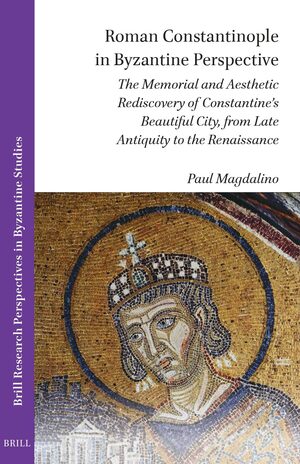
245 10|aRoman Constantinople in Byzantine Perspective /|cPaul Magdalino.
246 3 |aThe Memorial and Aesthetic Rediscovery of Constantine’s Beautiful City, from Late Antiquity to the Renaissance
264 1|aLeiden ;|aBoston :|bBrill,|c2024.
264 4|c©2024
300 |a1 online resource (184 pages) :|billustrations.
336 |atext|btxt|2rdacontent
337 |acomputer|bc|2rdamedia
338 |aonline resource|2rdacarrier
490 1 |aBrill Research Perspectives in Humanities and Social Sciences
490 1 |aLate Antiquity and Medieval Studies E-Books Online, Collection 2024
504 |aIncludes bibliographical references and index.
505 0 |tContents -- Abstract -- Keywords -- Introduction -- 1 Historical Research on Constantinople, 330–600 -- 2 Memorial Literature and Research Culture, 6th–10th Centuries -- 3 Cultural Heritage and Tourist Disinformation 1000–1453. From Bureaucratic to Scientific Antiquarianism -- 4 The Rhetorical Rediscovery of Constantinople, Tenth to Thirteenth Centuries -- 5 The Byzantios of Theodore Metochites and Its Legacy -- Conclusion -- Bibliography -- Index.
520 |aThis book studies the research perspective in which the literary inhabitants of Late Antique and medieval Constantinople remembered its past and conceptualised its existence as a Greek city that was the political capital of a Christian Roman state. Initial reactions to Constantine’s foundation noted its novel Christian orientation, but the memorial mode of writing about the city that developed from the sixth century recollected the traditional civic cultural heritage that Constantinople claimed both as the New Rome, and as the continuation of ancient Byzantion. This research culture increasingly became the preserve of the imperial bureaucracy, and focused on the city’s sculptured monuments as bearers of eschatological meaning. Yet from the tenth century, writers progressively preferred to define the wonder and spectacle of Constantinople in the aesthetic mode of urban praise inherited from late antiquity, developing the notion of the city as a cosmic theatre of excellence.
546 |aEnglish
588 |aDescription based on print version record.
650 0|aAncient History.
650 0|aClassical Studies.
650 0|aHistory.
776 08|iPrint version:|tRoman Constantinople in Byzantine Perspective : The Memorial and Aesthetic Rediscovery of Constantine’s Beautiful City, from Late Antiquity to the Renaissance.|dLeiden ; Boston : Brill, 2024.|z9789004698895|w(DLC) 2024936290
830 0|aBrill Research Perspectives in Humanities and Social Sciences.
830 0|aLate Antiquity and Medieval Studies E-Books Online, Collection 2024.
856 4 |zDOI: |uhttp://dx.doi.org/10.1163/9789004700765