

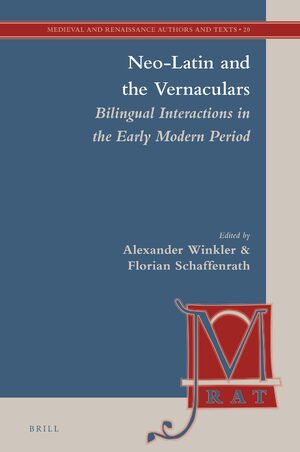
Neo-Latin and the Vernaculars : Bilingual Interactions in the Early Modern Period / Florian Schaffenrath, Alexander Winkler.
Erişim Adresi
ISBN
9789004386402 (electronic book)
9789004384866 (print)
9789004384866 (print)
Yer Numarası
DK/5954
Yayın Bilgisi
Leiden, Boston : BRILL, 2019.
Fiziksel Niteleme
1 online resource.
Dizi
Medieval and Renaissance Authors and Texts ; v. 20
Late Antiquity and Medieval Studies E-Books Online, Collection 2019, ISBN: 9789004386303
Late Antiquity and Medieval Studies E-Books Online, Collection 2019, ISBN: 9789004386303
Bibliyografi, vb. Notu
Includes bibliographical references and index.
İçindekiler Notu
Front Matter -- Copyright page -- Contributors -- Introduction / Alexander Winkler and Florian Schaffenrath -- Latin and the Vernacular in Biondo Flavio’s Thought and Works: a Study with a New Critical Edition of the Correspondence with the Duke of Milan, Francesco Sforza / Giuseppe Marcellino -- Latin and Vernacular Interplay: Lazzaro Bonamico as Author and Character of Sperone Speroni’s Dialogo delle lingue / Teodoro Katinis -- Diserte Germanice loqui: the Cultural-Historical Status of the German Language in Franciscus Irenicus’s Germaniae Exegesis (1518) / Ronny Kaiser -- Ludvig Holberg’s Niels Klim (1741) and the Irony of Reading and Writing in Latin / Thomas Velle -- Neo-Latin and Vernacular Translation Theory in the 15th and 16th Centuries: the ‘Tasks of the Translator’ According to Leonardo Bruni and Étienne Dolet / Marianne Pade -- Ariosto Latine Redditus: Early Modern Neo-Latin Rewritings of the Orlando Furioso / Francesco Lucioli -- Rewriting Vernacular Prose in Neo-Latin Hexameters: Francisco de Pedrosa’s Austriaca sive Naumachia (1580) / Maxim Rigaux -- Neo-Latin Epic Poetry on Telemach after Fénelon / Florian Schaffenrath -- Coexistence and Contamination of Vernacular and Latin in Alessandro Braccesi’s Bilingual Tribute to Camilla Saracini: the Literatures of Siena and Florence between Illustrious Women and Neoplatonism / Federica Signoriello -- The Reception of Petrarch and Petrarchists’ Poetry in Marcantonio Flaminio’s Carmina / Giacomo Comiati -- Pietro Angeli da Barga’s Syrias (1582–91) and Contemporary Debates over Epic Poetry / Alexander Winkler -- Didactic Poetry as Elitist Poetry: Christopher Stay’s De poesi didascalica dialogus in the Context of Classical and Neo-Latin Didactic Discourse / Claudia Schindler -- Back Matter -- Index.
Özet, vb.
The early modern world was profoundly bilingual: alongside the emerging vernaculars, Latin continued to be pervasively used well into the 18th century. Authors were often active in and conversant with both vernacular and Latin discourses. The language they chose for their writings depended on various factors, be they social, cultural, or merely aesthetic, and had an impact on how and by whom these texts were received. Due to the increasing interest in Neo-Latin studies, early modern bilingualism has recently been attracting attention. This volumes provides a series of case studies focusing on key aspects of early modern bilingualism, such as language choice, translations/rewritings, and the interferences between vernacular and Neo-Latin discourses. Contributors are Giacomo Comiati, Ronny Kaiser, Teodoro Katinis, Francesco Lucioli, Giuseppe Marcellino, Marianne Pade, Maxim Rigaux, Florian Schaffenrath, Claudia Schindler, Federica Signoriello, Thomas Velle, Alexander Winkler.
Konu
Latin language __ Influence on foreign languages.
Latin language __ Foreign elements.
Latin language __ Foreign elements.
Diğer Yazarlar
Eseri Alıntıla
Referansları kullanmadan önce gözden geçirmeniz ve varsa gerekli düzeltmeleri yapmanız önerilir.
Dijital Kaynak
MARC Görünümü
LEADER 04662cam a2200445Ii 4500
001 784788
003 TR_AnAIT
005 20250821173507
006 m d
007 cr un uuuua
008 170829s2017 ne sb 001 0 eng d
020 |a9789004386402|q(electronic book)
020 |z9789004384866|q(print)
024 7 |a10.1163/9789004386402|2DOI
035 |a(OCoLC)1056197136
040 |aNL-LeKB|cNL-LeKB|erda
049 |aTürk Tarih Kurumu Kütüphanesi
050 4|aPA2902
072 7|aHB|2bicssc
072 7|aHIS|x000000|2bisacsh
082 04|a480|223
090 |aDK/5954
245 10|aNeo-Latin and the Vernaculars : |bBilingual Interactions in the Early Modern Period /|cFlorian Schaffenrath, Alexander Winkler.
264 1|aLeiden, |aBoston :|bBRILL,|c2019.
300 |a1 online resource.
336 |atext|btxt|2rdacontent
337 |acomputer|bc|2rdamedia
338 |aonline resource|2rdacarrier
490 0 |aMedieval and Renaissance Authors and Texts ;|vv. 20
490 0 |aLate Antiquity and Medieval Studies E-Books Online, Collection 2019, ISBN: 9789004386303
504 |aIncludes bibliographical references and index.
505 00|tFront Matter -- |tCopyright page -- |tContributors -- |tIntroduction /|rAlexander Winkler and Florian Schaffenrath -- |tLatin and the Vernacular in Biondo Flavio’s Thought and Works: a Study with a New Critical Edition of the Correspondence with the Duke of Milan, Francesco Sforza /|rGiuseppe Marcellino -- |tLatin and Vernacular Interplay: Lazzaro Bonamico as Author and Character of Sperone Speroni’s Dialogo delle lingue /|rTeodoro Katinis -- |tDiserte Germanice loqui: the Cultural-Historical Status of the German Language in Franciscus Irenicus’s Germaniae Exegesis (1518) /|rRonny Kaiser -- |tLudvig Holberg’s Niels Klim (1741) and the Irony of Reading and Writing in Latin /|rThomas Velle -- |tNeo-Latin and Vernacular Translation Theory in the 15th and 16th Centuries: the ‘Tasks of the Translator’ According to Leonardo Bruni and Étienne Dolet /|rMarianne Pade -- |tAriosto Latine Redditus: Early Modern Neo-Latin Rewritings of the Orlando Furioso /|rFrancesco Lucioli -- |tRewriting Vernacular Prose in Neo-Latin Hexameters: Francisco de Pedrosa’s Austriaca sive Naumachia (1580) /|rMaxim Rigaux -- |tNeo-Latin Epic Poetry on Telemach after Fénelon /|rFlorian Schaffenrath -- |tCoexistence and Contamination of Vernacular and Latin in Alessandro Braccesi’s Bilingual Tribute to Camilla Saracini: the Literatures of Siena and Florence between Illustrious Women and Neoplatonism /|rFederica Signoriello -- |tThe Reception of Petrarch and Petrarchists’ Poetry in Marcantonio Flaminio’s Carmina /|rGiacomo Comiati -- |tPietro Angeli da Barga’s Syrias (1582–91) and Contemporary Debates over Epic Poetry /|rAlexander Winkler -- |tDidactic Poetry as Elitist Poetry: Christopher Stay’s De poesi didascalica dialogus in the Context of Classical and Neo-Latin Didactic Discourse /|rClaudia Schindler -- |tBack Matter -- |tIndex.
506 |aAvailable to subscribing member institutions only.
520 |aThe early modern world was profoundly bilingual: alongside the emerging vernaculars, Latin continued to be pervasively used well into the 18th century. Authors were often active in and conversant with both vernacular and Latin discourses. The language they chose for their writings depended on various factors, be they social, cultural, or merely aesthetic, and had an impact on how and by whom these texts were received. Due to the increasing interest in Neo-Latin studies, early modern bilingualism has recently been attracting attention. This volumes provides a series of case studies focusing on key aspects of early modern bilingualism, such as language choice, translations/rewritings, and the interferences between vernacular and Neo-Latin discourses. Contributors are Giacomo Comiati, Ronny Kaiser, Teodoro Katinis, Francesco Lucioli, Giuseppe Marcellino, Marianne Pade, Maxim Rigaux, Florian Schaffenrath, Claudia Schindler, Federica Signoriello, Thomas Velle, Alexander Winkler.
650 0|aLatin language|xInfluence on foreign languages.
650 0|aLatin language|xForeign elements.
700 1 |aSchaffenrath, Florian,|eeditor.
700 1 |aWinkler, Alexander,|eeditor.
776 08|iPrint version:|tNeo-Latin and the Vernaculars: Bilingual Interactions in the Early Modern Period|dLeiden ; Boston : BRILL, 2019,|z9789004384866
830 0|aMedieval and Renaissance Authors and Texts|v20.
830 0|aLate Antiquity and Medieval Studies E-Books Online, Collection 2019, ISBN: 9789004386303.
856 4 |zDOI: |uhttp://dx.doi.org/10.1163/9789004386402
001 784788
003 TR_AnAIT
005 20250821173507
006 m d
007 cr un uuuua
008 170829s2017 ne sb 001 0 eng d
020 |a9789004386402|q(electronic book)
020 |z9789004384866|q(print)
024 7 |a10.1163/9789004386402|2DOI
035 |a(OCoLC)1056197136
040 |aNL-LeKB|cNL-LeKB|erda
049 |aTürk Tarih Kurumu Kütüphanesi
050 4|aPA2902
072 7|aHB|2bicssc
072 7|aHIS|x000000|2bisacsh
082 04|a480|223
090 |aDK/5954
245 10|aNeo-Latin and the Vernaculars : |bBilingual Interactions in the Early Modern Period /|cFlorian Schaffenrath, Alexander Winkler.
264 1|aLeiden, |aBoston :|bBRILL,|c2019.
300 |a1 online resource.
336 |atext|btxt|2rdacontent
337 |acomputer|bc|2rdamedia
338 |aonline resource|2rdacarrier
490 0 |aMedieval and Renaissance Authors and Texts ;|vv. 20
490 0 |aLate Antiquity and Medieval Studies E-Books Online, Collection 2019, ISBN: 9789004386303
504 |aIncludes bibliographical references and index.
505 00|tFront Matter -- |tCopyright page -- |tContributors -- |tIntroduction /|rAlexander Winkler and Florian Schaffenrath -- |tLatin and the Vernacular in Biondo Flavio’s Thought and Works: a Study with a New Critical Edition of the Correspondence with the Duke of Milan, Francesco Sforza /|rGiuseppe Marcellino -- |tLatin and Vernacular Interplay: Lazzaro Bonamico as Author and Character of Sperone Speroni’s Dialogo delle lingue /|rTeodoro Katinis -- |tDiserte Germanice loqui: the Cultural-Historical Status of the German Language in Franciscus Irenicus’s Germaniae Exegesis (1518) /|rRonny Kaiser -- |tLudvig Holberg’s Niels Klim (1741) and the Irony of Reading and Writing in Latin /|rThomas Velle -- |tNeo-Latin and Vernacular Translation Theory in the 15th and 16th Centuries: the ‘Tasks of the Translator’ According to Leonardo Bruni and Étienne Dolet /|rMarianne Pade -- |tAriosto Latine Redditus: Early Modern Neo-Latin Rewritings of the Orlando Furioso /|rFrancesco Lucioli -- |tRewriting Vernacular Prose in Neo-Latin Hexameters: Francisco de Pedrosa’s Austriaca sive Naumachia (1580) /|rMaxim Rigaux -- |tNeo-Latin Epic Poetry on Telemach after Fénelon /|rFlorian Schaffenrath -- |tCoexistence and Contamination of Vernacular and Latin in Alessandro Braccesi’s Bilingual Tribute to Camilla Saracini: the Literatures of Siena and Florence between Illustrious Women and Neoplatonism /|rFederica Signoriello -- |tThe Reception of Petrarch and Petrarchists’ Poetry in Marcantonio Flaminio’s Carmina /|rGiacomo Comiati -- |tPietro Angeli da Barga’s Syrias (1582–91) and Contemporary Debates over Epic Poetry /|rAlexander Winkler -- |tDidactic Poetry as Elitist Poetry: Christopher Stay’s De poesi didascalica dialogus in the Context of Classical and Neo-Latin Didactic Discourse /|rClaudia Schindler -- |tBack Matter -- |tIndex.
506 |aAvailable to subscribing member institutions only.
520 |aThe early modern world was profoundly bilingual: alongside the emerging vernaculars, Latin continued to be pervasively used well into the 18th century. Authors were often active in and conversant with both vernacular and Latin discourses. The language they chose for their writings depended on various factors, be they social, cultural, or merely aesthetic, and had an impact on how and by whom these texts were received. Due to the increasing interest in Neo-Latin studies, early modern bilingualism has recently been attracting attention. This volumes provides a series of case studies focusing on key aspects of early modern bilingualism, such as language choice, translations/rewritings, and the interferences between vernacular and Neo-Latin discourses. Contributors are Giacomo Comiati, Ronny Kaiser, Teodoro Katinis, Francesco Lucioli, Giuseppe Marcellino, Marianne Pade, Maxim Rigaux, Florian Schaffenrath, Claudia Schindler, Federica Signoriello, Thomas Velle, Alexander Winkler.
650 0|aLatin language|xInfluence on foreign languages.
650 0|aLatin language|xForeign elements.
700 1 |aSchaffenrath, Florian,|eeditor.
700 1 |aWinkler, Alexander,|eeditor.
776 08|iPrint version:|tNeo-Latin and the Vernaculars: Bilingual Interactions in the Early Modern Period|dLeiden ; Boston : BRILL, 2019,|z9789004384866
830 0|aMedieval and Renaissance Authors and Texts|v20.
830 0|aLate Antiquity and Medieval Studies E-Books Online, Collection 2019, ISBN: 9789004386303.
856 4 |zDOI: |uhttp://dx.doi.org/10.1163/9789004386402
Materyaller
Depodan talep edilen materyal sadece kütüphane içerisinde kullanılmaktadır.
Materyal dışarıya ödünç verilmemektedir.
Materyal dışarıya ödünç verilmemektedir.
