LEADER 02299nam a22003978i 4500
001 784794
003 TR_AnAIT
005 20250821173457
006 m d
007 cr un uuuua
008 200716s2022 ne sb 001 0 eng d
020 |a9789004499706|q(electronic book)
020 |a9789004460928|q(print)
024 7 |a10.1163/9789004499706|2DOI
035 |z(OCoLC)1259587925
040 |aNL-LeKB|cNL-LeKB|erda
049 |aTürk Tarih Kurumu Kütüphanesi
050 4|aDF552.5
072 7|aHB|2bicssc
072 7|aHIS|x000000
082 04|a949.5|223
090 |aDK/5960
100 1 |aMüller, Samuel Pablo,|eauthor.
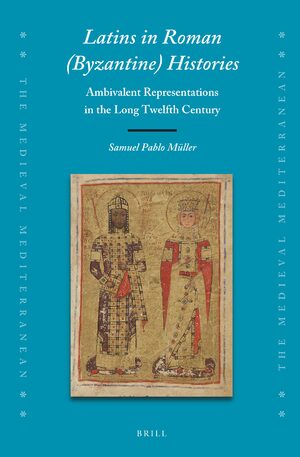
245 10|aLatins in Roman (Byzantine) Histories :|bAmbivalent Representations in the Long Twelfth Century /|cSamuel Pablo Müller.
246 3 |aAmbivalent Representations in the Long Twelfth Century
264 1|aLeiden; |aBoston :|bBRILL,|c2022.
300 |a1 online resource.
336 |atext|btxt|2rdacontent
337 |acomputer|bc|2rdamedia
338 |aonline resource|2rdacarrier
490 1 |aThe Medieval Mediterranean ;|v127
504 |aIncludes bibliographical references and index.
520 |aSamuel P. Müller offers here the first book-length study of the image of Latins in Byzantine historiography of the long twelfth century, a crucial period that witnessed an unprecedented intensification of Byzantine-Western relations. He notably argues against popular assertions that the image of Latins is "negative" and reflective of steadily mounting tension. Instead, Müller shows that Byzantine historiography can hardly be taken as evidence that the conquest of 1204 was the inevitable outcome of previous interactions. The representation of Latins is complex, ambivalent, and reflective of fickle and multifaceted Byzantine-Western relations. The book also highlights the need to focus on Byzantine identities and crucial, introspective motivations to which the image of Latins is subordinated.
588 |aDescription based on print version record.
650 0|aByzantine Empire.
776 08|iPrint version:|tLatins in Roman (Byzantine) Histories : Ambivalent Representations in the Long Twelfth Century.|dLeiden ; Boston : BRILL, 2022|z9789004460928
830 0|aThe Medieval Mediterranean ;|v127.
856 4 |zDOI: |uhttp://dx.doi.org/10.1163/9789004499706