

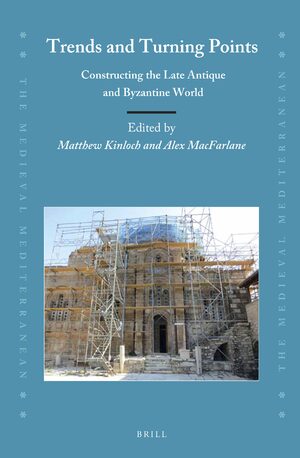
Trends and turning points : constructing the late antiquity and Byzantine world / edited by Matthew Kinloch and Alex MacFarlane.
Erişim Adresi
ISBN
9789004395749 (electronic book)
9789004395732 (print)
9789004395732 (print)
Yer Numarası
DK/5965
Yayın Bilgisi
Leiden ; Boston : Brill, [2019]
Fiziksel Niteleme
1 online resource.
Dizi
The medieval Mediterranean peoples, economies and cultures, 400-1500, 0928-5520 ; Volume 117
Late Antiquity and Medieval Studies E-Books Online, Collection 2019, ISBN: 9789004386303
Late Antiquity and Medieval Studies E-Books Online, Collection 2019, ISBN: 9789004386303
Bibliyografi, vb. Notu
Includes bibliographical references and index.
İçindekiler Notu
Front Matter -- Copyright Page -- Acknowledgements -- Illustrations -- Notes on Contributors -- Scholarly Constructions -- Constructing Late Antiquity and Byzantium: Introducing Trends and Turning Points / Matthew Kinloch -- Constructing the Past through the Present: The Eurasian View of Byzantium in the Pages of Seminarium Kondakovianum / Francesco Lovino -- Literary Trends -- The Power of the Cross: The Role of the Helper in Kassia’s Hymns’ Narratological Structure and Its Doctrinal Implications / Laura Borghetti -- Tzetzes, Eustathius, and the ‘City-Sacker’ Epeius: Trends and Turning Points in the 12th-century Reception of Homer / Valeria Flavia Lovato -- Greek Explicating Greek: A Study of Metaphrase Language and Style / Nikolas Churik -- Doing and Telling Administration and Diplomacy: Speech Acts in the 13th-Century Balkans / Milan Vukašinović -- Laughing up the Sleeve: The Image of the Emperor and Ironic Discourse in George Pachymeres’ Historia / Maria Rukavichnikova -- Constructing Politics -- The Roman Revolution: Leo i, Theodosius ii and the Contest for Power in the 5th Century / David Barritt -- The Reinvention of the Soldier-Emperor under Heraclius / Theresia Raum -- Omens of Expansionism? Revisiting the Caucasian Chapters of De Administrando Imperio / Kosuke Nakada -- The Madara Horseman and Triumphal Inscriptions in Krum’s Early Medieval Bulgaria (c.803-14) / Mirela Ivanova -- The Emperor is for Turning: Alexios Komnenos, John the Oxite and the Persecution of Heretics / Jonas Nilsson -- Turning Points in Religious Landscapes -- Eight Hundred Years of the Cult of the Archangels at Aphrodisias/Stauropolis: Modern and Ancient Narratives / Hugh Jeffery -- Crosses as Water Purification Devices in Byzantine Palestine / Stephen Humphreys -- Byzantium’s Ashes and the Bones of St Nicholas: Two Translations as Turning Points, 1087–1100 / Alasdair C. Grant -- Changing Profiles of Monastic Founders in Constantinople, From the Komnenoi to the Palaiologoi: The Case of the Theotokos Pammakaristos Monastery in Context / Elif Demirtiken -- Back Matter -- Bibliography -- Index.
Özet, vb.
Trends and Turning Points presents sixteen articles, examining the discursive construction of the late antique and Byzantine world, focusing specifically on the utilisation of trends and turning points to make stuff from the past, whether texts, matter, or action, meaningful. Contributions are divided into four complementary strands, Scholarly Constructions, Literary Trends, Constructing Politics, and Turning Points in Religious Landscapes . Each strand cuts across traditional disciplinary boundaries and periodisation, placing historical, archaeological, literary, and architectural concerns in discourse, whilst drawing on examples from the full range of the medieval Roman past. While its individual articles offer numerous important insights, together the volume collectively rethinks fundamental assumptions about how late antique and Byzantine studies has and continues to be discursively constructed. Contributors are: David Barritt, Laura Borghetti, Nikolas Churik, Elif Demirtiken, Alasdair C. Grant, Stephen Humphreys, Mirela Ivanova, Hugh Jeffery, Valeria Flavia Lovato, Francesco Lovino, Kosuke Nakada, Jonas Nilsson, Theresia Raum, Maria Rukavichnikova, and Milan Vukašinović.
Konu
Byzantine Empire __ History.
Byzantine Empire __ Civilization.
Byzantine Empire __ Civilization.
Diğer Yazarlar
Eseri Alıntıla
Referansları kullanmadan önce gözden geçirmeniz ve varsa gerekli düzeltmeleri yapmanız önerilir.
Dijital Kaynak
MARC Görünümü
LEADER 05178cam a22004458i 4500
001 784799
003 TR_AnAIT
005 20250821173445
006 m d
007 cr un uuuua
008 190221s2019 ne b 001 0 eng c
010 |a 2019006253
020 |a9789004395749|q(electronic book)
020 |z9789004395732|q(print)
024 7 |a10.1163/9789004395749|2DOI
040 |aNL-LeKB|cNL-LeKB|erda
043 |amm-----
049 |aTürk Tarih Kurumu Kütüphanesi
050 4|aDF504.5|b.T74 2019
072 7|aHB|2bicssc
072 7|aHIS|x000000|2bisacsh
082 04|a949.5/02|223
090 |aDK/5965
245 00|aTrends and turning points :|bconstructing the late antiquity and Byzantine world /|cedited by Matthew Kinloch and Alex MacFarlane.
264 1|aLeiden ;|aBoston :|bBrill,|c[2019]
300 |a1 online resource.
336 |atext|2rdacontent
337 |aunmediated|2rdamedia
338 |aonline resource|2rdacarrier
490 0 |aThe medieval Mediterranean peoples, economies and cultures, 400-1500,|x0928-5520 ;|vVolume 117
490 0 |aLate Antiquity and Medieval Studies E-Books Online, Collection 2019, ISBN: 9789004386303
504 |aIncludes bibliographical references and index.
505 00|tFront Matter -- |tCopyright Page -- |tAcknowledgements -- |tIllustrations -- |tNotes on Contributors -- |tScholarly Constructions -- |tConstructing Late Antiquity and Byzantium: Introducing Trends and Turning Points /|rMatthew Kinloch -- |tConstructing the Past through the Present: The Eurasian View of Byzantium in the Pages of Seminarium Kondakovianum /|rFrancesco Lovino -- |tLiterary Trends -- |tThe Power of the Cross: The Role of the Helper in Kassia’s Hymns’ Narratological Structure and Its Doctrinal Implications /|rLaura Borghetti -- |tTzetzes, Eustathius, and the ‘City-Sacker’ Epeius: Trends and Turning Points in the 12th-century Reception of Homer /|rValeria Flavia Lovato -- |tGreek Explicating Greek: A Study of Metaphrase Language and Style /|rNikolas Churik -- |tDoing and Telling Administration and Diplomacy: Speech Acts in the 13th-Century Balkans /|rMilan Vukašinović -- |tLaughing up the Sleeve: The Image of the Emperor and Ironic Discourse in George Pachymeres’ Historia /|rMaria Rukavichnikova -- |tConstructing Politics -- |tThe Roman Revolution: Leo i, Theodosius ii and the Contest for Power in the 5th Century /|rDavid Barritt -- |tThe Reinvention of the Soldier-Emperor under Heraclius /|rTheresia Raum -- |tOmens of Expansionism? Revisiting the Caucasian Chapters of De Administrando Imperio /|rKosuke Nakada -- |tThe Madara Horseman and Triumphal Inscriptions in Krum’s Early Medieval Bulgaria (c.803-14) /|rMirela Ivanova -- |tThe Emperor is for Turning: Alexios Komnenos, John the Oxite and the Persecution of Heretics /|rJonas Nilsson -- |tTurning Points in Religious Landscapes -- |tEight Hundred Years of the Cult of the Archangels at Aphrodisias/Stauropolis: Modern and Ancient Narratives /|rHugh Jeffery -- |tCrosses as Water Purification Devices in Byzantine Palestine /|rStephen Humphreys -- |tByzantium’s Ashes and the Bones of St Nicholas: Two Translations as Turning Points, 1087–1100 /|rAlasdair C. Grant -- |tChanging Profiles of Monastic Founders in Constantinople, From the Komnenoi to the Palaiologoi: The Case of the Theotokos Pammakaristos Monastery in Context /|rElif Demirtiken -- |tBack Matter -- |tBibliography -- |tIndex.
520 |aTrends and Turning Points presents sixteen articles, examining the discursive construction of the late antique and Byzantine world, focusing specifically on the utilisation of trends and turning points to make stuff from the past, whether texts, matter, or action, meaningful. Contributions are divided into four complementary strands, Scholarly Constructions, Literary Trends, Constructing Politics, and Turning Points in Religious Landscapes . Each strand cuts across traditional disciplinary boundaries and periodisation, placing historical, archaeological, literary, and architectural concerns in discourse, whilst drawing on examples from the full range of the medieval Roman past. While its individual articles offer numerous important insights, together the volume collectively rethinks fundamental assumptions about how late antique and Byzantine studies has and continues to be discursively constructed. Contributors are: David Barritt, Laura Borghetti, Nikolas Churik, Elif Demirtiken, Alasdair C. Grant, Stephen Humphreys, Mirela Ivanova, Hugh Jeffery, Valeria Flavia Lovato, Francesco Lovino, Kosuke Nakada, Jonas Nilsson, Theresia Raum, Maria Rukavichnikova, and Milan Vukašinović.
651 0|aByzantine Empire|xHistory.
651 0|aByzantine Empire|xCivilization.
700 1 |aKinloch, Matthew,|eeditor.
700 1 |aMacFarlane, Alex Dally,|eeditor.
776 08|iPrint version:|tTrends and Turning Points: Constructing the Late Antique and Byzantine World|dLeiden, Boston : BRILL, [2019], |z9789004395732
830 0|aThe Medieval Mediterranean|v117.
830 0|aLate Antiquity and Medieval Studies E-Books Online, Collection 2019, ISBN: 9789004386303.
856 4 |zDOI: |uhttp://dx.doi.org/10.1163/9789004395749
001 784799
003 TR_AnAIT
005 20250821173445
006 m d
007 cr un uuuua
008 190221s2019 ne b 001 0 eng c
010 |a 2019006253
020 |a9789004395749|q(electronic book)
020 |z9789004395732|q(print)
024 7 |a10.1163/9789004395749|2DOI
040 |aNL-LeKB|cNL-LeKB|erda
043 |amm-----
049 |aTürk Tarih Kurumu Kütüphanesi
050 4|aDF504.5|b.T74 2019
072 7|aHB|2bicssc
072 7|aHIS|x000000|2bisacsh
082 04|a949.5/02|223
090 |aDK/5965
245 00|aTrends and turning points :|bconstructing the late antiquity and Byzantine world /|cedited by Matthew Kinloch and Alex MacFarlane.
264 1|aLeiden ;|aBoston :|bBrill,|c[2019]
300 |a1 online resource.
336 |atext|2rdacontent
337 |aunmediated|2rdamedia
338 |aonline resource|2rdacarrier
490 0 |aThe medieval Mediterranean peoples, economies and cultures, 400-1500,|x0928-5520 ;|vVolume 117
490 0 |aLate Antiquity and Medieval Studies E-Books Online, Collection 2019, ISBN: 9789004386303
504 |aIncludes bibliographical references and index.
505 00|tFront Matter -- |tCopyright Page -- |tAcknowledgements -- |tIllustrations -- |tNotes on Contributors -- |tScholarly Constructions -- |tConstructing Late Antiquity and Byzantium: Introducing Trends and Turning Points /|rMatthew Kinloch -- |tConstructing the Past through the Present: The Eurasian View of Byzantium in the Pages of Seminarium Kondakovianum /|rFrancesco Lovino -- |tLiterary Trends -- |tThe Power of the Cross: The Role of the Helper in Kassia’s Hymns’ Narratological Structure and Its Doctrinal Implications /|rLaura Borghetti -- |tTzetzes, Eustathius, and the ‘City-Sacker’ Epeius: Trends and Turning Points in the 12th-century Reception of Homer /|rValeria Flavia Lovato -- |tGreek Explicating Greek: A Study of Metaphrase Language and Style /|rNikolas Churik -- |tDoing and Telling Administration and Diplomacy: Speech Acts in the 13th-Century Balkans /|rMilan Vukašinović -- |tLaughing up the Sleeve: The Image of the Emperor and Ironic Discourse in George Pachymeres’ Historia /|rMaria Rukavichnikova -- |tConstructing Politics -- |tThe Roman Revolution: Leo i, Theodosius ii and the Contest for Power in the 5th Century /|rDavid Barritt -- |tThe Reinvention of the Soldier-Emperor under Heraclius /|rTheresia Raum -- |tOmens of Expansionism? Revisiting the Caucasian Chapters of De Administrando Imperio /|rKosuke Nakada -- |tThe Madara Horseman and Triumphal Inscriptions in Krum’s Early Medieval Bulgaria (c.803-14) /|rMirela Ivanova -- |tThe Emperor is for Turning: Alexios Komnenos, John the Oxite and the Persecution of Heretics /|rJonas Nilsson -- |tTurning Points in Religious Landscapes -- |tEight Hundred Years of the Cult of the Archangels at Aphrodisias/Stauropolis: Modern and Ancient Narratives /|rHugh Jeffery -- |tCrosses as Water Purification Devices in Byzantine Palestine /|rStephen Humphreys -- |tByzantium’s Ashes and the Bones of St Nicholas: Two Translations as Turning Points, 1087–1100 /|rAlasdair C. Grant -- |tChanging Profiles of Monastic Founders in Constantinople, From the Komnenoi to the Palaiologoi: The Case of the Theotokos Pammakaristos Monastery in Context /|rElif Demirtiken -- |tBack Matter -- |tBibliography -- |tIndex.
520 |aTrends and Turning Points presents sixteen articles, examining the discursive construction of the late antique and Byzantine world, focusing specifically on the utilisation of trends and turning points to make stuff from the past, whether texts, matter, or action, meaningful. Contributions are divided into four complementary strands, Scholarly Constructions, Literary Trends, Constructing Politics, and Turning Points in Religious Landscapes . Each strand cuts across traditional disciplinary boundaries and periodisation, placing historical, archaeological, literary, and architectural concerns in discourse, whilst drawing on examples from the full range of the medieval Roman past. While its individual articles offer numerous important insights, together the volume collectively rethinks fundamental assumptions about how late antique and Byzantine studies has and continues to be discursively constructed. Contributors are: David Barritt, Laura Borghetti, Nikolas Churik, Elif Demirtiken, Alasdair C. Grant, Stephen Humphreys, Mirela Ivanova, Hugh Jeffery, Valeria Flavia Lovato, Francesco Lovino, Kosuke Nakada, Jonas Nilsson, Theresia Raum, Maria Rukavichnikova, and Milan Vukašinović.
651 0|aByzantine Empire|xHistory.
651 0|aByzantine Empire|xCivilization.
700 1 |aKinloch, Matthew,|eeditor.
700 1 |aMacFarlane, Alex Dally,|eeditor.
776 08|iPrint version:|tTrends and Turning Points: Constructing the Late Antique and Byzantine World|dLeiden, Boston : BRILL, [2019], |z9789004395732
830 0|aThe Medieval Mediterranean|v117.
830 0|aLate Antiquity and Medieval Studies E-Books Online, Collection 2019, ISBN: 9789004386303.
856 4 |zDOI: |uhttp://dx.doi.org/10.1163/9789004395749
Materyaller
Depodan talep edilen materyal sadece kütüphane içerisinde kullanılmaktadır.
Materyal dışarıya ödünç verilmemektedir.
Materyal dışarıya ödünç verilmemektedir.
