LEADER 02302nam a22004698i 4500
001 784994
003 TR_AnAIT
005 20250821172740
006 m d
007 cr un uuuua
008 231123s2024 gw sb 001 0 eng d
010 |a 2023037558
020 |a9789004686601|q(electronic book)
020 |z9789004685895|q(print)
024 7 |a110.1163/9789004686601|2DOI
035 |z(OCoLC)1395536707
040 |aNL-LeKB|cNL-LeKB|erda
041 |aeng
049 |aTürk Tarih Kurumu Kütüphanesi
050 4|aGA201
072 7|aHBLA|2bicssc
072 7|aHIS|x002000|2bisacsh
072 7|aHIS|x010000|2bisacsh
082 04|a526.09|223
090 |aDK/6160
100 1 |aLiccardo, Salvatore,|eauthor.
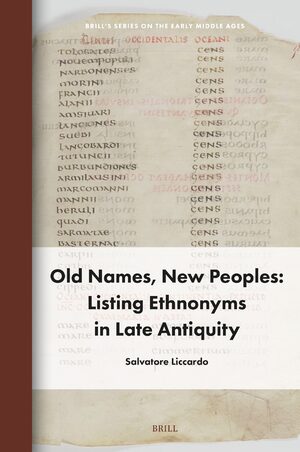
245 10|aOld Names, New Peoples: Listing Ethnonyms in Late Antiquity /|cSalvatore Liccardo.
264 1|aLeiden ;|aBoston :|bBrill,|c2024.
264 4|c©2024
300 |a1 online resource (346 pages) :|billustrations.
336 |atext|btxt|2rdacontent
337 |acomputer|bc|2rdamedia
338 |aonline resource|2rdacarrier
490 1 |aBrill's Series on the Early Middle Ages ;|v30
490 1 |aLate Antiquity and Medieval Studies E-Books Online, Collection 2023
504 |aIncludes bibliographical references and index.
520 |aNo people is nameless, and lists of words are as old as writing systems. And yet, both subjects can appear unpromising to historians. This volume shows the contrary by examining the various meanings and functions of ethnonyms in Late Antiquity: added to catalogues of provinces, they reflect the political messages and the regulating power of the imperial bureaucracy; included in schoolbooks, they mirror educational practices and reveal the geographical and ethnic landscapes taught at school; placed on a map, they help make sense of the world in times of transition.
546 |aEnglish
588 |aDescription based on print version record.
650 0|aCartography.
776 08|iPrint version:|tOld Names, New Peoples: Listing Ethnonyms in Late Antiquity.|dLeiden ; Boston : Brill, 2024.|z9789004685895|w(DLC) 2023037557
830 0|aBrill's Series on the Early Middle Ages ;|v30.
830 0|aLate Antiquity and Medieval Studies E-Books Online, Collection 2023.
856 4 |zDOI: |uhttp://dx.doi.org/10.1163/9789004686601