LEADER 03710cam a2200457Ii 4500
001 791963
003 TR_AnAIT
005 20260122235321
008 180813s2018 fluab ob 001 0 eng d
020 |a9780429875083 (e-book: PDF)|q(e-book : PDF)
035 |a(OCoLC)1045606300
041 |aeng
049 |aTürk Tarih Kurumu Kütüphanesi
050 4|aHD5724
060 10|aWY 16 GF5
072 7|aBUS|x030000 |2bisacsh
072 7|aBUS|x041000 |2bisacsh
072 7|aBUS|x085000 |2bisacsh
072 7|aKJMV2 |2bicscc
082 04|a331.12|223
100 1 |aCleland Silva, Tricia,|eauthor.
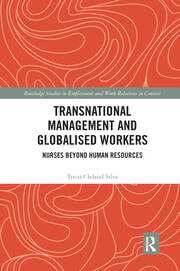
245 10|aTransnational management and globalised workers :|bnurses beyond human resources /|cby Tricia Cleland Silva.
250 |aFirst edition.
264 1|aBoca Raton, FL :|bRoutledge, an imprint of Taylor and Francis,|c2018.
300 |a1 online resource (222 pages) :|b11 illustrations.
490 1 |aRoutledge Research in Culture, Space and Identity
505 00|tpart, Part 1 Framing -- |tchapter 1 Transnational Management of Globalised Workers /|rNurses Beyond Human Resources -- |tchapter 2 Perspectives on the Transnationalisation of Care and the /|rNurse Labour Market -- |tchapter 3 Framing Transnational Human Resource Management of Nurse Labour -- |tpart, Part 2 Situating -- |tchapter 4 Representatives and Social Worlds in the Transnational Human Resource Management of Nurse Labour -- |tchapter 5 Mapping Social Worlds Through Discourse, Text, and Materiality -- |tpart, Part 3 A Situation -- |tchapter 6 Transnational Management of Nurses in Producer-Based Care Networks in Finland -- |tchapter 7 Discursive Positions and Structural Barriers to Equality in Transnational Human Resource Management -- |tchapter 8 Conclusions.
520 3 |aThere are 60 million health care workers globally and most of this workforce consists of nurses, as they are key providers of primary health care. Historically, the global nurse occupation has been predominately female and segregated along gendered, racialised and classed hierarchies. In the last decade, new actors have emerged in the management of health care human resources, specifically from the corporate sector, which has created new interactions, networks, and organisational practices. This book urgently calls for the reconceptualisation in the theoretical framing of the globalised nurse occupation from International Human Resource Management (IHRM) to Transnational Human Resource Management (THRM) Specifically, the book draws on critical human resource management literature and transnational feminist theories to frame the strategies and practices used to manage nurses across geographical sites of knowledge production and power, which centralise on how and by whom nurses are managed. In its current managerial form, the author argues that the nurses are constructed and produced as resources to be packaged for clients in public and private organisations.
650 7|aBUSINESS & ECONOMICS / Management.|2bisacsh
650 7|aBUSINESS & ECONOMICS / Organizational Behavior.|2bisacsh
650 0|aEmployee selection.
650 0|aNurses|xSupply and demand.
650 0|aNursing|xManpower.
650 0|aPersonnel management.
650 7|aBUSINESS & ECONOMICS / Labor.|2bisacsh
650 7|aPOLITICAL SCIENCE / Labor & Industrial Relations.|2bisacsh
650 12|aNurses, International|xsupply & distribution
650 12|aNursing|xmanpower
650 22|aInternationality
650 22|aPersonnel Selection
650 22|aSocioeconomic Factors
710 2 |aTaylor and Francis.
776 08|iPrint version: |z9781138614017|w(DLC) 2018016447
830 0|aRoutledge studies in employment and work relations in context.
856 40|uhttps://www.taylorfrancis.com/books/9780429875083|zClick here to view.
901 |aTaylor & Francis