LEADER 04000cam a22005778i 4500
001 792152
003 TR_AnAIT
005 20260122235635
006 m o d
007 cr |||||||||||
008 211101s2022 nyu ob 001 0 eng
020 |a9781003269267|q(ebook)
020 |a1003269265
020 |a9781000570144|q(electronic bk. : PDF)
020 |a1000570142|q(electronic bk. : PDF)
020 |a9781000570151|q(electronic bk. : EPUB)
020 |a1000570150|q(electronic bk. : EPUB)
020 |z9781032216201|q(hardback)
020 |z9781032216218|q(paperback)
024 7 |a10.4324/9781003269267|2doi
035 |a(OCoLC)1295620084
035 |a(OCoLC-P)1295620084
040 |aOCoLC-P|beng|erda|cOCoLC-P
041 |aeng
049 |aTürk Tarih Kurumu Kütüphanesi
050 00|aDK265.8.D3
072 7|aSOC|x008000|2bisacsh
072 7|aSOC|x024000|2bisacsh
072 7|aSOC|x053000|2bisacsh
072 7|aRGL|2bicssc
082 00|a947.5/2|223/eng/20220127
100 1 |aSahakyan, Naira,|d1988-|eauthor.
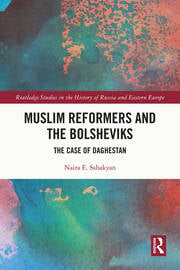
245 10|aMuslim reformers and the Bolsheviks :|bthe case of Daghestan /|cNaira Sahakyan.
264 1|aNew York :|bRoutledge,|c2022.
300 |a1 online resource.
336 |atext|btxt|2rdacontent
337 |acomputer|bc|2rdamedia
338 |aonline resource|bcr|2rdacarrier
490 0 |aRoutledge studies in the history of Russia and Eastern Europe
505 0 |aAcknowledgments -- List of abbreviations -- Notes on translation and transliteration -- Introduction -- Histori(ographi)cal background: the Russian Revolution and early Soviet rule in Daghestan (1917-1929) -- The concept of "freedom" and the issue of the Imamate in the revolutionary discourse of the Daghestani reformists -- The visions of Daghestan's future in debates on education and on the language of instruction -- The new scopes of the Islamic discourse: inner-Islamic and Soviet trajectories of the 1920s in the journal Bayān al-Ḥaqā'iq -- Conclusion -- Bibliography -- Index.
520 |a"This book explores how the Muslim scholars of Daghestan, an important Muslim region within Russia, experienced the 1917 Russian Revolution and how they attempted to gain religious and political authority in the new post-imperial environment. Covering the period between the February Revolution and the first massive repressions of the scholars of Islam, it provides new insights into the complexities of the relations between Muslim reformers and Bolsheviks. It challenges the prevailing view in Western scholarship that the relationship was antagonistic, revealing that relations were pragmatic rather than ideological. It argues that there was cooperation on issues of modern education and language policy, and alliances against assumed common threats, such as the British, Wahhābis and local Ṣūfīs, along with disagreements related to the Bolsheviks' atheism and their concept of class struggle. Overall, it demonstrates that the Islamic reformist discourse in Daghestan, although influenced by the wider Islamic debate at the turn of the twentieth century, was an integral part of Soviet modernity"--|cProvided by publisher.
588 |aOCLC-licensed vendor bibliographic record.
650 0|aIslam and politics|zRussia (Federation)|zDagestan.
650 0|aMuslims|xPolitical activity|zRussia (Federation)|zDagestan.
650 0|aEducation|zRussia (Federation)|zDagestan|xHistory|y20th century.
650 7|aSOCIAL SCIENCE / Ethnic Studies / General|2bisacsh
650 7|aSOCIAL SCIENCE / Research|2bisacsh
651 0|aSoviet Union|xHistory|yRevolution, 1917-1921|xInfluence.
651 0|aDagestan (Russia)|xPolitics and government|y20th century.
651 0|aDagestan (Russia)|xIntellectual life|y20th century.
651 0|aDagestan (Russia)|xHistory|y20th century.
856 40|3Taylor & Francis|uhttps://www.taylorfrancis.com/books/9781003269267
856 42|3OCLC metadata license agreement|uhttp://www.oclc.org/content/dam/oclc/forms/terms/vbrl-201703.pdf
901 |aTaylor & Francis