LEADER 03586cam a2200553 i 4500
001 792197
003 TR_AnAIT
005 20260122235716
006 m o d
007 cr cnu---unuuu
008 240202t20242024nyu ob 001 0 eng
020 |a9781003341864|qelectronic book
020 |a1003341861|qelectronic book
020 |a9781040018194|qelectronic publication
020 |a104001819X|qelectronic publication
020 |a9781040018170|qelectronic book
020 |a1040018173|qelectronic book
020 |z9781032377766|qhardcover
020 |z9781032377773|qpaperback
024 7 |a10.4324/9781003341864|2doi
035 |a(OCoLC)1422231665
035 |a(OCoLC-P)1422231665
040 |aOCoLC-P|beng|erda|cOCoLC-P
041 |aeng
049 |aTürk Tarih Kurumu Kütüphanesi
050 04|aGN380|b.B97 2024
072 7|aSOC|x002010|2bisacsh
072 7|aSOC|x062000|2bisacsh
072 7|aSCI|x092000|2bisacsh
072 7|aJHMC|2bicssc
082 00|a305.8|223/eng/20240214
100 1 |aByrne, George|c(Researcher),|eauthor.
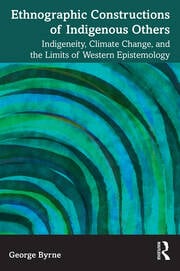
245 10|aEthnographic constructions of Indigenous others :|bindigeneity, climate change, and the limits of western epistemology /|cGeorge Byrne.
264 1|aNew York :|bRoutledge, Taylor & Francis Group,|c2024.
264 4|c©2024
300 |a1 online resource (xii, 229 pages)
336 |atext|btxt|2rdacontent
337 |acomputer|bc|2rdamedia
338 |aonline resource|bcr|2rdacarrier
505 0 |aIntroduction -- Part I: Background and methodology -- The emergence of REDD+, Indigenous alternatives, and Indigenous resistance -- Taking up space and making up others -- Part II: Seeing and being Indigenous -- Negotiating Indigeneity at the Indigenous pavilion -- Encountering the optimal other -- Part III: Fieldwork the hurts -- Failures and frustration during research encounters -- Fear, the real, and the other -- Conclusions: Re-membering research.
520 |a"This book examines the ways in which indigeneity interacts with climate change politics at multiple levels, and at the same time offers a self-critical reflection on the role of ethnographic research (and researchers) in this process. Through a multi-sited ethnography, it shows how indigeneity and climate change mitigation are at this point so intensely intertwined that one cannot be clearly understood without considering the other. While indigenous identities have been (re)defined in relation to climate change, it argues that indigenous peoples continue to subvert pervasive notions of the nature/culture dichotomy and disrupt our understanding of what it means to be human in relation to nature. It encourages students and researchers in anthropology, international development, and other related fields to engage in more meaningful reflection on the epistemic shortcomings of 'the West', including in our own research, and to acknowledge the ongoing role of power, coloniality, extractivism, and Whiteness in Climate Change discourses"--|cProvided by publisher.
588 |aOCLC-licensed vendor bibliographic record.
650 0|aIndigenous peoples|xSocial conditions.
650 0|aClimatic changes|xPolitical aspects.
650 0|aKnowledge, Theory of.
650 0|aEthnology|xFieldwork.
650 0|aClimate change mitigation.
650 0|aNature|xEffect of human beings on.
650 7|aSOCIAL SCIENCE / Anthropology / Cultural|2bisacsh
856 40|3Taylor & Francis|uhttps://www.taylorfrancis.com/books/9781003341864
856 42|3OCLC metadata license agreement|uhttp://www.oclc.org/content/dam/oclc/forms/terms/vbrl-201703.pdf
901 |aTaylor & Francis