LEADER 03623cam a2200565M 4500
001 792211
003 TR_AnAIT
005 20260122235729
006 m o d
007 cr |n|||||||||
008 250808s2026 xx o 0|| 0 eng d
020 |a9781040413357|q(electronic bk.)
020 |a1040413358|q(electronic bk.)
020 |a9781003376477|q(electronic bk.)
020 |a1003376479|q(electronic bk.)
020 |a9781040413326|q(electronic bk. : PDF)
020 |a1040413323|q(electronic bk. : PDF)
020 |z103245329X
020 |z9781032453293
020 |z1032453281
020 |z9781032453286
024 7 |a10.4324/9781003376477|2doi
035 |a(OCoLC)1531082497
035 |a(OCoLC-P)1531082497
040 |aOCoLC-P|beng|cOCoLC-P
041 |aeng
049 |aTürk Tarih Kurumu Kütüphanesi
050 4|aCB351
072 7|aHBLC1|2bicssc
072 7|aHIS000000|2bisacsh
072 7|aHBJD|2bicssc
072 7|aHBTB|2bicssc
072 7|aHRAX|2bicssc
072 7|aGTB|2bicssc
072 7|aHIS010000|2bisacsh
072 7|aHIS037010|2bisacsh
082 04|a940.1|223/eng/20250814
100 1 |aRaffensperger, Christian.|1https://id.oclc.org/worldcat/entity/E39PCjrT8GdTvKxKG4XHhhfKBP
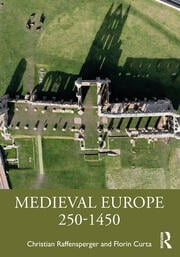
245 10|aMEDIEVAL EUROPE 250-1450|h[electronic resource].
260 |a[S.l.] :|bROUTLEDGE,|c2026.
300 |a1 online resource
336 |atext|btxt|2rdacontent
337 |acomputer|bc|2rdamedia
338 |aonline resource|bcr|2rdacarrier
520 |aProviding an inclusive history of the entire territory and people of medieval Europe from 250 to1450, this volume examines not just the political history but the rich social and cultural history, too.European history has functioned as a defining force in the modern worldview of many countries and their citizens. Whether viewed positively or negatively, that history has shaped the world in many ways. To understand Europe, it is essential to have a clear view of its medieval history. Proceeding from the decline of the Roman Empire, with the arrival of Germanic and Turkic peoples, through the development of polities in medieval Europe from Iberia to Ireland, Scandinavia to Sicily, and all the way to the taiga, European history grows and changes over the medieval period which we bring to a close with the final fall of Rome, the capture of Constantinople by the Ottomans in 1453. Traditional histories of medieval Europe focus primarily on the West. This history attempts to include the breadth of the continent, from Scandinavia to the Mediterranean and from the Atlantic to the Urals, from the nomads of the steppe to the Sami herders in the north and from the vernacular literacies of Alfred the Great of Wessex to Boris's kingdom in Bulgaria. The chapters pair eastern and western elements to help make the point that all of Europe was undergoing changes, not only the west, who then pushed those changes onto the east which has been the common narrative.Medieval Europe 250-1450 is essential reading for all students of Medieval Europe and, in particular, those who wish to understand the interactions and parallels between east and west, north and south.
588 |aOCLC-licensed vendor bibliographic record.
650 0|aCivilization, Medieval.
651 0|aEurope|xHistory|y476-1492.
651 0|aEurope|xSocial conditions|yTo 1492.
700 1 |aCurta, Florin.|1https://id.oclc.org/worldcat/entity/E39PBJrwXg7KWygTFgdQWYMwYP
856 40|3Taylor & Francis|uhttps://www.taylorfrancis.com/books/9781003376477
856 42|3OCLC metadata license agreement|uhttp://www.oclc.org/content/dam/oclc/forms/terms/vbrl-201703.pdf
901 |aTaylor & Francis