

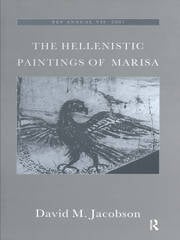
The Hellenistic Paintings of Marisa / David M. Jacobson ; including a facsimile reprint of Painted tombs in the necropolis of Marissa (Marêshah) by John P. Peters and Hermann Thiersch ; edited by Stanley A. Cook (1905).
ISBN
9781003580270 (electronic bk.)
1003580270 (electronic bk.)
9781040284377 (electronic bk. : PDF)
104028437X (electronic bk. : PDF)
9781040279861 (electronic bk. : EPUB)
1040279864 (electronic bk. : EPUB)
9781904350989
1003580270 (electronic bk.)
9781040284377 (electronic bk. : PDF)
104028437X (electronic bk. : PDF)
9781040279861 (electronic bk. : EPUB)
1040279864 (electronic bk. : EPUB)
9781904350989
Dil Kodu
İngilizce
Yazar
Yayın Bilgisi
London : Routledge, 2007.
Fiziksel Niteleme
1 online resource : illustrations
Dizi
The Palestine Exploration Fund Annual ; VII
İçindekiler Notu
Preface, Acknowledgements, List of Illustrations, Introduction, Marisa in History, Tomb I, Tomb II, The Painted Decoration, The Paintings in Tomb I, The Paintings in Tomb II, Analysis of the Paintings, Composition of the Animal Frieze, Purpose of the Paintings and Their Dating, Bibliography
Özet, vb.
In early June 1902, John Peters, an American theologian, and Hermann Thiersch, a German classical scholar, were alerted to the discovery of two painted burial caves at Marisa/Beit Jibrin, less than 40 miles (62 km) by road southwest from Jerusalem. Tomb robbers had, a short time previously, forced their way into the burial chambers and caused damage to their fabric. Realising that these splendid tombs dated to about 200 BCE and the importance of their painted interiors, the two scholars immediately commissioned a leading Jerusalem photographer, Chalil Raad, to record them. This was fortunate, because the paintings on the soft limestone walls rapidly deteriorated and now can no longer be seen. Peters and Thiersch published a monograph on the painted tombs, illustrated with hand-drawn copies of the photographs, but the original plates have lain all these years in the archives of the Palestine Exploration Fund in London, unpublished.The paintings are unique in the Greek pictorial repertoire and are among the most important surviving examples of Ptolemaic art. The remarkable painted frieze extending along the two long sides of the main chamber of Tomb I depicts 22 different animal species, drawn from the wild fauna of the Levant, the Nile basin and the Horn of Africa - as well as a few mythical beasts. This animal frieze attests to the interest in exotic animals shown in the Hellenistic period. Other remarkable subjects represented in the Marisa paintings include Cerberus, the three-headed guard-dog of Hades, and a pair of elegant musicians in Greek dress.Timed to coincide with the centenary of the discovery of the painted tombs, a new study on the paintings has been produced by David Jacobson. This study appears as Annual VII of the Palestine Exploration Fund. It contains, for the first time, high quality reproductions of the photographic plates taken in 1902, which are held in the PEF collections. Reproduced with the photographs are the proofs of the coloured lithographs, which are superior in quality to the versions that were published. The inaccuracies and loss of delicate detail of the originals in the coloured lithographs used by Peters and Thiersch for their 1905 publication are clearly apparent. The accompanying text includes an analysis of all the paintings in the light of a century of scholarship and an assessment is made of their religious and cultural significance. Each of the animals in the frieze is compared with descriptions given by ancient writers, and a new interpretation is presented of the cycle as a whole. An appraisal is made of the overall contribution of the Marisa paintings to our knowledge of the art and culture of the Levant in the Ptolemaic period. Included with this new study is facsimile reprint of the original 1905 publication, now long out of print, and it includes superior copies of the coloured lithographs from that edition. This new publication also reproduces a very rare addenda section prepared by R.A.S. Macalister after inspecting the Marisa tombs in October of that year.
Konu
SOCIAL SCIENCE / Archaeology __ bisacsh
Mural painting and decoration, Hellenistic __ Israel __ Mareshah (Extinct city)
Mareshah (Extinct city) __ Antiquities.
Mural painting and decoration, Hellenistic __ Israel __ Mareshah (Extinct city)
Mareshah (Extinct city) __ Antiquities.
Diğer Yazarlar
Veritabanı
Eseri Alıntıla
Referansları kullanmadan önce gözden geçirmeniz ve varsa gerekli düzeltmeleri yapmanız önerilir.
Dijital Kaynak
MARC Görünümü
LEADER 05688cam a2200517 i 4500
001 792300
003 TR_AnAIT
005 20260122235855
006 m o d
007 cr cnu|||unuuu
008 241029s2007 enka gob 001 0 eng d
020 |a9781003580270|q(electronic bk.)
020 |a1003580270|q(electronic bk.)
020 |a9781040284377|q(electronic bk. : PDF)
020 |a104028437X|q(electronic bk. : PDF)
020 |a9781040279861|q(electronic bk. : EPUB)
020 |a1040279864|q(electronic bk. : EPUB)
020 |z9781904350989
024 7 |a10.4324/9781003580270|2doi
035 |a(OCoLC)1464076255
035 |a(OCoLC-P)1464076255
040 |aOCoLC-P|beng|erda|epn|cOCoLC-P
041 |aeng
049 |aTürk Tarih Kurumu Kütüphanesi
050 0|aND2570
072 7|aSOC|x003000|2bisacsh
072 7|aHDD|2bicssc
082 04|a751.7/3095694|223/eng/20241118
100 1 |aJacobson, David M.,|eauthor.
245 14|aThe Hellenistic Paintings of Marisa /|cDavid M. Jacobson ; including a facsimile reprint of Painted tombs in the necropolis of Marissa (Marêshah) by John P. Peters and Hermann Thiersch ; edited by Stanley A. Cook (1905).
264 1|aLondon :|bRoutledge,|c2007.
300 |a1 online resource :|billustrations
336 |atext|btxt|2rdacontent
337 |acomputer|bc|2rdamedia
338 |aonline resource|bcr|2rdacarrier
490 1 |aThe Palestine Exploration Fund Annual ;|vVII
505 0 |aPreface, Acknowledgements, List of Illustrations, Introduction, Marisa in History, Tomb I, Tomb II, The Painted Decoration, The Paintings in Tomb I, The Paintings in Tomb II, Analysis of the Paintings, Composition of the Animal Frieze, Purpose of the Paintings and Their Dating, Bibliography
520 |aIn early June 1902, John Peters, an American theologian, and Hermann Thiersch, a German classical scholar, were alerted to the discovery of two painted burial caves at Marisa/Beit Jibrin, less than 40 miles (62 km) by road southwest from Jerusalem. Tomb robbers had, a short time previously, forced their way into the burial chambers and caused damage to their fabric. Realising that these splendid tombs dated to about 200 BCE and the importance of their painted interiors, the two scholars immediately commissioned a leading Jerusalem photographer, Chalil Raad, to record them. This was fortunate, because the paintings on the soft limestone walls rapidly deteriorated and now can no longer be seen. Peters and Thiersch published a monograph on the painted tombs, illustrated with hand-drawn copies of the photographs, but the original plates have lain all these years in the archives of the Palestine Exploration Fund in London, unpublished.The paintings are unique in the Greek pictorial repertoire and are among the most important surviving examples of Ptolemaic art. The remarkable painted frieze extending along the two long sides of the main chamber of Tomb I depicts 22 different animal species, drawn from the wild fauna of the Levant, the Nile basin and the Horn of Africa - as well as a few mythical beasts. This animal frieze attests to the interest in exotic animals shown in the Hellenistic period. Other remarkable subjects represented in the Marisa paintings include Cerberus, the three-headed guard-dog of Hades, and a pair of elegant musicians in Greek dress.Timed to coincide with the centenary of the discovery of the painted tombs, a new study on the paintings has been produced by David Jacobson. This study appears as Annual VII of the Palestine Exploration Fund. It contains, for the first time, high quality reproductions of the photographic plates taken in 1902, which are held in the PEF collections. Reproduced with the photographs are the proofs of the coloured lithographs, which are superior in quality to the versions that were published. The inaccuracies and loss of delicate detail of the originals in the coloured lithographs used by Peters and Thiersch for their 1905 publication are clearly apparent. The accompanying text includes an analysis of all the paintings in the light of a century of scholarship and an assessment is made of their religious and cultural significance. Each of the animals in the frieze is compared with descriptions given by ancient writers, and a new interpretation is presented of the cycle as a whole. An appraisal is made of the overall contribution of the Marisa paintings to our knowledge of the art and culture of the Levant in the Ptolemaic period. Included with this new study is facsimile reprint of the original 1905 publication, now long out of print, and it includes superior copies of the coloured lithographs from that edition. This new publication also reproduces a very rare addenda section prepared by R.A.S. Macalister after inspecting the Marisa tombs in October of that year.
588 |aOCLC-licensed vendor bibliographic record.
650 7|aSOCIAL SCIENCE / Archaeology|2bisacsh
650 0|aMural painting and decoration, Hellenistic|zIsrael|zMareshah (Extinct city)
651 0|aMareshah (Extinct city)|xAntiquities.
700 12|iContainer of (work) :|aPeters, John P.|q(John Punnett),|d1852-1921.|tPainted tombs in the necropolis of Marissa (Marêshah)
700 1 |aThiersch, Hermann,|d1874-1939,|eauthor.|1https://id.oclc.org/worldcat/entity/E39PBJwRQW7PKpyCJDQTrGKfMP
700 1 |aCook, Stanley Arthur,|d1873-1949,|eeditor.|1https://id.oclc.org/worldcat/entity/E39PBJc84yp84MRf8mQCfVKGHC
830 0|aPalestine Exploration Fund annual ;|v7.
856 40|3Taylor & Francis|uhttps://www.taylorfrancis.com/books/9781003580270
856 42|3OCLC metadata license agreement|uhttp://www.oclc.org/content/dam/oclc/forms/terms/vbrl-201703.pdf
901 |aTaylor & Francis
001 792300
003 TR_AnAIT
005 20260122235855
006 m o d
007 cr cnu|||unuuu
008 241029s2007 enka gob 001 0 eng d
020 |a9781003580270|q(electronic bk.)
020 |a1003580270|q(electronic bk.)
020 |a9781040284377|q(electronic bk. : PDF)
020 |a104028437X|q(electronic bk. : PDF)
020 |a9781040279861|q(electronic bk. : EPUB)
020 |a1040279864|q(electronic bk. : EPUB)
020 |z9781904350989
024 7 |a10.4324/9781003580270|2doi
035 |a(OCoLC)1464076255
035 |a(OCoLC-P)1464076255
040 |aOCoLC-P|beng|erda|epn|cOCoLC-P
041 |aeng
049 |aTürk Tarih Kurumu Kütüphanesi
050 0|aND2570
072 7|aSOC|x003000|2bisacsh
072 7|aHDD|2bicssc
082 04|a751.7/3095694|223/eng/20241118
100 1 |aJacobson, David M.,|eauthor.
245 14|aThe Hellenistic Paintings of Marisa /|cDavid M. Jacobson ; including a facsimile reprint of Painted tombs in the necropolis of Marissa (Marêshah) by John P. Peters and Hermann Thiersch ; edited by Stanley A. Cook (1905).
264 1|aLondon :|bRoutledge,|c2007.
300 |a1 online resource :|billustrations
336 |atext|btxt|2rdacontent
337 |acomputer|bc|2rdamedia
338 |aonline resource|bcr|2rdacarrier
490 1 |aThe Palestine Exploration Fund Annual ;|vVII
505 0 |aPreface, Acknowledgements, List of Illustrations, Introduction, Marisa in History, Tomb I, Tomb II, The Painted Decoration, The Paintings in Tomb I, The Paintings in Tomb II, Analysis of the Paintings, Composition of the Animal Frieze, Purpose of the Paintings and Their Dating, Bibliography
520 |aIn early June 1902, John Peters, an American theologian, and Hermann Thiersch, a German classical scholar, were alerted to the discovery of two painted burial caves at Marisa/Beit Jibrin, less than 40 miles (62 km) by road southwest from Jerusalem. Tomb robbers had, a short time previously, forced their way into the burial chambers and caused damage to their fabric. Realising that these splendid tombs dated to about 200 BCE and the importance of their painted interiors, the two scholars immediately commissioned a leading Jerusalem photographer, Chalil Raad, to record them. This was fortunate, because the paintings on the soft limestone walls rapidly deteriorated and now can no longer be seen. Peters and Thiersch published a monograph on the painted tombs, illustrated with hand-drawn copies of the photographs, but the original plates have lain all these years in the archives of the Palestine Exploration Fund in London, unpublished.The paintings are unique in the Greek pictorial repertoire and are among the most important surviving examples of Ptolemaic art. The remarkable painted frieze extending along the two long sides of the main chamber of Tomb I depicts 22 different animal species, drawn from the wild fauna of the Levant, the Nile basin and the Horn of Africa - as well as a few mythical beasts. This animal frieze attests to the interest in exotic animals shown in the Hellenistic period. Other remarkable subjects represented in the Marisa paintings include Cerberus, the three-headed guard-dog of Hades, and a pair of elegant musicians in Greek dress.Timed to coincide with the centenary of the discovery of the painted tombs, a new study on the paintings has been produced by David Jacobson. This study appears as Annual VII of the Palestine Exploration Fund. It contains, for the first time, high quality reproductions of the photographic plates taken in 1902, which are held in the PEF collections. Reproduced with the photographs are the proofs of the coloured lithographs, which are superior in quality to the versions that were published. The inaccuracies and loss of delicate detail of the originals in the coloured lithographs used by Peters and Thiersch for their 1905 publication are clearly apparent. The accompanying text includes an analysis of all the paintings in the light of a century of scholarship and an assessment is made of their religious and cultural significance. Each of the animals in the frieze is compared with descriptions given by ancient writers, and a new interpretation is presented of the cycle as a whole. An appraisal is made of the overall contribution of the Marisa paintings to our knowledge of the art and culture of the Levant in the Ptolemaic period. Included with this new study is facsimile reprint of the original 1905 publication, now long out of print, and it includes superior copies of the coloured lithographs from that edition. This new publication also reproduces a very rare addenda section prepared by R.A.S. Macalister after inspecting the Marisa tombs in October of that year.
588 |aOCLC-licensed vendor bibliographic record.
650 7|aSOCIAL SCIENCE / Archaeology|2bisacsh
650 0|aMural painting and decoration, Hellenistic|zIsrael|zMareshah (Extinct city)
651 0|aMareshah (Extinct city)|xAntiquities.
700 12|iContainer of (work) :|aPeters, John P.|q(John Punnett),|d1852-1921.|tPainted tombs in the necropolis of Marissa (Marêshah)
700 1 |aThiersch, Hermann,|d1874-1939,|eauthor.|1https://id.oclc.org/worldcat/entity/E39PBJwRQW7PKpyCJDQTrGKfMP
700 1 |aCook, Stanley Arthur,|d1873-1949,|eeditor.|1https://id.oclc.org/worldcat/entity/E39PBJc84yp84MRf8mQCfVKGHC
830 0|aPalestine Exploration Fund annual ;|v7.
856 40|3Taylor & Francis|uhttps://www.taylorfrancis.com/books/9781003580270
856 42|3OCLC metadata license agreement|uhttp://www.oclc.org/content/dam/oclc/forms/terms/vbrl-201703.pdf
901 |aTaylor & Francis
Materyaller
Depodan talep edilen materyal sadece kütüphane içerisinde kullanılmaktadır.
Materyal dışarıya ödünç verilmemektedir.
Materyal dışarıya ödünç verilmemektedir.
