

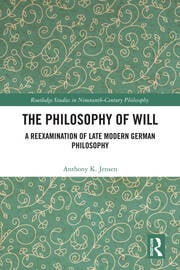
The philosophy of will : a reexamination of late modern German philosophy / Anthony K. Jensen.
ISBN
9781003593362 (electronic bk.)
1003593364 (electronic bk.)
9781040435809 (electronic bk. : PDF)
1040435807 (electronic bk. : PDF)
9781040435816 (electronic bk. : EPUB)
1040435815 (electronic bk. : EPUB)
9781032973517
103297351X
9781032973500
1032973501
1003593364 (electronic bk.)
9781040435809 (electronic bk. : PDF)
1040435807 (electronic bk. : PDF)
9781040435816 (electronic bk. : EPUB)
1040435815 (electronic bk. : EPUB)
9781032973517
103297351X
9781032973500
1032973501
Dil Kodu
İngilizce
Basım Bildirimi
1.
Yayın Bilgisi
New York, NY : Routledge, 2026.
Fiziksel Niteleme
1 online resource (volumes cm.)
Dizi
Routledge studies in nineteenth-century philosophy
Özet, vb.
"This book argues that the history of 19th-century German philosophy has neglected an important narrative: the philosophy of 'Will'. It aims to reconsider the history of late modern philosophy in terms of the interconnected philosophies of 'Will' of several notable thinkers: Goethe, Schelling, Schopenhauer, Eduard von Hartmann, Philipp Mainla??nder, Julius Bahnsen, and Nietzsche. The book has four goals. First, it shows that philosophy of Will really was a tradition, whose members were each working to put forward their notion of Will in self-consciously critical dialogue with the other members. Second, it shows that the 19th-century conception of Will is fundamentally different than the commonplace use of Will as a synonym for what propels intentional or motivated human agency. Each figure considers their specific formulation of Will to be in some sense the essence of reality. Will is dynamic growth in the natural world, expresses itself in artistic creativity, impresses on us our existential condition, is the lever of history, and is the wellspring from which moral values are drawn. Third, by focusing on these philosophers of Will, this book reveals a clearer interrelation between philosophy and the wider history of German intellectual culture than has typically been done. Will theory bears immediate connection to the day's reigning issues in politics, art, psychology, historiography, and the natural sciences. Finally, it aims to reexamine these thinkers' position in the history of philosophy. Some, like Goethe, have long been on the periphery of mainstream philosophy. Some, like Hartmann, Mainla??nder, and Bahnsen have long been forgotten. And some, like Nietzsche, have been characterized as more a radical innovator and less a critical respondent to the tradition of Will philosophy. A complex yet lively contribution to the history of philosophical ideas, The Philosophy of Will is essential reading for scholars and graduate students interested in German systematic metaphysics and more broadly anyone interested in the intellectual history of Late Modern philosophy, science, epistemology, aesthetics, politics, and ethics"-- Provided by publisher.
Konu
Will __ History __ 19th century.
Philosophy, German __ 19th century.
Philosophy, German __ 19th century.
Veritabanı
Eseri Alıntıla
Referansları kullanmadan önce gözden geçirmeniz ve varsa gerekli düzeltmeleri yapmanız önerilir.
Dijital Kaynak
MARC Görünümü
LEADER 04609cam a22006017i 4500
001 792304
003 TR_AnAIT
005 20260122235859
006 m o d
007 cr cnu---unuuu
008 250917s2026 nyu ob 001 0 eng d
020 |a9781003593362|q(electronic bk.)
020 |a1003593364|q(electronic bk.)
020 |a9781040435809|q(electronic bk. : PDF)
020 |a1040435807|q(electronic bk. : PDF)
020 |a9781040435816|q(electronic bk. : EPUB)
020 |a1040435815|q(electronic bk. : EPUB)
020 |z9781032973517
020 |z103297351X
020 |z9781032973500
020 |z1032973501
024 7 |a10.4324/9781003593362|2doi
035 |a(OCoLC)1536515555
035 |a(OCoLC-P)1536515555
040 |aOCoLC-P|beng|erda|epn|cOCoLC-P
041 |aeng
049 |aTürk Tarih Kurumu Kütüphanesi
050 4|aB849|b.J46 2026eb
072 7|aHPCD|2bicssc
072 7|aPHI016000|2bisacsh
072 7|aHPJ|2bicssc
072 7|aHBAH|2bicssc
072 7|aDSBF|2bicssc
072 7|aPHI046000|2bisacsh
082 04|a128.3|223/eng/20251021
100 1 |aJensen, Anthony K.,|d1978-|eauthor.|4aut|4http://id.loc.gov/vocabulary/relators/aut|1https://id.oclc.org/worldcat/entity/E39PBJmxRWFdMX3Dh4YRbhyyBP
245 14|aThe philosophy of will :|ba reexamination of late modern German philosophy /|cAnthony K. Jensen.
250 |a1.
264 1|aNew York, NY :|bRoutledge,|c2026.
300 |a1 online resource (volumes cm.)
334 |asingle unit|bmono|0http://id.loc.gov/vocabulary/issuance/mono
336 |atext|btxt|2rdacontent
337 |acomputer|bc|2rdamedia
338 |aonline resource|bcr|2rdacarrier
353 |abibliography|bbibliography|0http://id.loc.gov/vocabulary/msupplcont/bibliography
353 |aindex|bindex|0http://id.loc.gov/vocabulary/msupplcont/index
490 0 |aRoutledge studies in nineteenth-century philosophy
520 |a"This book argues that the history of 19th-century German philosophy has neglected an important narrative: the philosophy of 'Will'. It aims to reconsider the history of late modern philosophy in terms of the interconnected philosophies of 'Will' of several notable thinkers: Goethe, Schelling, Schopenhauer, Eduard von Hartmann, Philipp Mainla??nder, Julius Bahnsen, and Nietzsche. The book has four goals. First, it shows that philosophy of Will really was a tradition, whose members were each working to put forward their notion of Will in self-consciously critical dialogue with the other members. Second, it shows that the 19th-century conception of Will is fundamentally different than the commonplace use of Will as a synonym for what propels intentional or motivated human agency. Each figure considers their specific formulation of Will to be in some sense the essence of reality. Will is dynamic growth in the natural world, expresses itself in artistic creativity, impresses on us our existential condition, is the lever of history, and is the wellspring from which moral values are drawn. Third, by focusing on these philosophers of Will, this book reveals a clearer interrelation between philosophy and the wider history of German intellectual culture than has typically been done. Will theory bears immediate connection to the day's reigning issues in politics, art, psychology, historiography, and the natural sciences. Finally, it aims to reexamine these thinkers' position in the history of philosophy. Some, like Goethe, have long been on the periphery of mainstream philosophy. Some, like Hartmann, Mainla??nder, and Bahnsen have long been forgotten. And some, like Nietzsche, have been characterized as more a radical innovator and less a critical respondent to the tradition of Will philosophy. A complex yet lively contribution to the history of philosophical ideas, The Philosophy of Will is essential reading for scholars and graduate students interested in German systematic metaphysics and more broadly anyone interested in the intellectual history of Late Modern philosophy, science, epistemology, aesthetics, politics, and ethics"-- Provided by publisher.
588 |aOCLC-licensed vendor bibliographic record.
600 00|aWill|xHistory|y19th century.
650 0|aPhilosophy, German|y19th century.
758 |1http://id.loc.gov/resources/instances/24207304
758 |4http://id.loc.gov/ontologies/bibframe/instanceOf|1http://id.loc.gov/resources/works/24207304
856 40|3Taylor & Francis|uhttps://www.taylorfrancis.com/books/9781003593362
856 42|3OCLC metadata license agreement|uhttp://www.oclc.org/content/dam/oclc/forms/terms/vbrl-201703.pdf
901 |aTaylor & Francis
001 792304
003 TR_AnAIT
005 20260122235859
006 m o d
007 cr cnu---unuuu
008 250917s2026 nyu ob 001 0 eng d
020 |a9781003593362|q(electronic bk.)
020 |a1003593364|q(electronic bk.)
020 |a9781040435809|q(electronic bk. : PDF)
020 |a1040435807|q(electronic bk. : PDF)
020 |a9781040435816|q(electronic bk. : EPUB)
020 |a1040435815|q(electronic bk. : EPUB)
020 |z9781032973517
020 |z103297351X
020 |z9781032973500
020 |z1032973501
024 7 |a10.4324/9781003593362|2doi
035 |a(OCoLC)1536515555
035 |a(OCoLC-P)1536515555
040 |aOCoLC-P|beng|erda|epn|cOCoLC-P
041 |aeng
049 |aTürk Tarih Kurumu Kütüphanesi
050 4|aB849|b.J46 2026eb
072 7|aHPCD|2bicssc
072 7|aPHI016000|2bisacsh
072 7|aHPJ|2bicssc
072 7|aHBAH|2bicssc
072 7|aDSBF|2bicssc
072 7|aPHI046000|2bisacsh
082 04|a128.3|223/eng/20251021
100 1 |aJensen, Anthony K.,|d1978-|eauthor.|4aut|4http://id.loc.gov/vocabulary/relators/aut|1https://id.oclc.org/worldcat/entity/E39PBJmxRWFdMX3Dh4YRbhyyBP
245 14|aThe philosophy of will :|ba reexamination of late modern German philosophy /|cAnthony K. Jensen.
250 |a1.
264 1|aNew York, NY :|bRoutledge,|c2026.
300 |a1 online resource (volumes cm.)
334 |asingle unit|bmono|0http://id.loc.gov/vocabulary/issuance/mono
336 |atext|btxt|2rdacontent
337 |acomputer|bc|2rdamedia
338 |aonline resource|bcr|2rdacarrier
353 |abibliography|bbibliography|0http://id.loc.gov/vocabulary/msupplcont/bibliography
353 |aindex|bindex|0http://id.loc.gov/vocabulary/msupplcont/index
490 0 |aRoutledge studies in nineteenth-century philosophy
520 |a"This book argues that the history of 19th-century German philosophy has neglected an important narrative: the philosophy of 'Will'. It aims to reconsider the history of late modern philosophy in terms of the interconnected philosophies of 'Will' of several notable thinkers: Goethe, Schelling, Schopenhauer, Eduard von Hartmann, Philipp Mainla??nder, Julius Bahnsen, and Nietzsche. The book has four goals. First, it shows that philosophy of Will really was a tradition, whose members were each working to put forward their notion of Will in self-consciously critical dialogue with the other members. Second, it shows that the 19th-century conception of Will is fundamentally different than the commonplace use of Will as a synonym for what propels intentional or motivated human agency. Each figure considers their specific formulation of Will to be in some sense the essence of reality. Will is dynamic growth in the natural world, expresses itself in artistic creativity, impresses on us our existential condition, is the lever of history, and is the wellspring from which moral values are drawn. Third, by focusing on these philosophers of Will, this book reveals a clearer interrelation between philosophy and the wider history of German intellectual culture than has typically been done. Will theory bears immediate connection to the day's reigning issues in politics, art, psychology, historiography, and the natural sciences. Finally, it aims to reexamine these thinkers' position in the history of philosophy. Some, like Goethe, have long been on the periphery of mainstream philosophy. Some, like Hartmann, Mainla??nder, and Bahnsen have long been forgotten. And some, like Nietzsche, have been characterized as more a radical innovator and less a critical respondent to the tradition of Will philosophy. A complex yet lively contribution to the history of philosophical ideas, The Philosophy of Will is essential reading for scholars and graduate students interested in German systematic metaphysics and more broadly anyone interested in the intellectual history of Late Modern philosophy, science, epistemology, aesthetics, politics, and ethics"-- Provided by publisher.
588 |aOCLC-licensed vendor bibliographic record.
600 00|aWill|xHistory|y19th century.
650 0|aPhilosophy, German|y19th century.
758 |1http://id.loc.gov/resources/instances/24207304
758 |4http://id.loc.gov/ontologies/bibframe/instanceOf|1http://id.loc.gov/resources/works/24207304
856 40|3Taylor & Francis|uhttps://www.taylorfrancis.com/books/9781003593362
856 42|3OCLC metadata license agreement|uhttp://www.oclc.org/content/dam/oclc/forms/terms/vbrl-201703.pdf
901 |aTaylor & Francis
Materyaller
Depodan talep edilen materyal sadece kütüphane içerisinde kullanılmaktadır.
Materyal dışarıya ödünç verilmemektedir.
Materyal dışarıya ödünç verilmemektedir.
