LEADER 03638cam a2200325Ii 4500
001 792764
003 TR_AnAIT
005 20260123000629
008 180706s2018 enk o 000 0 eng d
020 |a9781351061421|q(e-book : PDF)
020 |z9781138709201|q(hardback)
024 7 |a10.4324/9781351061421 |2doi
035 |a(OCoLC)1022753194
040 |aFlBoTFG|cFlBoTFG|erda
041 |aeng
049 |aTürk Tarih Kurumu Kütüphanesi
050 4|aBL1138.27|b.E97 2018
082 04|a294.5923|bE967
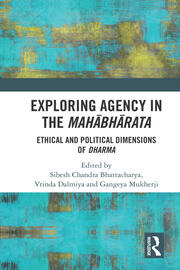
245 00|aExploring Agency in the Mahabharata :|bEthical and Political Dimensions of Dharma /|cedited by Sibesh Chandra Bhattacharya, Vrinda Dalmiya and Gangeya Mukherji.
250 |aFirst edition.
264 1|aLondon :|bRoutledge,|c2018.
300 |a1 online resource (272 pages)
336 |atext|2rdacontent
337 |acomputer|2rdamedia
338 |aonline resource|2rdacarrier
505 00|tchapter Introduction -- |tTo Do /|rVrinda Dalmiya -- |tpart I Action -- |tchapter 1 Mah?bh?rata. Itih?sa. Agency /|rSibesh Chandra Bhattacharya -- |tchapter 2 In Search of Genuine Agency -- |tA Review of Action, Freedom and Karma in the Mah?bh?rata /|rAmita Chatterjee -- |tchapter 3 The Theory of Karma in the Mah?bh?rata /|rChristopher G. Framarin -- |tchapter 4 Karmayoga and the Vexed Moral Agent /|rArti Dhand -- |tpart II Actor -- |tchapter 5 Complexities in the Agency for Violence -- |tA Look at the Mah?bh?rata /|rGangeya Mukherji -- |tchapter 6 Irresolution and Agency -- |tThe Case of Yudhi??hira /|rShirshendu Chakrabarti -- |tchapter 7 Can the Subhuman Speak or Act? -- |tAgency of Sagacious Serpents, Benevolent Birds, Rational Rodents, and a Mocking Mongoose in the Mah?bh?rata /|rArindam Chakrabarti -- |tchapter 8 Textual–Sexual Transitions -- |tThe Reification of Women in the Mah?bh?rata /|rUma Chakravarti -- |tchapter 9 Ekalavya and the Possibility of Learning /|rSundar Sarukkai -- |tpart III Epic Agency and Retellings -- |tchapter 10 Tagore’s Readings of the Mah?bh?rata /|rSudipta Kaviraj -- |tchapter 11 Answerability Between Lived Life and Living Text -- |tChronotopicity in Finding Agency in the Mah?bh?rata /|rLakshmi Bandlamudi -- |tchapter 12 Dro?a in the Ekalavya Episode in S?ral? Mah?bh?rata /|rB. N. Patnaik.
520 |a"The Mahabharata, one of the major epics of India, is a sourcebook complete by itself as well as an open text constantly under construction. This volume looks at transactions between its modern discourses and ancient vocabulary. Located amid conversations between these two conceptual worlds, the volume grapples with the epic's problematisation of dharma or righteousness, and consequently, of the ideal person and the good life through a cluster of issues surrounding the concept of agency and action. Drawing on several interdisciplinary approaches, the essays reflect on a range of issues in the Mahabharata, including those of duty, motivation, freedom, selfhood, choice, autonomy, and justice, both in the context of philosophical debates and their ethical and political ramifications for contemporary times. This book will be of interest to scholars and researchers engaged with philosophy, literature, religion, history, politics, culture, gender, South Asian studies, and Indology. It will also appeal to the general reader interested in South Asian epics and the Mahabharata. "--Provided by publisher.
630 00|aMahabharata|xCriticism, interpretation, etc.
650 0|aDharma.
700 1 |aBhattacharya, Sibesh Chandra,|eeditor.
700 1 |aDalmiya, Vrinda,|eeditor.
700 1 |aMukherji, Gangeya,|eeditor.
776 08|iPrint version:|z9781138709201
856 40|uhttps://www.taylorfrancis.com/books/9781351061421|zClick here to view.
901 |aTaylor & Francis