

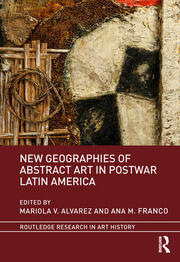
New Geographies of Abstract Art in Postwar Latin America
ISBN
9781351062138
1351062131
9781351062121
1351062123
9781351062114
1351062115
9781351062145
135106214X
1138480762
9781138480766
9781138480766 (hbk.)
1351062131
9781351062121
1351062123
9781351062114
1351062115
9781351062145
135106214X
1138480762
9781138480766
9781138480766 (hbk.)
Dil Kodu
İngilizce
Yazar
Fiziksel Niteleme
1 online resource (269 pages)
Dizi
Routledge Research in Art History Ser.
Genel Not
Chapter 10: Public 'Lifescapes': Gonzalo Fonseca's Designs for Life and Play (1964-1969)
İçindekiler Notu
New Geographies of Abstract Art in Postwar Latin America- Front Cover; New Geographies of Abstract Art in Postwar Latin America; Title Page; Coprright Page; Dedication; Contents; List of Plates; List of Figures; Acknowledgements; Introduction; Gestural Abstractions; New Visions of Geometric Abstraction; Nuestra América: Abstraction between Latin America and the United States; Abstraction and the Avant-Garde; Notes; PART I: Gestural Abstractions; Chapter 1: Informalism between Surrealism and Concrete Art: Aldo Pellegrini and the Promotion of Modern Art in Buenos Aires during the 1950s
The Reformulation of the Scenario for Concrete Art and the Introduction of the Poetics of Surrealism in the Early 1950sArte Nuevo and the Emergence of the Informalist Scene; The 1950s as the Turning Point of the Twentieth Century; Notes; Bibliography; Chapter 2: Calligraphic Abstraction and Postwar Brazilian Informalist Painting; Calligraphic Abstraction in Brazil; Informalism and Tachism in Brazil; Conclusion; Notes; Bibliography; Chapter 3: The Painting Devoured: El Techo de la Ballena and the Destruction of Venezuelan Informalism; Politicizing Informalism; Killing Informalism; Notes
González's Conception of a Cosmic ArtGonzález, Mentor to the Costa Rican Avant-Garde; Toward a Greater Minimalism: Cybernetics and Phi; Notes; Bibliography; Chapter 7: Beyond Abstraction: The Work of Vicente Rojo, Kazuya Sakai and Manuel Felguérez during the 1970s; Vicente Rojo's Negaciones (Negations); Kazuya Sakai's Ondulaciones (Loops); Manuel Felguérez's El espacio múltiple/La máquina estética (The Multiple Space/The Aesthetic Machine); Conclusion: Mexican Geometrism and New Artistic Practices of the 1970s; Notes; Bibliography
PART III: Nuestra América: Abstraction between Latin America and the United StatesChapter 8: Andean Abstraction as Displayed at the Organization of American States; Notes; Bibliography; Chapter 9: The Politics of Abstraction in Colombian Art during the Cold War; The Politics of Apolitical Art; The Ideology of Modernization in the Cold War: The Alliance for Progress in Colombia; Modernization and Progress: Eduardo Ramírez Villamizar's El Dorado; Poverty and Underdevelopment: Wiedemann's Assemblages; Conclusion; Notes; Bibliography
The Reformulation of the Scenario for Concrete Art and the Introduction of the Poetics of Surrealism in the Early 1950sArte Nuevo and the Emergence of the Informalist Scene; The 1950s as the Turning Point of the Twentieth Century; Notes; Bibliography; Chapter 2: Calligraphic Abstraction and Postwar Brazilian Informalist Painting; Calligraphic Abstraction in Brazil; Informalism and Tachism in Brazil; Conclusion; Notes; Bibliography; Chapter 3: The Painting Devoured: El Techo de la Ballena and the Destruction of Venezuelan Informalism; Politicizing Informalism; Killing Informalism; Notes
González's Conception of a Cosmic ArtGonzález, Mentor to the Costa Rican Avant-Garde; Toward a Greater Minimalism: Cybernetics and Phi; Notes; Bibliography; Chapter 7: Beyond Abstraction: The Work of Vicente Rojo, Kazuya Sakai and Manuel Felguérez during the 1970s; Vicente Rojo's Negaciones (Negations); Kazuya Sakai's Ondulaciones (Loops); Manuel Felguérez's El espacio múltiple/La máquina estética (The Multiple Space/The Aesthetic Machine); Conclusion: Mexican Geometrism and New Artistic Practices of the 1970s; Notes; Bibliography
PART III: Nuestra América: Abstraction between Latin America and the United StatesChapter 8: Andean Abstraction as Displayed at the Organization of American States; Notes; Bibliography; Chapter 9: The Politics of Abstraction in Colombian Art during the Cold War; The Politics of Apolitical Art; The Ideology of Modernization in the Cold War: The Alliance for Progress in Colombia; Modernization and Progress: Eduardo Ramírez Villamizar's El Dorado; Poverty and Underdevelopment: Wiedemann's Assemblages; Conclusion; Notes; Bibliography
Özet, vb.
This edited volume examines the history of abstract art across Latin America after 1945. This form of art grew in popularity across the Americas in the postwar period, often serving to affirm a sense of being modern and the right of Latin America to assume the leading role Europe had played before World War II. Latin American artists practiced gestural and geometric abstraction, though the history of art has favored the latter. Recent scholarship, for instance, has focused on geometric abstraction from Argentina, Brazil, and Venezuela. The book aims to expand the map and consider this phenomenon as it developed in neglected regions such as Central America and the Andes, investigatinghow this style came to stand in for Latin American contemporary art.
Konu
Art, Abstract __ Latin America.
Art, Latin American __ 20th century.
Art, Abstract.
Art, Latin American.
ART __ History __ Modern (late 19th Century to 1945) __ bisacsh
ART __ History __ Contemporary (1945- ) __ bisacsh
Andean region. __ bisacsh
Argentina. __ bisacsh
abstract art. __ bisacsh
art and politics. __ bisacsh
art history. __ bisacsh
Brazil. __ bisacsh
Central America. __ bisacsh
Cold War. __ bisacsh
Colombia. __ bisacsh
Costa Rica. __ bisacsh
Cuba. __ bisacsh
calligraphy. __ bisacsh
communism. __ bisacsh
contemporary art. __ bisacsh
democracy. __ bisacsh
geometric abstraction. __ bisacsh
global art history. __ bisacsh
Informalism. __ bisacsh
indigenous art. __ bisacsh
Latin America. __ bisacsh
Latin American studies. __ bisacsh
Mexico. __ bisacsh
modern art. __ bisacsh
postwar art. __ bisacsh
South America. __ bisacsh
the Andes. __ bisacsh
the Caribbean. __ bisacsh
visual studies. __ bisacsh
World War II. __ bisacsh
Art, Latin American __ 20th century.
Art, Abstract.
Art, Latin American.
ART __ History __ Modern (late 19th Century to 1945) __ bisacsh
ART __ History __ Contemporary (1945- ) __ bisacsh
Andean region. __ bisacsh
Argentina. __ bisacsh
abstract art. __ bisacsh
art and politics. __ bisacsh
art history. __ bisacsh
Brazil. __ bisacsh
Central America. __ bisacsh
Cold War. __ bisacsh
Colombia. __ bisacsh
Costa Rica. __ bisacsh
Cuba. __ bisacsh
calligraphy. __ bisacsh
communism. __ bisacsh
contemporary art. __ bisacsh
democracy. __ bisacsh
geometric abstraction. __ bisacsh
global art history. __ bisacsh
Informalism. __ bisacsh
indigenous art. __ bisacsh
Latin America. __ bisacsh
Latin American studies. __ bisacsh
Mexico. __ bisacsh
modern art. __ bisacsh
postwar art. __ bisacsh
South America. __ bisacsh
the Andes. __ bisacsh
the Caribbean. __ bisacsh
visual studies. __ bisacsh
World War II. __ bisacsh
Diğer Yazarlar
Veritabanı
Eseri Alıntıla
Referansları kullanmadan önce gözden geçirmeniz ve varsa gerekli düzeltmeleri yapmanız önerilir.
Dijital Kaynak
MARC Görünümü
LEADER 06265cam a2200973Mu 4500
001 792765
003 TR_AnAIT
005 20260123000630
006 m o d
007 cr cnu---unuuu
008 181020s2018 xx ob 000 0 eng d
020 |a9781351062138
020 |a1351062131
020 |a9781351062121
020 |a1351062123
020 |a9781351062114
020 |a1351062115
020 |a9781351062145
020 |a135106214X
020 |a1138480762
020 |a9781138480766
020 |z9781138480766|q(hbk.)
024 7 |a10.4324/9781351062145|2doi
035 |a(OCoLC)1057687248|z(OCoLC)1110584912
035 |a(OCoLC-P)1057687248
040 |aOCoLC-P|beng|epn|cOCoLC-P
041 |aeng
049 |aTürk Tarih Kurumu Kütüphanesi
050 4|aN6502.57.A37
082 04|a709.04052
100 1 |aAlvarez, Mariola V.
245 10|aNew Geographies of Abstract Art in Postwar Latin America
260 |aMilton :|bRoutledge,|c2018.
300 |a1 online resource (269 pages)
336 |atext|btxt|2rdacontent
336 |astill image|bsti|2rdacontent
337 |acomputer|bc|2rdamedia
338 |aonline resource|bcr|2rdacarrier
490 1 |aRoutledge Research in Art History Ser.
500 |aChapter 10: Public 'Lifescapes': Gonzalo Fonseca's Designs for Life and Play (1964-1969)
505 0 |aNew Geographies of Abstract Art in Postwar Latin America- Front Cover; New Geographies of Abstract Art in Postwar Latin America; Title Page; Coprright Page; Dedication; Contents; List of Plates; List of Figures; Acknowledgements; Introduction; Gestural Abstractions; New Visions of Geometric Abstraction; Nuestra América: Abstraction between Latin America and the United States; Abstraction and the Avant-Garde; Notes; PART I: Gestural Abstractions; Chapter 1: Informalism between Surrealism and Concrete Art: Aldo Pellegrini and the Promotion of Modern Art in Buenos Aires during the 1950s
505 8 |aThe Reformulation of the Scenario for Concrete Art and the Introduction of the Poetics of Surrealism in the Early 1950sArte Nuevo and the Emergence of the Informalist Scene; The 1950s as the Turning Point of the Twentieth Century; Notes; Bibliography; Chapter 2: Calligraphic Abstraction and Postwar Brazilian Informalist Painting; Calligraphic Abstraction in Brazil; Informalism and Tachism in Brazil; Conclusion; Notes; Bibliography; Chapter 3: The Painting Devoured: El Techo de la Ballena and the Destruction of Venezuelan Informalism; Politicizing Informalism; Killing Informalism; Notes
505 8 |aGonzález's Conception of a Cosmic ArtGonzález, Mentor to the Costa Rican Avant-Garde; Toward a Greater Minimalism: Cybernetics and Phi; Notes; Bibliography; Chapter 7: Beyond Abstraction: The Work of Vicente Rojo, Kazuya Sakai and Manuel Felguérez during the 1970s; Vicente Rojo's Negaciones (Negations); Kazuya Sakai's Ondulaciones (Loops); Manuel Felguérez's El espacio múltiple/La máquina estética (The Multiple Space/The Aesthetic Machine); Conclusion: Mexican Geometrism and New Artistic Practices of the 1970s; Notes; Bibliography
505 8 |aPART III: Nuestra América: Abstraction between Latin America and the United StatesChapter 8: Andean Abstraction as Displayed at the Organization of American States; Notes; Bibliography; Chapter 9: The Politics of Abstraction in Colombian Art during the Cold War; The Politics of Apolitical Art; The Ideology of Modernization in the Cold War: The Alliance for Progress in Colombia; Modernization and Progress: Eduardo Ramírez Villamizar's El Dorado; Poverty and Underdevelopment: Wiedemann's Assemblages; Conclusion; Notes; Bibliography
520 3 |aThis edited volume examines the history of abstract art across Latin America after 1945. This form of art grew in popularity across the Americas in the postwar period, often serving to affirm a sense of being modern and the right of Latin America to assume the leading role Europe had played before World War II. Latin American artists practiced gestural and geometric abstraction, though the history of art has favored the latter. Recent scholarship, for instance, has focused on geometric abstraction from Argentina, Brazil, and Venezuela. The book aims to expand the map and consider this phenomenon as it developed in neglected regions such as Central America and the Andes, investigatinghow this style came to stand in for Latin American contemporary art.
588 |aOCLC-licensed vendor bibliographic record.
650 0|aArt, Abstract|zLatin America.
650 0|aArt, Latin American|y20th century.
650 0|aArt, Abstract.
650 0|aArt, Latin American.
650 7|aART|xHistory|xModern (late 19th Century to 1945)|2bisacsh
650 7|aART|xHistory|xContemporary (1945- )|2bisacsh
650 7|aAndean region.|2bisacsh
650 7|aArgentina.|2bisacsh
650 7|aabstract art.|2bisacsh
650 7|aart and politics.|2bisacsh
650 7|aart history.|2bisacsh
650 7|aBrazil.|2bisacsh
650 7|aCentral America.|2bisacsh
650 7|aCold War.|2bisacsh
650 7|aColombia.|2bisacsh
650 7|aCosta Rica.|2bisacsh
650 7|aCuba.|2bisacsh
650 7|acalligraphy.|2bisacsh
650 7|acommunism.|2bisacsh
650 7|acontemporary art.|2bisacsh
650 7|ademocracy.|2bisacsh
650 7|ageometric abstraction.|2bisacsh
650 7|aglobal art history.|2bisacsh
650 7|aInformalism.|2bisacsh
650 7|aindigenous art.|2bisacsh
650 7|aLatin America.|2bisacsh
650 7|aLatin American studies.|2bisacsh
650 7|aMexico.|2bisacsh
650 7|amodern art.|2bisacsh
650 7|apostwar art.|2bisacsh
650 7|aSouth America.|2bisacsh
650 7|athe Andes.|2bisacsh
650 7|athe Caribbean.|2bisacsh
650 7|avisual studies.|2bisacsh
650 7|aWorld War II.|2bisacsh
700 1 |aFranco, Ana M.
856 40|3Taylor & Francis|uhttps://www.taylorfrancis.com/books/e/9781351062138
856 40|3Taylor & Francis|uhttps://www.taylorfrancis.com/books/9781351062145
856 42|3OCLC metadata license agreement|uhttp://www.oclc.org/content/dam/oclc/forms/terms/vbrl-201703.pdf
901 |aTaylor & Francis
938 |aTaylor & Francis|bTAFR|n9781351062145
001 792765
003 TR_AnAIT
005 20260123000630
006 m o d
007 cr cnu---unuuu
008 181020s2018 xx ob 000 0 eng d
020 |a9781351062138
020 |a1351062131
020 |a9781351062121
020 |a1351062123
020 |a9781351062114
020 |a1351062115
020 |a9781351062145
020 |a135106214X
020 |a1138480762
020 |a9781138480766
020 |z9781138480766|q(hbk.)
024 7 |a10.4324/9781351062145|2doi
035 |a(OCoLC)1057687248|z(OCoLC)1110584912
035 |a(OCoLC-P)1057687248
040 |aOCoLC-P|beng|epn|cOCoLC-P
041 |aeng
049 |aTürk Tarih Kurumu Kütüphanesi
050 4|aN6502.57.A37
082 04|a709.04052
100 1 |aAlvarez, Mariola V.
245 10|aNew Geographies of Abstract Art in Postwar Latin America
260 |aMilton :|bRoutledge,|c2018.
300 |a1 online resource (269 pages)
336 |atext|btxt|2rdacontent
336 |astill image|bsti|2rdacontent
337 |acomputer|bc|2rdamedia
338 |aonline resource|bcr|2rdacarrier
490 1 |aRoutledge Research in Art History Ser.
500 |aChapter 10: Public 'Lifescapes': Gonzalo Fonseca's Designs for Life and Play (1964-1969)
505 0 |aNew Geographies of Abstract Art in Postwar Latin America- Front Cover; New Geographies of Abstract Art in Postwar Latin America; Title Page; Coprright Page; Dedication; Contents; List of Plates; List of Figures; Acknowledgements; Introduction; Gestural Abstractions; New Visions of Geometric Abstraction; Nuestra América: Abstraction between Latin America and the United States; Abstraction and the Avant-Garde; Notes; PART I: Gestural Abstractions; Chapter 1: Informalism between Surrealism and Concrete Art: Aldo Pellegrini and the Promotion of Modern Art in Buenos Aires during the 1950s
505 8 |aThe Reformulation of the Scenario for Concrete Art and the Introduction of the Poetics of Surrealism in the Early 1950sArte Nuevo and the Emergence of the Informalist Scene; The 1950s as the Turning Point of the Twentieth Century; Notes; Bibliography; Chapter 2: Calligraphic Abstraction and Postwar Brazilian Informalist Painting; Calligraphic Abstraction in Brazil; Informalism and Tachism in Brazil; Conclusion; Notes; Bibliography; Chapter 3: The Painting Devoured: El Techo de la Ballena and the Destruction of Venezuelan Informalism; Politicizing Informalism; Killing Informalism; Notes
505 8 |aGonzález's Conception of a Cosmic ArtGonzález, Mentor to the Costa Rican Avant-Garde; Toward a Greater Minimalism: Cybernetics and Phi; Notes; Bibliography; Chapter 7: Beyond Abstraction: The Work of Vicente Rojo, Kazuya Sakai and Manuel Felguérez during the 1970s; Vicente Rojo's Negaciones (Negations); Kazuya Sakai's Ondulaciones (Loops); Manuel Felguérez's El espacio múltiple/La máquina estética (The Multiple Space/The Aesthetic Machine); Conclusion: Mexican Geometrism and New Artistic Practices of the 1970s; Notes; Bibliography
505 8 |aPART III: Nuestra América: Abstraction between Latin America and the United StatesChapter 8: Andean Abstraction as Displayed at the Organization of American States; Notes; Bibliography; Chapter 9: The Politics of Abstraction in Colombian Art during the Cold War; The Politics of Apolitical Art; The Ideology of Modernization in the Cold War: The Alliance for Progress in Colombia; Modernization and Progress: Eduardo Ramírez Villamizar's El Dorado; Poverty and Underdevelopment: Wiedemann's Assemblages; Conclusion; Notes; Bibliography
520 3 |aThis edited volume examines the history of abstract art across Latin America after 1945. This form of art grew in popularity across the Americas in the postwar period, often serving to affirm a sense of being modern and the right of Latin America to assume the leading role Europe had played before World War II. Latin American artists practiced gestural and geometric abstraction, though the history of art has favored the latter. Recent scholarship, for instance, has focused on geometric abstraction from Argentina, Brazil, and Venezuela. The book aims to expand the map and consider this phenomenon as it developed in neglected regions such as Central America and the Andes, investigatinghow this style came to stand in for Latin American contemporary art.
588 |aOCLC-licensed vendor bibliographic record.
650 0|aArt, Abstract|zLatin America.
650 0|aArt, Latin American|y20th century.
650 0|aArt, Abstract.
650 0|aArt, Latin American.
650 7|aART|xHistory|xModern (late 19th Century to 1945)|2bisacsh
650 7|aART|xHistory|xContemporary (1945- )|2bisacsh
650 7|aAndean region.|2bisacsh
650 7|aArgentina.|2bisacsh
650 7|aabstract art.|2bisacsh
650 7|aart and politics.|2bisacsh
650 7|aart history.|2bisacsh
650 7|aBrazil.|2bisacsh
650 7|aCentral America.|2bisacsh
650 7|aCold War.|2bisacsh
650 7|aColombia.|2bisacsh
650 7|aCosta Rica.|2bisacsh
650 7|aCuba.|2bisacsh
650 7|acalligraphy.|2bisacsh
650 7|acommunism.|2bisacsh
650 7|acontemporary art.|2bisacsh
650 7|ademocracy.|2bisacsh
650 7|ageometric abstraction.|2bisacsh
650 7|aglobal art history.|2bisacsh
650 7|aInformalism.|2bisacsh
650 7|aindigenous art.|2bisacsh
650 7|aLatin America.|2bisacsh
650 7|aLatin American studies.|2bisacsh
650 7|aMexico.|2bisacsh
650 7|amodern art.|2bisacsh
650 7|apostwar art.|2bisacsh
650 7|aSouth America.|2bisacsh
650 7|athe Andes.|2bisacsh
650 7|athe Caribbean.|2bisacsh
650 7|avisual studies.|2bisacsh
650 7|aWorld War II.|2bisacsh
700 1 |aFranco, Ana M.
856 40|3Taylor & Francis|uhttps://www.taylorfrancis.com/books/e/9781351062138
856 40|3Taylor & Francis|uhttps://www.taylorfrancis.com/books/9781351062145
856 42|3OCLC metadata license agreement|uhttp://www.oclc.org/content/dam/oclc/forms/terms/vbrl-201703.pdf
901 |aTaylor & Francis
938 |aTaylor & Francis|bTAFR|n9781351062145
Materyaller
Depodan talep edilen materyal sadece kütüphane içerisinde kullanılmaktadır.
Materyal dışarıya ödünç verilmemektedir.
Materyal dışarıya ödünç verilmemektedir.
