

The lower limbs in Jungian psychology : the girl with her big toe in her mouth / Inácio Cunha.
ISBN
0429465823
9780429879791 (Adobe Reader)
0429879792
9780429879784 ( ePub)
0429879784
9780429879777 (Mobipocket)
0429879776
9780429465826 (electronic bk.)
9781138610347 (hardback)
9780429879791 (Adobe Reader)
0429879792
9780429879784 ( ePub)
0429879784
9780429879777 (Mobipocket)
0429879776
9780429465826 (electronic bk.)
9781138610347 (hardback)
Dil Kodu
İngilizce
Yazar
Yayın Bilgisi
Abingdon, Oxon ; New York, NY : Routledge, 2019.
Fiziksel Niteleme
1 online resource
İçindekiler Notu
Cover; Praise; Half Title; Title Page; Copyright Page; Dedication; Table of Contents; Foreword; Acknowledgments; Introduction; Chapter 1: The lower limbs in the context of evolution; Note; Chapter 2: The occurrence of lower limbs in mythology; The lower limbs and cosmogony; The injury to the lower limb as opposition to progress; The mark on the lower limbs as an indicator of a transforming destiny; The marked lower limb as a sign of creativity; The projection of creative power onto the lower limbs; Notes; Chapter 3: The one-footedness; Notes; Chapter 4: An image materialized
Tracking the statuetteThe universe of icons; Notes; Chapter 5: The Tapajoara statuette; The statuette and the Beyond; The statuette's religious body; Notes; Chapter 6: The statuette's foot; The issue of the toes; The statuette and the Uroborus; Notes; Chapter 7: Final considerations; Notes; Index
Tracking the statuetteThe universe of icons; Notes; Chapter 5: The Tapajoara statuette; The statuette and the Beyond; The statuette's religious body; Notes; Chapter 6: The statuette's foot; The issue of the toes; The statuette and the Uroborus; Notes; Chapter 7: Final considerations; Notes; Index
Özet, vb.
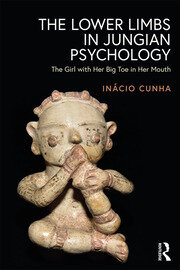
In The Lower Limbs in Jungian Psychology: The Girl with Her Big Toe in Her Mouth, Inaacio Cunha explores the motif of lower limbs by amplifying their symbolism from a wide range of source materials, including an intriguing statuette from prehistoric Brazilian culture. Taking a Jungian perspective, Cunha gathers and compares rich material from different historical, anthropological and mythological viewpoints, as well as from fetish, dreams, fairy tales and physical symptoms. Noticing how often the subject of legs and feet manifested in his analytical practice, not only as symptoms but also as dreams and fantasies, Cunha set out to deeply scrutinize our symbolic understanding of these body segments. By observing the lower limbs in the context of evolution and their occurrence in mythology, he proposes a parallel between the evolution in the manner of walking in different species and the development of consciousness. Cunha also surveys dreams relating to these body parts in multiple manifestations, as part of complexes, fantasies and fetishes, and through the description of physical marks, spots and injuries. Mythological icons, such as Ulysses, Achilles, Oedipus, Jacob and others, are utilized to amplify the meaning of the feet and legs as far as their psychological meaning is concerned. The book also explores the lower limbs as a sign of creativity and projection of creative power, before moving to investigate a clay icon from a pre-Columbian indigenous tribe, the Tapajao: an ancient statuette of a girl with her left big toe in her mouth. Cunha analyzes the relevance of this image as an archetypal pattern, occurring not only in his clinical work-- in clients' dreams and physical and emotional issues related to their lower limbs--but also in other cultures' depictions of the left toe in stories and images. The utilization of material gathered in his extensive research from multiple sources characterizes the method of amplification, advocated in analytical psychology as a possibility to extract symbolic meaning of a given image. The Lower Limbs in Jungian Psychology: The Girl with Her Big Toe in Her Mouth is an original overview of a rarely examined part of analytical psychology and symbolism, and will have great appeal to Jungian analysts, analytical psychologists, and psychotherapists interested in somatic, psychosomatic and symbolical understanding. It will also be of interest to academics and students of Jungian studies, psychotherapy, mythology, anthropology, history and symbolism.
Konu
Consciousness.
Leg __ Psychophysiology.
Leg __ Symbolic aspects.
Mind and body.
Jungian psychology.
PSYCHOLOGY / Reference __ bisacsh
PSYCHOLOGY / Movements / Jungian __ bisacsh
Leg __ Psychophysiology.
Leg __ Symbolic aspects.
Mind and body.
Jungian psychology.
PSYCHOLOGY / Reference __ bisacsh
PSYCHOLOGY / Movements / Jungian __ bisacsh
Veritabanı
Eseri Alıntıla
Referansları kullanmadan önce gözden geçirmeniz ve varsa gerekli düzeltmeleri yapmanız önerilir.
Dijital Kaynak
MARC Görünümü
LEADER 05192cam a22005418i 4500
001 793006
003 TR_AnAIT
005 20260123001026
006 m o d
007 cr |||||||||||
008 181001s2019 enk o 000 0 eng
020 |a0429465823
020 |a9780429879791|q(Adobe Reader)
020 |a0429879792
020 |a9780429879784|q( ePub)
020 |a0429879784
020 |a9780429879777|q(Mobipocket)
020 |a0429879776
020 |a9780429465826|q(electronic bk.)
020 |z9781138610347 (hardback)
035 |a(OCoLC)1055569255
035 |a(OCoLC-P)1055569255
040 |aOCoLC-P|beng|erda|cOCoLC-P
041 |aeng
049 |aTürk Tarih Kurumu Kütüphanesi
050 10|aBF311
072 7|aPSY|x029000|2bisacsh
072 7|aPSY|x045060|2bisacsh
072 7|aJMAF|2bicssc
082 00|a150.19/54|223
100 1 |aCunha, Inácio,|d1962-|eauthor.
245 14|aThe lower limbs in Jungian psychology :|bthe girl with her big toe in her mouth /|cInácio Cunha.
264 1|aAbingdon, Oxon ;|aNew York, NY :|bRoutledge,|c2019.
300 |a1 online resource
336 |atext|btxt|2rdacontent
337 |acomputer|bn|2rdamedia
338 |aonline resource|bnc|2rdacarrier
505 0 |aCover; Praise; Half Title; Title Page; Copyright Page; Dedication; Table of Contents; Foreword; Acknowledgments; Introduction; Chapter 1: The lower limbs in the context of evolution; Note; Chapter 2: The occurrence of lower limbs in mythology; The lower limbs and cosmogony; The injury to the lower limb as opposition to progress; The mark on the lower limbs as an indicator of a transforming destiny; The marked lower limb as a sign of creativity; The projection of creative power onto the lower limbs; Notes; Chapter 3: The one-footedness; Notes; Chapter 4: An image materialized
505 8 |aTracking the statuetteThe universe of icons; Notes; Chapter 5: The Tapajoara statuette; The statuette and the Beyond; The statuette's religious body; Notes; Chapter 6: The statuette's foot; The issue of the toes; The statuette and the Uroborus; Notes; Chapter 7: Final considerations; Notes; Index
520 |aIn The Lower Limbs in Jungian Psychology: The Girl with Her Big Toe in Her Mouth, Inaacio Cunha explores the motif of lower limbs by amplifying their symbolism from a wide range of source materials, including an intriguing statuette from prehistoric Brazilian culture. Taking a Jungian perspective, Cunha gathers and compares rich material from different historical, anthropological and mythological viewpoints, as well as from fetish, dreams, fairy tales and physical symptoms. Noticing how often the subject of legs and feet manifested in his analytical practice, not only as symptoms but also as dreams and fantasies, Cunha set out to deeply scrutinize our symbolic understanding of these body segments. By observing the lower limbs in the context of evolution and their occurrence in mythology, he proposes a parallel between the evolution in the manner of walking in different species and the development of consciousness. Cunha also surveys dreams relating to these body parts in multiple manifestations, as part of complexes, fantasies and fetishes, and through the description of physical marks, spots and injuries. Mythological icons, such as Ulysses, Achilles, Oedipus, Jacob and others, are utilized to amplify the meaning of the feet and legs as far as their psychological meaning is concerned. The book also explores the lower limbs as a sign of creativity and projection of creative power, before moving to investigate a clay icon from a pre-Columbian indigenous tribe, the Tapajao: an ancient statuette of a girl with her left big toe in her mouth. Cunha analyzes the relevance of this image as an archetypal pattern, occurring not only in his clinical work-- in clients' dreams and physical and emotional issues related to their lower limbs--but also in other cultures' depictions of the left toe in stories and images. The utilization of material gathered in his extensive research from multiple sources characterizes the method of amplification, advocated in analytical psychology as a possibility to extract symbolic meaning of a given image. The Lower Limbs in Jungian Psychology: The Girl with Her Big Toe in Her Mouth is an original overview of a rarely examined part of analytical psychology and symbolism, and will have great appeal to Jungian analysts, analytical psychologists, and psychotherapists interested in somatic, psychosomatic and symbolical understanding. It will also be of interest to academics and students of Jungian studies, psychotherapy, mythology, anthropology, history and symbolism.
588 |aOCLC-licensed vendor bibliographic record.
650 0|aConsciousness.
650 0|aLeg|xPsychophysiology.
650 0|aLeg|xSymbolic aspects.
650 0|aMind and body.
650 0|aJungian psychology.
650 7|aPSYCHOLOGY / Reference|2bisacsh
650 7|aPSYCHOLOGY / Movements / Jungian|2bisacsh
856 40|3Taylor & Francis|uhttps://www.taylorfrancis.com/books/9780429465826
856 42|3OCLC metadata license agreement|uhttp://www.oclc.org/content/dam/oclc/forms/terms/vbrl-201703.pdf
901 |aTaylor & Francis
001 793006
003 TR_AnAIT
005 20260123001026
006 m o d
007 cr |||||||||||
008 181001s2019 enk o 000 0 eng
020 |a0429465823
020 |a9780429879791|q(Adobe Reader)
020 |a0429879792
020 |a9780429879784|q( ePub)
020 |a0429879784
020 |a9780429879777|q(Mobipocket)
020 |a0429879776
020 |a9780429465826|q(electronic bk.)
020 |z9781138610347 (hardback)
035 |a(OCoLC)1055569255
035 |a(OCoLC-P)1055569255
040 |aOCoLC-P|beng|erda|cOCoLC-P
041 |aeng
049 |aTürk Tarih Kurumu Kütüphanesi
050 10|aBF311
072 7|aPSY|x029000|2bisacsh
072 7|aPSY|x045060|2bisacsh
072 7|aJMAF|2bicssc
082 00|a150.19/54|223
100 1 |aCunha, Inácio,|d1962-|eauthor.
245 14|aThe lower limbs in Jungian psychology :|bthe girl with her big toe in her mouth /|cInácio Cunha.
264 1|aAbingdon, Oxon ;|aNew York, NY :|bRoutledge,|c2019.
300 |a1 online resource
336 |atext|btxt|2rdacontent
337 |acomputer|bn|2rdamedia
338 |aonline resource|bnc|2rdacarrier
505 0 |aCover; Praise; Half Title; Title Page; Copyright Page; Dedication; Table of Contents; Foreword; Acknowledgments; Introduction; Chapter 1: The lower limbs in the context of evolution; Note; Chapter 2: The occurrence of lower limbs in mythology; The lower limbs and cosmogony; The injury to the lower limb as opposition to progress; The mark on the lower limbs as an indicator of a transforming destiny; The marked lower limb as a sign of creativity; The projection of creative power onto the lower limbs; Notes; Chapter 3: The one-footedness; Notes; Chapter 4: An image materialized
505 8 |aTracking the statuetteThe universe of icons; Notes; Chapter 5: The Tapajoara statuette; The statuette and the Beyond; The statuette's religious body; Notes; Chapter 6: The statuette's foot; The issue of the toes; The statuette and the Uroborus; Notes; Chapter 7: Final considerations; Notes; Index
520 |aIn The Lower Limbs in Jungian Psychology: The Girl with Her Big Toe in Her Mouth, Inaacio Cunha explores the motif of lower limbs by amplifying their symbolism from a wide range of source materials, including an intriguing statuette from prehistoric Brazilian culture. Taking a Jungian perspective, Cunha gathers and compares rich material from different historical, anthropological and mythological viewpoints, as well as from fetish, dreams, fairy tales and physical symptoms. Noticing how often the subject of legs and feet manifested in his analytical practice, not only as symptoms but also as dreams and fantasies, Cunha set out to deeply scrutinize our symbolic understanding of these body segments. By observing the lower limbs in the context of evolution and their occurrence in mythology, he proposes a parallel between the evolution in the manner of walking in different species and the development of consciousness. Cunha also surveys dreams relating to these body parts in multiple manifestations, as part of complexes, fantasies and fetishes, and through the description of physical marks, spots and injuries. Mythological icons, such as Ulysses, Achilles, Oedipus, Jacob and others, are utilized to amplify the meaning of the feet and legs as far as their psychological meaning is concerned. The book also explores the lower limbs as a sign of creativity and projection of creative power, before moving to investigate a clay icon from a pre-Columbian indigenous tribe, the Tapajao: an ancient statuette of a girl with her left big toe in her mouth. Cunha analyzes the relevance of this image as an archetypal pattern, occurring not only in his clinical work-- in clients' dreams and physical and emotional issues related to their lower limbs--but also in other cultures' depictions of the left toe in stories and images. The utilization of material gathered in his extensive research from multiple sources characterizes the method of amplification, advocated in analytical psychology as a possibility to extract symbolic meaning of a given image. The Lower Limbs in Jungian Psychology: The Girl with Her Big Toe in Her Mouth is an original overview of a rarely examined part of analytical psychology and symbolism, and will have great appeal to Jungian analysts, analytical psychologists, and psychotherapists interested in somatic, psychosomatic and symbolical understanding. It will also be of interest to academics and students of Jungian studies, psychotherapy, mythology, anthropology, history and symbolism.
588 |aOCLC-licensed vendor bibliographic record.
650 0|aConsciousness.
650 0|aLeg|xPsychophysiology.
650 0|aLeg|xSymbolic aspects.
650 0|aMind and body.
650 0|aJungian psychology.
650 7|aPSYCHOLOGY / Reference|2bisacsh
650 7|aPSYCHOLOGY / Movements / Jungian|2bisacsh
856 40|3Taylor & Francis|uhttps://www.taylorfrancis.com/books/9780429465826
856 42|3OCLC metadata license agreement|uhttp://www.oclc.org/content/dam/oclc/forms/terms/vbrl-201703.pdf
901 |aTaylor & Francis
Materyaller
Depodan talep edilen materyal sadece kütüphane içerisinde kullanılmaktadır.
Materyal dışarıya ödünç verilmemektedir.
Materyal dışarıya ödünç verilmemektedir.
