

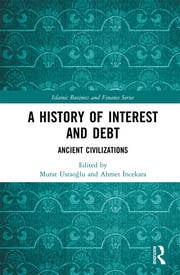
A history of interest and debt : ancient civilizations / edited by Murat Ustaoğlu and Ahmet İncekara.
ISBN
9781003041214 electronic book
1003041213 electronic book
9781000089936 electronic book
1000089932 electronic book
9781000089868 electronic book
100008986X electronic book
9781000089790 electronic book
1000089797 electronic book
9780367484880 hardcover
1003041213 electronic book
9781000089936 electronic book
1000089932 electronic book
9781000089868 electronic book
100008986X electronic book
9781000089790 electronic book
1000089797 electronic book
9780367484880 hardcover
Dil Kodu
İngilizce
Yayın Bilgisi
Abingdon, Oxon ; New York, NY : Routledge, 2020.
©2020
©2020
Fiziksel Niteleme
1 online resource (xvii, 134 pages).
Dizi
Islamic business and finance
Özet, vb.
"With the spread of interest-based transactions, major problems such as inequality, poverty and debt-based slavery have emerged. Those who practiced professions such as usury have, despite the negative connotations attributed to them, contributed extensively to the construction of the conventional financial system in the global economy, suggesting that the core concepts in this practice need to be analyzed in greater depth and from a historical perspective. This book analyses the evolution of interest-bearing debt transactions from Ancient times to the era of Abrahamic religions. In modern times, interest is strictly prohibited by Islam but this book demonstrates that it is a practice that has been condemned and legally and morally prohibited in other civilizations, long before Islam outlawed it. Exploring the roots of this prohibition and how interest has been justified as a viable practice in economic and financial transactions, the book offers deep insight into the current nature of finance and economics, and the distinctive features of Islamic finance in particular and enables researchers to further delve into a review of interest-free financing models. Islamic finance, or alternative financial methods have become extremely popular particularly in the aftermath of global financial crises, suggesting that they will attract further interest in the future as well. The book is primarily aimed at undergraduate and graduate students but, as it avoids the use of technical jargon, it also speaks to a general readership. It will appeal to those who have an interest in financial history, particularly the history of borrowing practices as well"-- Provided by publisher.
Konu
Interest rates __ History.
Debt __ History.
Consumer credit __ History.
Interest (Islamic law)
BUSINESS & ECONOMICS / Economic History __ bisacsh
HISTORY / Middle East / General __ bisacsh
Debt __ History.
Consumer credit __ History.
Interest (Islamic law)
BUSINESS & ECONOMICS / Economic History __ bisacsh
HISTORY / Middle East / General __ bisacsh
Diğer Yazarlar
Veritabanı
