LEADER 03268cam a2200529M 4500
001 793153
003 TR_AnAIT
005 20260123001251
006 m o d
007 cr |n|||||||||
008 210801s2021 xx o 0|| 0 eng d
020 |a9781000470734|q(electronic bk.)
020 |a1000470733|q(electronic bk.)
020 |a9781000470765|qelectronic book
020 |a1000470768|qelectronic book
020 |a9781003188766|q(ebook)
020 |a1003188761
020 |z1032037369
020 |z9781032037363
024 7 |a10.4324/9781003188766|2doi
035 |a(OCoLC)1262436412
035 |a(OCoLC-P)1262436412
040 |aOCoLC-P|beng|cOCoLC-P
041 |aeng
049 |aTürk Tarih Kurumu Kütüphanesi
050 4|aHB251
072 7|aBUS|x069030|2bisacsh
072 7|aBUS|x023000|2bisacsh
072 7|aBUS|x039000|2bisacsh
072 7|aKCP|2bicssc
082 04|a330.1/6|223
100 1 |aAtkinson, Benedict.
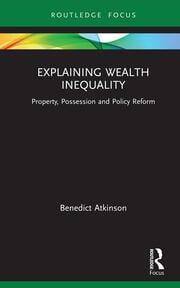
245 10|aEXPLAINING WEALTH INEQUALITY|h[electronic resource] :|bproperty, possession and policy reform.
260 |a[S.l.] :|bROUTLEDGE,|c2021.
300 |a1 online resource.
336 |atext|btxt|2rdacontent
337 |acomputer|bc|2rdamedia
338 |aonline resource|bcr|2rdacarrier
490 0 |aRoutledge frontiers of political economy
520 |aThis book discusses the origins of wealth inequality and explains how societies can reform to avoid the catastrophe of inequality-induced social breakdown. It develops a theoretical and practical understanding of the principles behind the concept of ownership and property, complete with historical examples. It proposes a new research perspective focusing on how the problem of wealth concentration is ameliorated by cooperative and collaborative initiatives to enhance the public sphere, without derogating from the private. The book is based on research data compiled from taxation and household data to explore the theme that wealth inequality is made inevitable by possessive behaviour expressed in possessive language. It shows that while inequality is inescapable, we can adopt policies where resources are more efficiently and broadly distributed for public benefit. Such policies are directed towards encouraging voluntary, as opposed to compulsory, wealth transfer to achieve public good. The primary market for the book consists of academics and students from the fields of economics, including growth and developmental economics, law, sociology, history, business and international trade. It also provides a practical resource for government policy analysts wanting to develop a more detailed understanding of the role played by wealth inequality in a range of social problems.
588 |aOCLC-licensed vendor bibliographic record.
650 0|aWealth|xMoral and ethical aspects.
650 0|aIncome distribution.
650 0|aEquality|xEconomic aspects.
650 7|aBUSINESS & ECONOMICS / Economics / Theory|2bisacsh
650 7|aBUSINESS & ECONOMICS / Economic History|2bisacsh
650 7|aBUSINESS & ECONOMICS / Economics / Macroeconomics|2bisacsh
856 40|3Taylor & Francis|uhttps://www.taylorfrancis.com/books/9781003188766
856 42|3OCLC metadata license agreement|uhttp://www.oclc.org/content/dam/oclc/forms/terms/vbrl-201703.pdf
901 |aTaylor & Francis