LEADER 03668cam a22005297i 4500
001 793208
003 TR_AnAIT
005 20260123001341
006 m o d
007 cr cnu---unuuu
008 221206s2022 xx o 0|0 0 eng d
020 |a9781003294085|q(electronic bk.)
020 |a1003294081|q(electronic bk.)
020 |a9781000807066|q(electronic bk. : EPUB)
020 |a1000807061|q(electronic bk. : EPUB)
020 |a9781000807035|q(electronic bk. : PDF)
020 |a1000807037|q(electronic bk. : PDF)
020 |z1032277866
020 |z9781032277868
024 7 |a10.4324/9781003294085|2doi
035 |a(OCoLC)1353293071
035 |a(OCoLC-P)1353293071
040 |aOCoLC-P|beng|erda|epn|cOCoLC-P
041 |aeng
049 |aTürk Tarih Kurumu Kütüphanesi
050 4|aRA441.3
072 7|aNAT|x024000|2bisacsh
072 7|aMED|x078000|2bisacsh
072 7|aMED|x116000|2bisacsh
072 7|aV|2bicssc
082 04|a362.1042|223
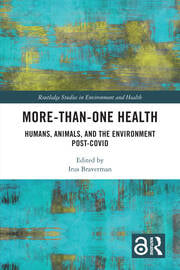
245 00|aMORE-THAN-ONE HEALTH :|bhumans, animals, and the environment post-covid.
264 1|a[Place of publication not identified] :|bROUTLEDGE,|c2022.
300 |a1 online resource (1 volume) :|billustrations (black and white).
336 |atext|btxt|2rdacontent
337 |acomputer|bc|2rdamedia
338 |aonline resource|bcr|2rdacarrier
490 0 |aRoutledge studies in environment and health
520 |aThis edited volume examines the complex entanglements of human, animal, and environmental health. It assembles leading scholars from the humanities, social sciences, natural sciences, and medicine to explore existing One Health approaches and to envision a mode of health that is both more-than-human and also more sensitive to, and explicit about, colonial and neocolonial legacies--urging the decolonization of One Health. While acknowledging the importance of One Health, the volume at the same time critically examines its roots, highlighting the structural biases and power dynamics still at play in this global health regime. The volume is distinctive in its geographic breadth. It travels from Inuit sled dogs in the Arctic to rock hyraxes in Jerusalem, from black-faced spoonbills in Taiwan to street dogs in India, from spittle-bugs on Mallorca's almond trees to jellyfish management at sea, and from rabies in sub-Saharan Africa to massive culling practices in South Korea. Together, the contributors call for One Health to move toward a more transparent, plural, and just perception of health that takes seriously the role of more-than-humans and of nonscientific knowledges, pointing to ways in which One Health can--and should--be decolonized. This volume will appeal to researchers and practitioners in the medical humanities, posthumanities, environmental humanities, science and technology studies, animal studies, multispecies ethnography, anthrozoology, and critical public health. The Open Access version of chapter 1, available at http://www.taylorfrancis.com/books/e/9781003294085, has been made available under a Creative Commons Attribution-Non Commercial-No Derivatives 4.0 license. Funded by the Wellcome Trust.
588 |aOCLC-licensed vendor bibliographic record.
650 0|aWorld health.
650 0|aEnvironmental health.
650 0|aGlobalization|xHealth aspects.
650 0|aCommunicable diseases|xPrevention.
650 7|aNATURE / Essays|2bisacsh
650 7|aMEDICAL / Public Health|2bisacsh
700 1 |aBraverman, Irus,|d1970-|eeditor.
856 40|3Taylor & Francis|uhttps://www.taylorfrancis.com/books/9781003294085
856 42|3OCLC metadata license agreement|uhttp://www.oclc.org/content/dam/oclc/forms/terms/vbrl-201703.pdf
901 |aTaylor & Francis