

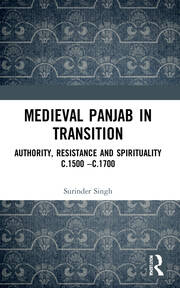
Medieval Panjab in transition : authority, resistance and spirituality c.1500-c.1700 / Surinder Singh.
ISBN
9781003302452 (ebook)
1003302459
9781000609448 (electronic bk. : EPUB)
1000609448 (electronic bk. : EPUB)
9781000609424 (electronic bk. : PDF)
1000609421 (electronic bk. : PDF)
9781032298702 (hardback)
9781032298795 (paperback)
1003302459
9781000609448 (electronic bk. : EPUB)
1000609448 (electronic bk. : EPUB)
9781000609424 (electronic bk. : PDF)
1000609421 (electronic bk. : PDF)
9781032298702 (hardback)
9781032298795 (paperback)
Dil Kodu
İngilizce
Yazar
Yayın Bilgisi
New York : Routledge, 2022.
Fiziksel Niteleme
1 online resource
İçindekiler Notu
Acknowledgements -- Abbreviations -- Map -- Introduction -- State formations and tribal resistance -- Consolidation of the Mughal state -- Renunciation, monasticism and patronage -- Continuity and change in Sufi lineages -- Spiritual discourses in poetic idiom -- Uplift of depressed castes among the Sikhs -- Love, suffering and death -- Material and cultural life in the city of Lahore -- The Mughal quest for supremacy -- Conclusion -- Appendices -- Bibliography -- Index.
Özet, vb.
"This book reconstructs the historical transition in the undivided Panjab during the sixteenth and seventeenth centuries. It shows that the assertion of Mughal and Afghan suzerainty faced sustained resistance from local elements, particularly the autonomous tribes and hill chiefdoms. In central plains, Dulla Bhatti mobilized the toilers of his ancestral domain and, leading a relentless fight against the Mughal oppression, became an abiding symbol of resistance in the collective memory. The multicultural legacy of Panjab evolved through diverse strands of spirituality. The jogis, wedded to monastic discipline, supernatural abilities and land grants, gained acceptance through their exertions for social betterment. The Sabiri and Qadiri silsilas channelized mystical urges towards the technique of prime recitation. The popular verses of Shah Husain, Baba Lal and Sultan Bahu proposed a loving relation with God. The legendary lovers, perishing in the struggles against patriarchal forces, promoted a merger of dissent with spirituality. In the city of Lahore, the material pursuits and cultural life were visible in a mosaic of descriptions, including episodes of social tension. The book understands the upliftment of depressed castes as a defining feature of Sikhism. It places egalitarian concern of the Sikh Gurus alongside the anti-caste protests of Namdev, Kabir and Ravidas. Owing to scriptural authority and congregational equality, the members of depressed castes attained a numerical majority in the Sikh warrior bands that shook the foundations of the Mughal state. The work relies on evidence from the Persian chronicles, Mughal newsletters, Sufi writings, Sikh literature and Punjabi folklore"-- Provided by publisher.
Konu
Dullā Bhaṭṭī, __ active 16th century.
Caste __ India __ Punjab __ History.
HISTORY / Asia / India & South Asia __ bisacsh
HISTORY / Medieval __ bisacsh
HISTORY / Military / General __ bisacsh
Punjab (India) __ History.
Punjab (India) __ Politics and government.
Punjab (India) __ Religion.
Punjab (India) __ Religious life and customs.
Punjab (India) __ History __ Autonomy and independence movements.
Mogul Empire __ History.
Caste __ India __ Punjab __ History.
HISTORY / Asia / India & South Asia __ bisacsh
HISTORY / Medieval __ bisacsh
HISTORY / Military / General __ bisacsh
Punjab (India) __ History.
Punjab (India) __ Politics and government.
Punjab (India) __ Religion.
Punjab (India) __ Religious life and customs.
Punjab (India) __ History __ Autonomy and independence movements.
Mogul Empire __ History.
Veritabanı
Eseri Alıntıla
Referansları kullanmadan önce gözden geçirmeniz ve varsa gerekli düzeltmeleri yapmanız önerilir.
Dijital Kaynak
MARC Görünümü
LEADER 04403cam a22005898i 4500
001 793221
003 TR_AnAIT
005 20260123001353
006 m o d
007 cr |||||||||||
008 220113s2022 nyu ob 001 0 eng
020 |a9781003302452|q(ebook)
020 |a1003302459
020 |a9781000609448|q(electronic bk. : EPUB)
020 |a1000609448|q(electronic bk. : EPUB)
020 |a9781000609424|q(electronic bk. : PDF)
020 |a1000609421|q(electronic bk. : PDF)
020 |z9781032298702|q(hardback)
020 |z9781032298795|q(paperback)
024 7 |a10.4324/9781003302452|2doi
035 |a(OCoLC)1295617434
035 |a(OCoLC-P)1295617434
040 |aOCoLC-P|beng|erda|cOCoLC-P
041 |aeng
049 |aTürk Tarih Kurumu Kütüphanesi
050 00|aDS485.P87
072 7|aHIS|x017000|2bisacsh
072 7|aHIS|x037010|2bisacsh
072 7|aHIS|x027000|2bisacsh
072 7|aHBLC1|2bicssc
082 00|a954/.552|223/eng/20220204
100 0 |aSurinder Singh,|cProf.,|eauthor.
245 10|aMedieval Panjab in transition :|bauthority, resistance and spirituality c.1500-c.1700 /|cSurinder Singh.
264 1|aNew York :|bRoutledge,|c2022.
300 |a1 online resource
336 |atext|btxt|2rdacontent
337 |acomputer|bc|2rdamedia
338 |aonline resource|bcr|2rdacarrier
505 0 |aAcknowledgements -- Abbreviations -- Map -- Introduction -- State formations and tribal resistance -- Consolidation of the Mughal state -- Renunciation, monasticism and patronage -- Continuity and change in Sufi lineages -- Spiritual discourses in poetic idiom -- Uplift of depressed castes among the Sikhs -- Love, suffering and death -- Material and cultural life in the city of Lahore -- The Mughal quest for supremacy -- Conclusion -- Appendices -- Bibliography -- Index.
520 |a"This book reconstructs the historical transition in the undivided Panjab during the sixteenth and seventeenth centuries. It shows that the assertion of Mughal and Afghan suzerainty faced sustained resistance from local elements, particularly the autonomous tribes and hill chiefdoms. In central plains, Dulla Bhatti mobilized the toilers of his ancestral domain and, leading a relentless fight against the Mughal oppression, became an abiding symbol of resistance in the collective memory. The multicultural legacy of Panjab evolved through diverse strands of spirituality. The jogis, wedded to monastic discipline, supernatural abilities and land grants, gained acceptance through their exertions for social betterment. The Sabiri and Qadiri silsilas channelized mystical urges towards the technique of prime recitation. The popular verses of Shah Husain, Baba Lal and Sultan Bahu proposed a loving relation with God. The legendary lovers, perishing in the struggles against patriarchal forces, promoted a merger of dissent with spirituality. In the city of Lahore, the material pursuits and cultural life were visible in a mosaic of descriptions, including episodes of social tension. The book understands the upliftment of depressed castes as a defining feature of Sikhism. It places egalitarian concern of the Sikh Gurus alongside the anti-caste protests of Namdev, Kabir and Ravidas. Owing to scriptural authority and congregational equality, the members of depressed castes attained a numerical majority in the Sikh warrior bands that shook the foundations of the Mughal state. The work relies on evidence from the Persian chronicles, Mughal newsletters, Sufi writings, Sikh literature and Punjabi folklore"--|cProvided by publisher.
588 |aOCLC-licensed vendor bibliographic record.
600 00|aDullā Bhaṭṭī,|dactive 16th century.
650 0|aCaste|zIndia|zPunjab|xHistory.
650 7|aHISTORY / Asia / India & South Asia|2bisacsh
650 7|aHISTORY / Medieval|2bisacsh
650 7|aHISTORY / Military / General|2bisacsh
651 0|aPunjab (India)|xHistory.
651 0|aPunjab (India)|xPolitics and government.
651 0|aPunjab (India)|xReligion.
651 0|aPunjab (India)|xReligious life and customs.
651 0|aPunjab (India)|xHistory|xAutonomy and independence movements.
651 0|aMogul Empire|xHistory.
856 40|3Taylor & Francis|uhttps://www.taylorfrancis.com/books/9781003302452
856 42|3OCLC metadata license agreement|uhttp://www.oclc.org/content/dam/oclc/forms/terms/vbrl-201703.pdf
901 |aTaylor & Francis
001 793221
003 TR_AnAIT
005 20260123001353
006 m o d
007 cr |||||||||||
008 220113s2022 nyu ob 001 0 eng
020 |a9781003302452|q(ebook)
020 |a1003302459
020 |a9781000609448|q(electronic bk. : EPUB)
020 |a1000609448|q(electronic bk. : EPUB)
020 |a9781000609424|q(electronic bk. : PDF)
020 |a1000609421|q(electronic bk. : PDF)
020 |z9781032298702|q(hardback)
020 |z9781032298795|q(paperback)
024 7 |a10.4324/9781003302452|2doi
035 |a(OCoLC)1295617434
035 |a(OCoLC-P)1295617434
040 |aOCoLC-P|beng|erda|cOCoLC-P
041 |aeng
049 |aTürk Tarih Kurumu Kütüphanesi
050 00|aDS485.P87
072 7|aHIS|x017000|2bisacsh
072 7|aHIS|x037010|2bisacsh
072 7|aHIS|x027000|2bisacsh
072 7|aHBLC1|2bicssc
082 00|a954/.552|223/eng/20220204
100 0 |aSurinder Singh,|cProf.,|eauthor.
245 10|aMedieval Panjab in transition :|bauthority, resistance and spirituality c.1500-c.1700 /|cSurinder Singh.
264 1|aNew York :|bRoutledge,|c2022.
300 |a1 online resource
336 |atext|btxt|2rdacontent
337 |acomputer|bc|2rdamedia
338 |aonline resource|bcr|2rdacarrier
505 0 |aAcknowledgements -- Abbreviations -- Map -- Introduction -- State formations and tribal resistance -- Consolidation of the Mughal state -- Renunciation, monasticism and patronage -- Continuity and change in Sufi lineages -- Spiritual discourses in poetic idiom -- Uplift of depressed castes among the Sikhs -- Love, suffering and death -- Material and cultural life in the city of Lahore -- The Mughal quest for supremacy -- Conclusion -- Appendices -- Bibliography -- Index.
520 |a"This book reconstructs the historical transition in the undivided Panjab during the sixteenth and seventeenth centuries. It shows that the assertion of Mughal and Afghan suzerainty faced sustained resistance from local elements, particularly the autonomous tribes and hill chiefdoms. In central plains, Dulla Bhatti mobilized the toilers of his ancestral domain and, leading a relentless fight against the Mughal oppression, became an abiding symbol of resistance in the collective memory. The multicultural legacy of Panjab evolved through diverse strands of spirituality. The jogis, wedded to monastic discipline, supernatural abilities and land grants, gained acceptance through their exertions for social betterment. The Sabiri and Qadiri silsilas channelized mystical urges towards the technique of prime recitation. The popular verses of Shah Husain, Baba Lal and Sultan Bahu proposed a loving relation with God. The legendary lovers, perishing in the struggles against patriarchal forces, promoted a merger of dissent with spirituality. In the city of Lahore, the material pursuits and cultural life were visible in a mosaic of descriptions, including episodes of social tension. The book understands the upliftment of depressed castes as a defining feature of Sikhism. It places egalitarian concern of the Sikh Gurus alongside the anti-caste protests of Namdev, Kabir and Ravidas. Owing to scriptural authority and congregational equality, the members of depressed castes attained a numerical majority in the Sikh warrior bands that shook the foundations of the Mughal state. The work relies on evidence from the Persian chronicles, Mughal newsletters, Sufi writings, Sikh literature and Punjabi folklore"--|cProvided by publisher.
588 |aOCLC-licensed vendor bibliographic record.
600 00|aDullā Bhaṭṭī,|dactive 16th century.
650 0|aCaste|zIndia|zPunjab|xHistory.
650 7|aHISTORY / Asia / India & South Asia|2bisacsh
650 7|aHISTORY / Medieval|2bisacsh
650 7|aHISTORY / Military / General|2bisacsh
651 0|aPunjab (India)|xHistory.
651 0|aPunjab (India)|xPolitics and government.
651 0|aPunjab (India)|xReligion.
651 0|aPunjab (India)|xReligious life and customs.
651 0|aPunjab (India)|xHistory|xAutonomy and independence movements.
651 0|aMogul Empire|xHistory.
856 40|3Taylor & Francis|uhttps://www.taylorfrancis.com/books/9781003302452
856 42|3OCLC metadata license agreement|uhttp://www.oclc.org/content/dam/oclc/forms/terms/vbrl-201703.pdf
901 |aTaylor & Francis
Materyaller
Depodan talep edilen materyal sadece kütüphane içerisinde kullanılmaktadır.
Materyal dışarıya ödünç verilmemektedir.
Materyal dışarıya ödünç verilmemektedir.
