LEADER 03126cam a2200397Ii 4500
001 793749
003 TR_AnAIT
005 20260123002142
008 180706s2014 nyuab ob 001 0 eng d
020 |a9781315818207|q(e-book : PDF)
020 |a9781317815914|q(e-book: Mobi)
020 |a9781317815921|q(e-book: ePub)
020 |a9781317815938|q(e-book: PDF)
020 |z9780415592383|q(hardback)
020 |z9781138206076|q(paperback)
024 7 |a10.4324/9781315818207 |2doi
035 |a(OCoLC)881438104
040 |aFlBoTFG|cFlBoTFG|erda
041 |aeng
043 |aa-gs---
049 |aTürk Tarih Kurumu Kütüphanesi
050 4|aDK265.8.G4|bM337 2014
082 04|a947.58084|bM235
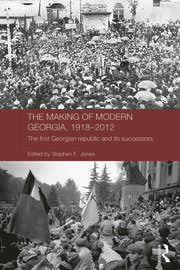
245 04|aThe making of modern Georgia, 1918-2012 :|bthe first Georgian republic and its successors /|cedited by Stephen F. Jones.
264 1|aNew York :|bRoutledge,|c2014.
300 |a1 online resource (xxviii, 363 pages)
336 |atext|2rdacontent
337 |acomputer|2rdamedia
338 |aonline resource|2rdacarrier
490 1 |aRoutledge contemporary Russia and Eastern Europe series ;|v52
505 0 |apt. 1. Good neighbors, bad neighbors -- part 2. Creating democracy, building states -- part 3. Home for whom? -- part 4. The power of the past.
520 |a"When most of Eastern Europe was struggling with dictatorships of one kind or another, the Democratic Republic of Georgia (1918-1921) established a constitution, a parliamentary system with national elections, an active opposition, and a free press. Like the Democratic Republic of Georgia in 1918, its successors emerged after 1991 from a bankrupt empire, and faced, yet again, the task of establishing a new economic, political and social system from scratch. In both 1918 and 1991, Georgia was confronted with a hostile Russia and followed a pro-Western and pro-democratic course. The top regional experts in this book explore the domestic and external parallels between the Georgian post-colonial governments of the early twentieth and twenty-first centuries. How did the inexperienced Georgian leaders in both eras deal with the challenge of secessionism, what were their state building strategies, and what did democracy mean to them? What did their electoral systems look like, why were their economic strategies so different, and how did they negotiate with the international community neighbouring threats. These are the central challenges of transitional governments around the world today. Georgia's experience over one hundred years suggests that both history and contemporary political analysis offer the best (and most interesting) explanation of the often ambivalent outcomes"--|cProvided by publisher.
651 0|aGeorgia (Republic)|xHistory|y1991-
651 0|aGeorgia (Republic)|xHistory|yRevolution, 1917-1921.
651 0|aGeorgia (Republic)|xPolitics and government|y1917-1991.
651 0|aGeorgia (Republic)|xPolitics and government|y1991-
700 1 |aJones, Stephen F.
776 08|iPrint version: |z9780415592383|w(DLC) 2013030514
830 0|aRoutledge contemporary Russia and Eastern Europe series ;|v52.
856 40|uhttps://www.taylorfrancis.com/books/9781315818207|zClick here to view.
901 |aTaylor & Francis