LEADER 04068cam a22005898i 4500
001 793756
003 TR_AnAIT
005 20260123002148
006 m o d
007 cr |||||||||||
008 241011s2025 enk ob 001 0 eng
020 |a9781003539100|q(ebook)
020 |a1003539106
020 |a9781040260562|q(electronic bk. : PDF)
020 |a104026056X|q(electronic bk. : PDF)
020 |a9781040260616|q(electronic bk. : EPUB)
020 |a1040260616|q(electronic bk. : EPUB)
020 |z9781032886893|q(hardback)
020 |z9781032886862|q(paperback)
024 7 |a10.4324/9781003539100|2doi
035 |a(OCoLC)1463561520
035 |a(OCoLC-P)1463561520
040 |aOCoLC-P|beng|erda|cOCoLC-P
041 |aeng
049 |aTürk Tarih Kurumu Kütüphanesi
050 00|aBS1235.52
072 7|aHIS|x002000|2bisacsh
072 7|aREL|x006090|2bisacsh
072 7|aREL|x006210|2bisacsh
072 7|aHBLA1|2bicssc
082 00|a222/.1106|223/eng/20241022
100 1 |aNaiweld, Ron,|eauthor.
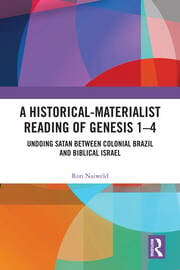
245 12|aA historical-materialist reading of Genesis 1-4 :|bundoing satan between Colonial Brazil and biblical Israel /|cRon Naiweld.
250 |a1.
264 1|aAbingdon, Oxon :|bRoutledge,|c2025.
300 |a1 online resource
336 |atext|btxt|2rdacontent
337 |acomputer|bc|2rdamedia
338 |aonline resource|bcr|2rdacarrier
520 |a"This book offers a historical-materialist reading of the opening chapters of the book of Genesis, in an attempt to revive their potential to engage people in truthful discussions about power and pleasure. For the past two millennia, biblical stories have been told and discussed in countless settings; whether one lives in Europe or in a country that was colonized by Europeans, the biblical symbolic universe remains present. This book offers a method to explore the social and political meanings of its most theological content, by visiting two historical settings in which biblical modes of expression intersected with the demands of an economic-political process: Jerusalem and its province during the Persian period (5th-4th centuries BCE), and Brazil of the early colonial period (16th century CE). Though distant in time and space, both were moments of comparable transformation - individuals with financial resources and military power arrived from the East to seize control over lands and means of production, subjugating the population to a distant king. By turning to these two historical settings, Naiweld examines how the narratives of Genesis resonated in these environments, how they were used to legitimize imperial power structures, and how they opened these structures to scrutiny. The volume is part of a larger trend of reading the Bible with a historical-materialist approach that allows us to grasp the power of its symbolic universe to inspire both utopia and barbarism, especially in colonial contexts. This book is suitable for students and scholars interested in the biblical symbolic universe and Jewish and Christian history. It is also of interest to those working on the history of Brazil, comparative literature, and the intersection of religion, economy, and politics"--|cProvided by publisher.
588 |aOCLC-licensed vendor bibliographic record.
610 20|aJesuits|xMissions|zBrazil|xHistory|y16th century.
630 00|aBible.|pGenesis, I-IV|xCriticism, interpretation, etc.
630 00|aBible|xPostcolonial criticism.
650 0|aSocial conflict in the Bible.
650 0|aPolitics in the Bible.
650 0|aJews|xHistory|y586 B.C.-70 A.D.
650 7|aHISTORY / Ancient / General|2bisacsh
650 7|aRELIGION / Bible / Criticism, Interpretation / Old Testament|2bisacsh
650 7|aRELIGION / Bible / Study / Old Testament|2bisacsh
651 0|aYehud (Persian province)|xHistory.
651 0|aBrazil|xHistory|y1548-1580.
856 40|3Taylor & Francis|uhttps://www.taylorfrancis.com/books/9781003539100
856 42|3OCLC metadata license agreement|uhttp://www.oclc.org/content/dam/oclc/forms/terms/vbrl-201703.pdf
901 |aTaylor & Francis