

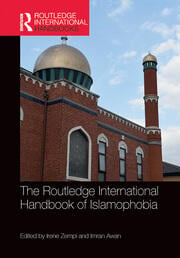
The Routledge international handbook of Islamophobia / [edited by] Irene Zempi and Imran Awan.
ISBN
9781351135535 (electronic bk.)
1351135538 (electronic bk.)
9781351135542 (PDF ebook)
1351135546
9781351135528 (Mobipocket ebook)
135113552X
9781351135559 (ebook)
1351135554
9780815353751
1351135538 (electronic bk.)
9781351135542 (PDF ebook)
1351135546
9781351135528 (Mobipocket ebook)
135113552X
9781351135559 (ebook)
1351135554
9780815353751
Dil Kodu
İngilizce
Yayın Bilgisi
London : Routledge, 2019.
Fiziksel Niteleme
1 online resource.
Dizi
Routledge international handbooks
İçindekiler Notu
Cover; Half Title; Title Page; Copyright Page; Table of Contents; Notes on contributors; Introduction; Definition of Islamophobia; Reference; PART I: Conceptualising Islamophobia; Chapter 1: The debate over the utility and precision of the term "Islamophobia"; Introduction; Identifying issues of clarity and content; A public problem with an academic solution?; The phenomenon versus the terminology; Moving forward; Notes; References; Chapter 2: Islamophobia as the racialisation of Muslims; Introduction; Conceiving Islamophobia; Muslims and racialisation; Religion and racialisation
Biological and cultural racismFraming racism discretely; Placing the role of religion; The impact of anxieties over terrorism; Conclusions; Acknowledgement; Notes; References; Chapter 3: Islamophobia as the hidden hand of structural and cultural racism; Introduction; British Muslims responses to Islamophobia; The hyper-normalisation of Islamophobia; The tragedies of symbolic and actual Islamophobic violence; Concluding thoughts; References; Chapter 4: A multidimensional model of understanding Islamophobia: a comparative practical analysis of the US, Canada, UK and France; Introduction
Typology of IslamophobiaMultilateral Model of Understanding Islamophobia; Domination Hate Model of Intercultural Relations; Background and methodology; Conclusion: Islamophobia/Islamoromia and macro change policy of the world; References; Chapter 5: Mapping and mainstreaming Islamophobia: between the illiberal and liberal; Introduction; Islamophobias: definitions and debates; Understanding Islamophobias as articulations; Illiberal Islamophobia; Liberal Islamophobia; Blurry lines, contradictions and functionality; Conclusion; Acknowledgement; Note; References
Chapter 6: The psychology of hate crime offenders who target Muslims: who could be a hate crime offender?Introduction; Influences of salient group identity; Motivations for hate crime offending; De-individuation processes and hate crime; Emergent norms and social representations; Mechanisms and processes of group identification; Psychological implications of being a victim of hate crime; Psychological factors in predisposition to commit hate crime; Role of psychological disorders; Conclusion; References
Chapter 7: 'Your pain is my pain': examining the community impacts of Islamophobic hate crimesIntroduction; Understanding the impacts of hate crime; Research design and sample; Experiences of Islamophobic hate crime; The impacts of Islamophobic hate crime; Behavioural impacts; Attitudes towards the criminal justice system; Conclusions; Notes; References; PART II: Patterns of Islamophobia through a European lens; Chapter 8: A historical perspective: secularism, 'white backlash' and Islamophobia in France; Introduction
Biological and cultural racismFraming racism discretely; Placing the role of religion; The impact of anxieties over terrorism; Conclusions; Acknowledgement; Notes; References; Chapter 3: Islamophobia as the hidden hand of structural and cultural racism; Introduction; British Muslims responses to Islamophobia; The hyper-normalisation of Islamophobia; The tragedies of symbolic and actual Islamophobic violence; Concluding thoughts; References; Chapter 4: A multidimensional model of understanding Islamophobia: a comparative practical analysis of the US, Canada, UK and France; Introduction
Typology of IslamophobiaMultilateral Model of Understanding Islamophobia; Domination Hate Model of Intercultural Relations; Background and methodology; Conclusion: Islamophobia/Islamoromia and macro change policy of the world; References; Chapter 5: Mapping and mainstreaming Islamophobia: between the illiberal and liberal; Introduction; Islamophobias: definitions and debates; Understanding Islamophobias as articulations; Illiberal Islamophobia; Liberal Islamophobia; Blurry lines, contradictions and functionality; Conclusion; Acknowledgement; Note; References
Chapter 6: The psychology of hate crime offenders who target Muslims: who could be a hate crime offender?Introduction; Influences of salient group identity; Motivations for hate crime offending; De-individuation processes and hate crime; Emergent norms and social representations; Mechanisms and processes of group identification; Psychological implications of being a victim of hate crime; Psychological factors in predisposition to commit hate crime; Role of psychological disorders; Conclusion; References
Chapter 7: 'Your pain is my pain': examining the community impacts of Islamophobic hate crimesIntroduction; Understanding the impacts of hate crime; Research design and sample; Experiences of Islamophobic hate crime; The impacts of Islamophobic hate crime; Behavioural impacts; Attitudes towards the criminal justice system; Conclusions; Notes; References; PART II: Patterns of Islamophobia through a European lens; Chapter 8: A historical perspective: secularism, 'white backlash' and Islamophobia in France; Introduction
Özet, vb.
Islamophobic hate crimes have increased significantly following the terrorist attacks of 9/11 and 7/7. More recently, the rhetoric surrounding Trump's election and presidency, Brexit, the rise of far-right groups and ISIS-inspired terrorist attacks worldwide have promoted a climate where Islamophobia and anti-Muslim sentiments have become 'legitimised'. The Routledge International Handbook of Islamophobia provides a comprehensive single-volume collection of key readings in Islamophobia. Consisting of 32 chapters accessibly written by scholars, policy makers and practitioners, it seeks to examine the nature, extent, implications of, and responses to Islamophobic hate crime both nationally and internationally. This volume will appeal to undergraduate and postgraduate students as well as postdoctoral researchers interested in fields such as Criminology, Victimology, Sociology, Social Policy, Religious Studies, Law and related Social Sciences subjects. It will also appeal to scholars, policy makers and practitioners working in and around the areas of Islamophobic hate crimes.
Konu
Islamophobia.
SOCIAL SCIENCE / Discrimination & Race Relations. __ bisacsh
SOCIAL SCIENCE / Minority Studies. __ bisacsh
RELIGION / Islam / General __ bisacsh
SOCIAL SCIENCE / Discrimination & Race Relations. __ bisacsh
SOCIAL SCIENCE / Minority Studies. __ bisacsh
RELIGION / Islam / General __ bisacsh
Diğer Yazarlar
Veritabanı
Eseri Alıntıla
Referansları kullanmadan önce gözden geçirmeniz ve varsa gerekli düzeltmeleri yapmanız önerilir.
Dijital Kaynak
MARC Görünümü
LEADER 05780cam a2200589Ii 4500
001 793803
003 TR_AnAIT
005 20260123002236
006 m o d
007 cr cnu|||unuuu
008 190215s2019 enk ob 001 0 eng d
020 |a9781351135535|q(electronic bk.)
020 |a1351135538|q(electronic bk.)
020 |a9781351135542|q(PDF ebook)
020 |a1351135546
020 |a9781351135528|q(Mobipocket ebook)
020 |a135113552X
020 |a9781351135559|q(ebook)
020 |a1351135554
020 |z9780815353751
024 8 |a10.4324/9781351135559|2doi
035 |a(OCoLC)1085890318
035 |a(OCoLC-P)1085890318
040 |aOCoLC-P|beng|erda|epn|cOCoLC-P
041 |aeng
049 |aTürk Tarih Kurumu Kütüphanesi
050 4|aBP52
072 7|aSOC|x031000|2bisacsh
072 7|aSOC|x020000|2bisacsh
072 7|aREL|x037000|2bisacsh
072 7|aREL|x116000|2bisacsh
072 7|aJKV|2bicssc
082 04|a305.6/97|223
245 04|aThe Routledge international handbook of Islamophobia /|c[edited by] Irene Zempi and Imran Awan.
264 1|aLondon :|bRoutledge,|c2019.
300 |a1 online resource.
336 |atext|btxt|2rdacontent
337 |acomputer|bc|2rdamedia
338 |aonline resource|bcr|2rdacarrier
490 1 |aRoutledge international handbooks
505 0 |aCover; Half Title; Title Page; Copyright Page; Table of Contents; Notes on contributors; Introduction; Definition of Islamophobia; Reference; PART I: Conceptualising Islamophobia; Chapter 1: The debate over the utility and precision of the term "Islamophobia"; Introduction; Identifying issues of clarity and content; A public problem with an academic solution?; The phenomenon versus the terminology; Moving forward; Notes; References; Chapter 2: Islamophobia as the racialisation of Muslims; Introduction; Conceiving Islamophobia; Muslims and racialisation; Religion and racialisation
505 8 |aBiological and cultural racismFraming racism discretely; Placing the role of religion; The impact of anxieties over terrorism; Conclusions; Acknowledgement; Notes; References; Chapter 3: Islamophobia as the hidden hand of structural and cultural racism; Introduction; British Muslims responses to Islamophobia; The hyper-normalisation of Islamophobia; The tragedies of symbolic and actual Islamophobic violence; Concluding thoughts; References; Chapter 4: A multidimensional model of understanding Islamophobia: a comparative practical analysis of the US, Canada, UK and France; Introduction
505 8 |aTypology of IslamophobiaMultilateral Model of Understanding Islamophobia; Domination Hate Model of Intercultural Relations; Background and methodology; Conclusion: Islamophobia/Islamoromia and macro change policy of the world; References; Chapter 5: Mapping and mainstreaming Islamophobia: between the illiberal and liberal; Introduction; Islamophobias: definitions and debates; Understanding Islamophobias as articulations; Illiberal Islamophobia; Liberal Islamophobia; Blurry lines, contradictions and functionality; Conclusion; Acknowledgement; Note; References
505 8 |aChapter 6: The psychology of hate crime offenders who target Muslims: who could be a hate crime offender?Introduction; Influences of salient group identity; Motivations for hate crime offending; De-individuation processes and hate crime; Emergent norms and social representations; Mechanisms and processes of group identification; Psychological implications of being a victim of hate crime; Psychological factors in predisposition to commit hate crime; Role of psychological disorders; Conclusion; References
505 8 |aChapter 7: 'Your pain is my pain': examining the community impacts of Islamophobic hate crimesIntroduction; Understanding the impacts of hate crime; Research design and sample; Experiences of Islamophobic hate crime; The impacts of Islamophobic hate crime; Behavioural impacts; Attitudes towards the criminal justice system; Conclusions; Notes; References; PART II: Patterns of Islamophobia through a European lens; Chapter 8: A historical perspective: secularism, 'white backlash' and Islamophobia in France; Introduction
520 |aIslamophobic hate crimes have increased significantly following the terrorist attacks of 9/11 and 7/7. More recently, the rhetoric surrounding Trump's election and presidency, Brexit, the rise of far-right groups and ISIS-inspired terrorist attacks worldwide have promoted a climate where Islamophobia and anti-Muslim sentiments have become 'legitimised'. The Routledge International Handbook of Islamophobia provides a comprehensive single-volume collection of key readings in Islamophobia. Consisting of 32 chapters accessibly written by scholars, policy makers and practitioners, it seeks to examine the nature, extent, implications of, and responses to Islamophobic hate crime both nationally and internationally. This volume will appeal to undergraduate and postgraduate students as well as postdoctoral researchers interested in fields such as Criminology, Victimology, Sociology, Social Policy, Religious Studies, Law and related Social Sciences subjects. It will also appeal to scholars, policy makers and practitioners working in and around the areas of Islamophobic hate crimes.
588 |aOCLC-licensed vendor bibliographic record.
650 0|aIslamophobia.
650 7|aSOCIAL SCIENCE / Discrimination & Race Relations.|2bisacsh
650 7|aSOCIAL SCIENCE / Minority Studies.|2bisacsh
650 7|aRELIGION / Islam / General|2bisacsh
700 1 |aZempi, Irene,|d1984-|eeditor.
856 40|3Taylor & Francis|uhttps://www.taylorfrancis.com/books/9781351135559
856 42|3OCLC metadata license agreement|uhttp://www.oclc.org/content/dam/oclc/forms/terms/vbrl-201703.pdf
901 |aTaylor & Francis
001 793803
003 TR_AnAIT
005 20260123002236
006 m o d
007 cr cnu|||unuuu
008 190215s2019 enk ob 001 0 eng d
020 |a9781351135535|q(electronic bk.)
020 |a1351135538|q(electronic bk.)
020 |a9781351135542|q(PDF ebook)
020 |a1351135546
020 |a9781351135528|q(Mobipocket ebook)
020 |a135113552X
020 |a9781351135559|q(ebook)
020 |a1351135554
020 |z9780815353751
024 8 |a10.4324/9781351135559|2doi
035 |a(OCoLC)1085890318
035 |a(OCoLC-P)1085890318
040 |aOCoLC-P|beng|erda|epn|cOCoLC-P
041 |aeng
049 |aTürk Tarih Kurumu Kütüphanesi
050 4|aBP52
072 7|aSOC|x031000|2bisacsh
072 7|aSOC|x020000|2bisacsh
072 7|aREL|x037000|2bisacsh
072 7|aREL|x116000|2bisacsh
072 7|aJKV|2bicssc
082 04|a305.6/97|223
245 04|aThe Routledge international handbook of Islamophobia /|c[edited by] Irene Zempi and Imran Awan.
264 1|aLondon :|bRoutledge,|c2019.
300 |a1 online resource.
336 |atext|btxt|2rdacontent
337 |acomputer|bc|2rdamedia
338 |aonline resource|bcr|2rdacarrier
490 1 |aRoutledge international handbooks
505 0 |aCover; Half Title; Title Page; Copyright Page; Table of Contents; Notes on contributors; Introduction; Definition of Islamophobia; Reference; PART I: Conceptualising Islamophobia; Chapter 1: The debate over the utility and precision of the term "Islamophobia"; Introduction; Identifying issues of clarity and content; A public problem with an academic solution?; The phenomenon versus the terminology; Moving forward; Notes; References; Chapter 2: Islamophobia as the racialisation of Muslims; Introduction; Conceiving Islamophobia; Muslims and racialisation; Religion and racialisation
505 8 |aBiological and cultural racismFraming racism discretely; Placing the role of religion; The impact of anxieties over terrorism; Conclusions; Acknowledgement; Notes; References; Chapter 3: Islamophobia as the hidden hand of structural and cultural racism; Introduction; British Muslims responses to Islamophobia; The hyper-normalisation of Islamophobia; The tragedies of symbolic and actual Islamophobic violence; Concluding thoughts; References; Chapter 4: A multidimensional model of understanding Islamophobia: a comparative practical analysis of the US, Canada, UK and France; Introduction
505 8 |aTypology of IslamophobiaMultilateral Model of Understanding Islamophobia; Domination Hate Model of Intercultural Relations; Background and methodology; Conclusion: Islamophobia/Islamoromia and macro change policy of the world; References; Chapter 5: Mapping and mainstreaming Islamophobia: between the illiberal and liberal; Introduction; Islamophobias: definitions and debates; Understanding Islamophobias as articulations; Illiberal Islamophobia; Liberal Islamophobia; Blurry lines, contradictions and functionality; Conclusion; Acknowledgement; Note; References
505 8 |aChapter 6: The psychology of hate crime offenders who target Muslims: who could be a hate crime offender?Introduction; Influences of salient group identity; Motivations for hate crime offending; De-individuation processes and hate crime; Emergent norms and social representations; Mechanisms and processes of group identification; Psychological implications of being a victim of hate crime; Psychological factors in predisposition to commit hate crime; Role of psychological disorders; Conclusion; References
505 8 |aChapter 7: 'Your pain is my pain': examining the community impacts of Islamophobic hate crimesIntroduction; Understanding the impacts of hate crime; Research design and sample; Experiences of Islamophobic hate crime; The impacts of Islamophobic hate crime; Behavioural impacts; Attitudes towards the criminal justice system; Conclusions; Notes; References; PART II: Patterns of Islamophobia through a European lens; Chapter 8: A historical perspective: secularism, 'white backlash' and Islamophobia in France; Introduction
520 |aIslamophobic hate crimes have increased significantly following the terrorist attacks of 9/11 and 7/7. More recently, the rhetoric surrounding Trump's election and presidency, Brexit, the rise of far-right groups and ISIS-inspired terrorist attacks worldwide have promoted a climate where Islamophobia and anti-Muslim sentiments have become 'legitimised'. The Routledge International Handbook of Islamophobia provides a comprehensive single-volume collection of key readings in Islamophobia. Consisting of 32 chapters accessibly written by scholars, policy makers and practitioners, it seeks to examine the nature, extent, implications of, and responses to Islamophobic hate crime both nationally and internationally. This volume will appeal to undergraduate and postgraduate students as well as postdoctoral researchers interested in fields such as Criminology, Victimology, Sociology, Social Policy, Religious Studies, Law and related Social Sciences subjects. It will also appeal to scholars, policy makers and practitioners working in and around the areas of Islamophobic hate crimes.
588 |aOCLC-licensed vendor bibliographic record.
650 0|aIslamophobia.
650 7|aSOCIAL SCIENCE / Discrimination & Race Relations.|2bisacsh
650 7|aSOCIAL SCIENCE / Minority Studies.|2bisacsh
650 7|aRELIGION / Islam / General|2bisacsh
700 1 |aZempi, Irene,|d1984-|eeditor.
856 40|3Taylor & Francis|uhttps://www.taylorfrancis.com/books/9781351135559
856 42|3OCLC metadata license agreement|uhttp://www.oclc.org/content/dam/oclc/forms/terms/vbrl-201703.pdf
901 |aTaylor & Francis
Materyaller
Depodan talep edilen materyal sadece kütüphane içerisinde kullanılmaktadır.
Materyal dışarıya ödünç verilmemektedir.
Materyal dışarıya ödünç verilmemektedir.
