LEADER 04041cam a2200601Ki 4500
001 793813
003 TR_AnAIT
005 20260123002246
006 m o d
007 cr cnu---unuuu
008 190215s2019 enk ob 001 0 eng d
020 |a9781351243636|q(electronic bk.)
020 |a1351243632|q(electronic bk.)
020 |a9781351243650|q(electronic bk.)
020 |a1351243659|q(electronic bk.)
020 |a9781351243643|q(electronic bk. : PDF)
020 |a1351243640|q(electronic bk. : PDF)
020 |a9781351243629|q(electronic bk. : Mobipocket)
020 |a1351243624|q(electronic bk. : Mobipocket)
020 |z9780815373360
020 |z0815373368
024 7 |a10.4324/9781351243650|2doi
035 |a(OCoLC)1085890965
035 |a(OCoLC-P)1085890965
040 |aOCoLC-P|beng|erda|epn|cOCoLC-P
041 |aeng
049 |aTürk Tarih Kurumu Kütüphanesi
050 4|aDL21|b.G78 2019eb
072 7|aHIS|x044000|2bisacsh
072 7|aSOC|x003000|2bisacsh
072 7|aHD|2bicssc
082 04|a948/.022|223
100 1 |aGruszczynski, Jacek,|d1980-|eauthor.
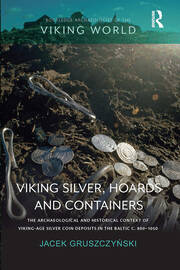
245 10|aViking silver, hoards and containers :|bthe archaeological and historical context of Viking-age silver coin deposits in the Baltic c. 800-1050 /|cJacek Gruszczynski.
264 1|aAbingdon, Oxon ;|aNew York, NY :|bRoutledge,|c2019.
300 |a1 online resource.
336 |atext|btxt|2rdacontent
337 |acomputer|bc|2rdamedia
338 |aonline resource|bcr|2rdacarrier
490 1 |aRoutledge archaeologies of the Viking world
505 0 |aIntroduction -- Gotland : the silver island -- Pomerania : Slavs and war perpetual -- Svealand : a mainland kingdom -- Composition and patterns of hoard deposition from a chronological perspective -- Synthesis and conclusions.
520 |a"It is widely accepted that the Viking Age (c. 800-1050) stimulated the development of long-distance, regional and local trade and exchange networks. The clearest archaeological evidence for these contacts is mainly in the form of silver artefacts, predominantly found in hoards in Northern and Central Europe - the Baltic zone. However, beyond occasional national or regional-level research, there have been no attempts at a historically guided comparative archaeological survey of the Baltic zone as a whole. By investigating silver hoards and the context of their deposition, Viking Silver, Hoards and Containers seeks to understand the variety of functions performed by hoards; the differences in function within regions; the hoards' relationship with trade; and the nature and function of emporia. It also examines the extent to which the findings mesh with literary evidence and the nature of the different societies benefiting from the influx of silver in the Viking Age. Crucially, the book features a catalogue, which provides a thorough overview and update of Baltic-zone hoards. Viking Silver, Hoards and Containers is intended for use by students of and specialists in early medieval, Viking and Slavic history and archaeology. However, it will also be a useful teaching resource for other general courses in archaeology, anthropology and material culture, numismatics, economic history, religious studies, GIS, and statistics"--|cProvided by publisher.
588 |aOCLC-licensed vendor bibliographic record.
650 0|aViking antiquities|zBaltic Sea Region.
650 0|aVikings|zBaltic Sea Region|xHistory.
650 0|aSilverwork, Viking|zBaltic Sea Region.
650 0|aSilver coins|zBaltic Sea Region.
650 0|aCoin hoards|zBaltic Sea Region.
650 0|aExcavations (Archaeology)|zBaltic Sea Region.
650 7|aHISTORY / Europe / Scandinavia|2bisacsh
650 7|aSOCIAL SCIENCE / Archaeology|2bisacsh
651 0|aBaltic Sea Region|xAntiquities.
651 0|aBaltic Sea Region|xCommerce|xHistory.
856 40|3Taylor & Francis|uhttps://www.taylorfrancis.com/books/9781351243650
856 42|3OCLC metadata license agreement|uhttp://www.oclc.org/content/dam/oclc/forms/terms/vbrl-201703.pdf
901 |aTaylor & Francis