

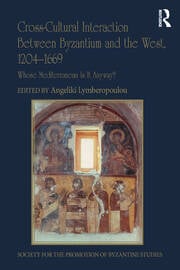
Cross-Cultural Interaction Between Byzantium and the West, 1204-1669 : Whose Mediterranean Is It Anyway? / edited by Angeliki Lymberopoulou.
Erişim Adresi
ISBN
9781351244923 (e-book: Mobi)
9781351244954 (e-book : PDF)
9780815372677 (hardback)
9781351244954 (e-book : PDF)
9780815372677 (hardback)
Dil Kodu
İngilizce
Basım Bildirimi
First edition.
Yayın Bilgisi
London : Taylor and Francis, 2018.
Fiziksel Niteleme
1 online resource (xxiv, 346 pages)
Dizi
Publications of the Society for the Promotion of Byzantine Studies
İçindekiler Notu
part, 1 Byzantium and the West -- Evidence from Crete / Angeliki Lymberopoulou -- chapter 1 Introduction / Angeliki Lymberopoulou -- chapter 2 Cultural Interaction in Candia -- Case studies in a developing early modern multi-ethnic community / Diana Newall -- chapter 3 Aspects of Artistic Exchange on Crete -- Questions concerning the presence of Venetian painters on the island in the fourteenth and fifteenth centuries / Maria Constantoudaki-Kitromilides -- chapter 4 The Fogg Triptych -- Testimony of a case study to the society and artistic production of Venetian Crete / Angeliki Lymberopoulou -- chapter 5 Artistic Interactions between Byzantium and Italy in the Palaiologan Era -- The case of Hell 1 / Rembrandt Duits -- part, 2 Byzantium and the West -- Evidence from Cyprus / Angeliki Lymberopoulou -- chapter 6 The Byzantine Tradition in Late Medieval Cyprus -- Selective continuity and creative diversification 1 / Tassos Papacostas -- chapter 7 Giotto’s Quadrilobes -- Transmigrations of Italianate ornaments in the eastern Mediterranean / Michele Bacci -- chapter 8 East is East and West is West? -- Artistic interchange across frontiers in the eastern Mediterranean / Ioanna Christoforaki -- part, 3 Byzantium and the West -- Evidence from the Peloponnese / Angeliki Lymberopoulou -- chapter 9 Between East and West -- Locating monumental painting from the Peloponnese / Sharon E.J. Gerstel Michalis Kappas -- chapter 10 The Elephant on the Page -- Ciriaco d’Ancona in Mystras / Andrea Mattiello -- part, 4 Byzantium and the West -- Evidence from the Wider Mediterranean / Angeliki Lymberopoulou -- chapter 11 Space, Place and Culture -- Processions across the Mediterranean 1 / Leslie Brubaker -- chapter 12 Sister, Widow, Consort, Bride -- Four Latin ladies in Greece (1330–1430) / Dionysios Stathakopoulos -- chapter 13 Made in Byzantium? -- Mosaics After 1204 / Liz James -- chapter 14 The Royal Deesis – An Anti-Latin Image of Late Byzantine Art 1 / Ágnes Kriza -- chapter 15 Epeiros between Byzantium and the West in the Thirteenth and Early Fourteenth Centuries -- Visual evidence / Leonela Fundić -- chapter 16 The Fate of Bells Under Ottoman Rule -- Between destruction and negotiation 1 / Alex Rodriguez Suarez -- chapter 17 Illustrated Medical Manuscripts in Late Palaiologan Constantinople and their Fortune in Sixteenth-Century Italy 1 / Francesca Marchetti.
Özet, vb.
"The early modern Mediterranean was an area where many different rich cultural traditions came in contact with each other, were often forced to co-exist, and frequently learned to reap the benefits of co-operation. Orthodox, Roman Catholics, Muslims, Jews, and their interactions all contributed significantly to the cultural development of modern Europe. The aim of this volume is to address, explore, re-examine and re-interpret one specific aspect of this cross-cultural interaction in the Mediterranean--that between the Byzantine East and the (mainly Italian) West. The investigation of this interaction has become increasingly popular in the past few decades, not least due to the relevance it has for cultural exchanges in our present-day society.The starting point is provided by the fall of Constantinople to the troops of the Fourth Crusade in 1204. In the aftermath of the fall, a number of Byzantine territories came under prolonged Latin occupation, an occupation that forced Greeks and Latins to adapt their life socially and religiously to the new status quo. Venetian Crete developed one of the most fertile 'bi-cultural' societies, which evolved over 458 years. Its fall to the Ottoman Turks in 1669 marked the end of an era and was hence chosen as the end point for the conference. By sampling case studies from the most representative areas where this interaction took place, the volume highlights the process as well as the significance of its cultural development. "--Provided by publisher.
Konu
Cross-cultural studies.
Byzantine Empire __ Civilization.
Turkey __ History __ Ottoman Empire, 1288-1918.
Byzantine Empire __ Civilization.
Turkey __ History __ Ottoman Empire, 1288-1918.
Diğer Yazarlar
Veritabanı
Eseri Alıntıla
Referansları kullanmadan önce gözden geçirmeniz ve varsa gerekli düzeltmeleri yapmanız önerilir.
Dijital Kaynak
MARC Görünümü
LEADER 05329cam a2200349Ii 4500
001 793815
003 TR_AnAIT
005 20260123002249
008 180706s2018 enkao ob 001 0 eng d
020 |a9781351244923|q(e-book: Mobi)
020 |a9781351244954|q(e-book : PDF)
020 |z9780815372677|q(hardback)
024 7 |a10.4324/9781351244954 |2doi
035 |a(OCoLC)1023831188
040 |aFlBoTFG|cFlBoTFG|erda
041 |aeng
043 |amm-----|aa-tu---
049 |aTürk Tarih Kurumu Kütüphanesi
050 4|aDF531|b.C76 2018
082 04|a949.5|bC951
245 00|aCross-Cultural Interaction Between Byzantium and the West, 1204-1669 :|bWhose Mediterranean Is It Anyway? /|cedited by Angeliki Lymberopoulou.
250 |aFirst edition.
264 1|aLondon :|bTaylor and Francis,|c2018.
300 |a1 online resource (xxiv, 346 pages)
336 |atext|2rdacontent
337 |acomputer|2rdamedia
338 |aonline resource|2rdacarrier
490 0 |aPublications of the Society for the Promotion of Byzantine Studies
505 00|tpart, 1 Byzantium and the West -- |tEvidence from Crete /|r Angeliki Lymberopoulou -- |tchapter 1 Introduction /|r Angeliki Lymberopoulou -- |tchapter 2 Cultural Interaction in Candia -- |tCase studies in a developing early modern multi-ethnic community /|r Diana Newall -- |tchapter 3 Aspects of Artistic Exchange on Crete -- |tQuestions concerning the presence of Venetian painters on the island in the fourteenth and fifteenth centuries /|r Maria Constantoudaki-Kitromilides -- |tchapter 4 The Fogg Triptych -- |tTestimony of a case study to the society and artistic production of Venetian Crete /|r Angeliki Lymberopoulou -- |tchapter 5 Artistic Interactions between Byzantium and Italy in the Palaiologan Era -- |tThe case of Hell 1 /|r Rembrandt Duits -- |tpart, 2 Byzantium and the West -- |tEvidence from Cyprus /|r Angeliki Lymberopoulou -- |tchapter 6 The Byzantine Tradition in Late Medieval Cyprus -- |tSelective continuity and creative diversification 1 /|r Tassos Papacostas -- |tchapter 7 Giotto’s Quadrilobes -- |tTransmigrations of Italianate ornaments in the eastern Mediterranean /|r Michele Bacci -- |tchapter 8 East is East and West is West? -- |tArtistic interchange across frontiers in the eastern Mediterranean /|r Ioanna Christoforaki -- |tpart, 3 Byzantium and the West -- |tEvidence from the Peloponnese /|r Angeliki Lymberopoulou -- |tchapter 9 Between East and West -- |tLocating monumental painting from the Peloponnese /|r Sharon E.J. Gerstel Michalis Kappas -- |tchapter 10 The Elephant on the Page -- |tCiriaco d’Ancona in Mystras /|r Andrea Mattiello -- |tpart, 4 Byzantium and the West -- |tEvidence from the Wider Mediterranean /|r Angeliki Lymberopoulou -- |tchapter 11 Space, Place and Culture -- |tProcessions across the Mediterranean 1 /|r Leslie Brubaker -- |tchapter 12 Sister, Widow, Consort, Bride -- |tFour Latin ladies in Greece (1330–1430) /|r Dionysios Stathakopoulos -- |tchapter 13 Made in Byzantium? -- |tMosaics After 1204 /|r Liz James -- |tchapter 14 The Royal Deesis – An Anti-Latin Image of Late Byzantine Art 1 /|r Ágnes Kriza -- |tchapter 15 Epeiros between Byzantium and the West in the Thirteenth and Early Fourteenth Centuries -- |tVisual evidence /|r Leonela Fundić -- |tchapter 16 The Fate of Bells Under Ottoman Rule -- |tBetween destruction and negotiation 1 /|r Alex Rodriguez Suarez -- |tchapter 17 Illustrated Medical Manuscripts in Late Palaiologan Constantinople and their Fortune in Sixteenth-Century Italy 1 /|r Francesca Marchetti.
520 |a"The early modern Mediterranean was an area where many different rich cultural traditions came in contact with each other, were often forced to co-exist, and frequently learned to reap the benefits of co-operation. Orthodox, Roman Catholics, Muslims, Jews, and their interactions all contributed significantly to the cultural development of modern Europe. The aim of this volume is to address, explore, re-examine and re-interpret one specific aspect of this cross-cultural interaction in the Mediterranean--that between the Byzantine East and the (mainly Italian) West. The investigation of this interaction has become increasingly popular in the past few decades, not least due to the relevance it has for cultural exchanges in our present-day society.The starting point is provided by the fall of Constantinople to the troops of the Fourth Crusade in 1204. In the aftermath of the fall, a number of Byzantine territories came under prolonged Latin occupation, an occupation that forced Greeks and Latins to adapt their life socially and religiously to the new status quo. Venetian Crete developed one of the most fertile 'bi-cultural' societies, which evolved over 458 years. Its fall to the Ottoman Turks in 1669 marked the end of an era and was hence chosen as the end point for the conference. By sampling case studies from the most representative areas where this interaction took place, the volume highlights the process as well as the significance of its cultural development. "--Provided by publisher.
650 0|aCross-cultural studies.
651 0|aByzantine Empire|xCivilization.
651 0|aTurkey|xHistory|yOttoman Empire, 1288-1918.
700 1 |aLymberopoulou, Angeliki,|eeditor.
776 08|iPrint version:|z9780815372677
856 40|uhttps://www.taylorfrancis.com/books/9781351244954|zClick here to view.
901 |aTaylor & Francis
001 793815
003 TR_AnAIT
005 20260123002249
008 180706s2018 enkao ob 001 0 eng d
020 |a9781351244923|q(e-book: Mobi)
020 |a9781351244954|q(e-book : PDF)
020 |z9780815372677|q(hardback)
024 7 |a10.4324/9781351244954 |2doi
035 |a(OCoLC)1023831188
040 |aFlBoTFG|cFlBoTFG|erda
041 |aeng
043 |amm-----|aa-tu---
049 |aTürk Tarih Kurumu Kütüphanesi
050 4|aDF531|b.C76 2018
082 04|a949.5|bC951
245 00|aCross-Cultural Interaction Between Byzantium and the West, 1204-1669 :|bWhose Mediterranean Is It Anyway? /|cedited by Angeliki Lymberopoulou.
250 |aFirst edition.
264 1|aLondon :|bTaylor and Francis,|c2018.
300 |a1 online resource (xxiv, 346 pages)
336 |atext|2rdacontent
337 |acomputer|2rdamedia
338 |aonline resource|2rdacarrier
490 0 |aPublications of the Society for the Promotion of Byzantine Studies
505 00|tpart, 1 Byzantium and the West -- |tEvidence from Crete /|r Angeliki Lymberopoulou -- |tchapter 1 Introduction /|r Angeliki Lymberopoulou -- |tchapter 2 Cultural Interaction in Candia -- |tCase studies in a developing early modern multi-ethnic community /|r Diana Newall -- |tchapter 3 Aspects of Artistic Exchange on Crete -- |tQuestions concerning the presence of Venetian painters on the island in the fourteenth and fifteenth centuries /|r Maria Constantoudaki-Kitromilides -- |tchapter 4 The Fogg Triptych -- |tTestimony of a case study to the society and artistic production of Venetian Crete /|r Angeliki Lymberopoulou -- |tchapter 5 Artistic Interactions between Byzantium and Italy in the Palaiologan Era -- |tThe case of Hell 1 /|r Rembrandt Duits -- |tpart, 2 Byzantium and the West -- |tEvidence from Cyprus /|r Angeliki Lymberopoulou -- |tchapter 6 The Byzantine Tradition in Late Medieval Cyprus -- |tSelective continuity and creative diversification 1 /|r Tassos Papacostas -- |tchapter 7 Giotto’s Quadrilobes -- |tTransmigrations of Italianate ornaments in the eastern Mediterranean /|r Michele Bacci -- |tchapter 8 East is East and West is West? -- |tArtistic interchange across frontiers in the eastern Mediterranean /|r Ioanna Christoforaki -- |tpart, 3 Byzantium and the West -- |tEvidence from the Peloponnese /|r Angeliki Lymberopoulou -- |tchapter 9 Between East and West -- |tLocating monumental painting from the Peloponnese /|r Sharon E.J. Gerstel Michalis Kappas -- |tchapter 10 The Elephant on the Page -- |tCiriaco d’Ancona in Mystras /|r Andrea Mattiello -- |tpart, 4 Byzantium and the West -- |tEvidence from the Wider Mediterranean /|r Angeliki Lymberopoulou -- |tchapter 11 Space, Place and Culture -- |tProcessions across the Mediterranean 1 /|r Leslie Brubaker -- |tchapter 12 Sister, Widow, Consort, Bride -- |tFour Latin ladies in Greece (1330–1430) /|r Dionysios Stathakopoulos -- |tchapter 13 Made in Byzantium? -- |tMosaics After 1204 /|r Liz James -- |tchapter 14 The Royal Deesis – An Anti-Latin Image of Late Byzantine Art 1 /|r Ágnes Kriza -- |tchapter 15 Epeiros between Byzantium and the West in the Thirteenth and Early Fourteenth Centuries -- |tVisual evidence /|r Leonela Fundić -- |tchapter 16 The Fate of Bells Under Ottoman Rule -- |tBetween destruction and negotiation 1 /|r Alex Rodriguez Suarez -- |tchapter 17 Illustrated Medical Manuscripts in Late Palaiologan Constantinople and their Fortune in Sixteenth-Century Italy 1 /|r Francesca Marchetti.
520 |a"The early modern Mediterranean was an area where many different rich cultural traditions came in contact with each other, were often forced to co-exist, and frequently learned to reap the benefits of co-operation. Orthodox, Roman Catholics, Muslims, Jews, and their interactions all contributed significantly to the cultural development of modern Europe. The aim of this volume is to address, explore, re-examine and re-interpret one specific aspect of this cross-cultural interaction in the Mediterranean--that between the Byzantine East and the (mainly Italian) West. The investigation of this interaction has become increasingly popular in the past few decades, not least due to the relevance it has for cultural exchanges in our present-day society.The starting point is provided by the fall of Constantinople to the troops of the Fourth Crusade in 1204. In the aftermath of the fall, a number of Byzantine territories came under prolonged Latin occupation, an occupation that forced Greeks and Latins to adapt their life socially and religiously to the new status quo. Venetian Crete developed one of the most fertile 'bi-cultural' societies, which evolved over 458 years. Its fall to the Ottoman Turks in 1669 marked the end of an era and was hence chosen as the end point for the conference. By sampling case studies from the most representative areas where this interaction took place, the volume highlights the process as well as the significance of its cultural development. "--Provided by publisher.
650 0|aCross-cultural studies.
651 0|aByzantine Empire|xCivilization.
651 0|aTurkey|xHistory|yOttoman Empire, 1288-1918.
700 1 |aLymberopoulou, Angeliki,|eeditor.
776 08|iPrint version:|z9780815372677
856 40|uhttps://www.taylorfrancis.com/books/9781351244954|zClick here to view.
901 |aTaylor & Francis
Materyaller
Depodan talep edilen materyal sadece kütüphane içerisinde kullanılmaktadır.
Materyal dışarıya ödünç verilmemektedir.
Materyal dışarıya ödünç verilmemektedir.
