

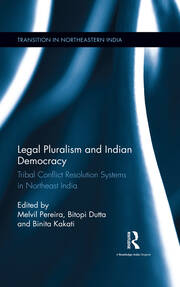
Legal Pluralism and Indian Democracy : Tribal Conflict Resolution Systems in Northeast India / edited by Melvil Pereira, Bitopi Dutta and Binita Kakati.
Erişim Adresi
ISBN
9780203733479 (e-book : PDF)
9781138230781 (hardback)
9781138230781 (hardback)
Dil Kodu
İngilizce
Yayın Bilgisi
London : Routledge, 2018.
Fiziksel Niteleme
1 online resource (xvi, 337 pages).
Dizi
Transition in Northeastern India
İçindekiler Notu
chapter Introduction / Melvil Pereira -- part I Conflict resolution systems -- Theories, thoughts and concepts -- chapter 1 Conflict resolution systems in the tribal societies of Northeast India -- Legal pluralism and Indian democracy 1 / Nandita Haksar -- chapter 2 Diverse personal laws, gender justice and controversy over the uniform civil code / Flavia Agnes -- chapter 3 Customary law, state law and non-state organisation -- The predicaments of legal pluralism and growing conflict in Nagaland / N. K. Das -- chapter 4 Customary law and the politics of peace and conflict resolution in post-colonial states -- Threats posed by modernisation and development / Bitopi Dutta -- chapter 5 Legal pluralism and alternative dispute redressal systems in the Northeast / Ranga Ranjan Das -- chapter 6 The resilience of tribal conflict resolution systems in Northeast India -- A panoramic view / Melvil Pereira -- chapter 7 Mizo customary laws and the discourse of women’s rights / V. Sawmveli -- part II Fights in the field -- Case studies of resolution systems from the communities of Northeast India -- chapter 8 Traditional methods of conflict resolution of the Sumi Naga tribe / Herali Achumi -- chapter 9 The hall without walls – the role of namghars in peace-building -- Practices and prospects / Jayanta Madhab Tamuly -- chapter 10 The Khasi-Pnar ideology of peace and conflict resolution / Valentina Pakyntein -- chapter 11 Indigenous methods of conflict resolution in Sikkim -- A case study on the dzumsa / Ganga Maya Tamang -- chapter 12 Exploring traditional approaches to resolving conflicts over land resources -- The case of the Nyishi tribe in Arunachal Pradesh / Tame Ramya -- chapter 13 Hmar traditional practices in conflict resolution -- An anthropological perspective / Immanuel Zarzosang Varte -- chapter 14 Conflict and systems for its resolution among the Paites of Manipur / H. Kamkhenthang -- chapter 15 Forums for conflict resolution in the Jaintia tribal community over land resources / Rikil Chyrmang -- chapter 16 Indigenous conflict resolution mechanisms -- A study on the Riang of Tripura / Janet Florine Tellis -- chapter Epilogue / Thomas C.B.P. Small.
Özet, vb.
"This book offers a multifaceted look at Northeast India and the customs and traditions that underpin its legal framework. The book:charts the transition of traditions from colonial rule to present day, through constitutionalism and the consolidation of autonomous identities, as well as outlines contemporary debates in an increasingly modernising region;explores the theoretical context of legal pluralism and its implications, compares the personal legal systems with that of the mainland, and discusses customary law's continuing popularity (both pragmatic and ideological) and common law;brings together case studies from across the eight states and focuses on the way individual systems and procedures manifest among various tribes and communities in the voices of tribal and non-tribal scholars; andhighlights the resilience and relevance of alternative systems of redressal, including conflict resolution and women's rights.Part of the prestigious 'Transition in Northeastern India' series, this book presents an interesting blend of theory and practice, key case studies and examples to study legal pluralism in multicultural contexts. It will be of great interest to students of law and social sciences, anthropology, political science, peace and conflict studies, besides administrators, judicial officers and lawyers in Northeast India, legal scholars and students of tribal law, and members of customary law courts of various tribal communities in Northeast India."--Provided by publisher.
Konu
Legal polycentricity __ India.
Diğer Yazarlar
Veritabanı
Eseri Alıntıla
Referansları kullanmadan önce gözden geçirmeniz ve varsa gerekli düzeltmeleri yapmanız önerilir.
Dijital Kaynak
MARC Görünümü
LEADER 04928cam a2200325Ii 4500
001 793876
003 TR_AnAIT
005 20260123002344
008 180706s2018 enkad ob 001 0 eng d
020 |a9780203733479|q(e-book : PDF)
020 |z9781138230781|q(hardback)
024 7 |a10.4324/9780203733479 |2doi
035 |a(OCoLC)993959040
040 |aFlBoTFG|cFlBoTFG|erda
041 |aeng
043 |aa-ii---
049 |aTürk Tarih Kurumu Kütüphanesi
050 4|aKNS469.5|b.L44 2018
082 04|a340.59|bL496
245 00|aLegal Pluralism and Indian Democracy :|bTribal Conflict Resolution Systems in Northeast India /|cedited by Melvil Pereira, Bitopi Dutta and Binita Kakati.
264 1|aLondon :|bRoutledge,|c2018.
300 |a1 online resource (xvi, 337 pages).
336 |atext|2rdacontent
337 |acomputer|2rdamedia
338 |aonline resource|2rdacarrier
490 0 |aTransition in Northeastern India
505 0 |tchapter Introduction /|rMelvil Pereira -- |tpart I Conflict resolution systems -- |tTheories, thoughts and concepts -- |tchapter 1 Conflict resolution systems in the tribal societies of Northeast India -- |tLegal pluralism and Indian democracy 1 /|rNandita Haksar -- |tchapter 2 Diverse personal laws, gender justice and controversy over the uniform civil code /|rFlavia Agnes -- |tchapter 3 Customary law, state law and non-state organisation -- |tThe predicaments of legal pluralism and growing conflict in Nagaland /|rN. K. Das -- |tchapter 4 Customary law and the politics of peace and conflict resolution in post-colonial states -- |tThreats posed by modernisation and development /|rBitopi Dutta -- |tchapter 5 Legal pluralism and alternative dispute redressal systems in the Northeast /|rRanga Ranjan Das -- |tchapter 6 The resilience of tribal conflict resolution systems in Northeast India -- |tA panoramic view /|rMelvil Pereira -- |tchapter 7 Mizo customary laws and the discourse of women’s rights /|rV. Sawmveli -- |tpart II Fights in the field -- |tCase studies of resolution systems from the communities of Northeast India -- |tchapter 8 Traditional methods of conflict resolution of the Sumi Naga tribe /|rHerali Achumi -- |tchapter 9 The hall without walls – the role of namghars in peace-building -- |tPractices and prospects /|rJayanta Madhab Tamuly -- |tchapter 10 The Khasi-Pnar ideology of peace and conflict resolution /|rValentina Pakyntein -- |tchapter 11 Indigenous methods of conflict resolution in Sikkim -- |tA case study on the dzumsa /|rGanga Maya Tamang -- |tchapter 12 Exploring traditional approaches to resolving conflicts over land resources -- |tThe case of the Nyishi tribe in Arunachal Pradesh /|rTame Ramya -- |tchapter 13 Hmar traditional practices in conflict resolution -- |tAn anthropological perspective /|rImmanuel Zarzosang Varte -- |tchapter 14 Conflict and systems for its resolution among the Paites of Manipur /|rH. Kamkhenthang -- |tchapter 15 Forums for conflict resolution in the Jaintia tribal community over land resources /|rRikil Chyrmang -- |tchapter 16 Indigenous conflict resolution mechanisms -- |tA study on the Riang of Tripura /|rJanet Florine Tellis -- |tchapter Epilogue /|rThomas C.B.P. Small.
520 |a"This book offers a multifaceted look at Northeast India and the customs and traditions that underpin its legal framework. The book:charts the transition of traditions from colonial rule to present day, through constitutionalism and the consolidation of autonomous identities, as well as outlines contemporary debates in an increasingly modernising region;explores the theoretical context of legal pluralism and its implications, compares the personal legal systems with that of the mainland, and discusses customary law's continuing popularity (both pragmatic and ideological) and common law;brings together case studies from across the eight states and focuses on the way individual systems and procedures manifest among various tribes and communities in the voices of tribal and non-tribal scholars; andhighlights the resilience and relevance of alternative systems of redressal, including conflict resolution and women's rights.Part of the prestigious 'Transition in Northeastern India' series, this book presents an interesting blend of theory and practice, key case studies and examples to study legal pluralism in multicultural contexts. It will be of great interest to students of law and social sciences, anthropology, political science, peace and conflict studies, besides administrators, judicial officers and lawyers in Northeast India, legal scholars and students of tribal law, and members of customary law courts of various tribal communities in Northeast India."--Provided by publisher.
650 0|aLegal polycentricity|zIndia.
700 1 |aDutta, Bitopi,|eeditor.
700 1 |aKakati, Binita,|eeditor.
700 1 |aPereira, Melvil,|eeditor.
776 08|iPrint version: |z9781138230781
856 40|uhttps://www.taylorfrancis.com/books/9780203733479|zClick here to view.
901 |aTaylor & Francis
001 793876
003 TR_AnAIT
005 20260123002344
008 180706s2018 enkad ob 001 0 eng d
020 |a9780203733479|q(e-book : PDF)
020 |z9781138230781|q(hardback)
024 7 |a10.4324/9780203733479 |2doi
035 |a(OCoLC)993959040
040 |aFlBoTFG|cFlBoTFG|erda
041 |aeng
043 |aa-ii---
049 |aTürk Tarih Kurumu Kütüphanesi
050 4|aKNS469.5|b.L44 2018
082 04|a340.59|bL496
245 00|aLegal Pluralism and Indian Democracy :|bTribal Conflict Resolution Systems in Northeast India /|cedited by Melvil Pereira, Bitopi Dutta and Binita Kakati.
264 1|aLondon :|bRoutledge,|c2018.
300 |a1 online resource (xvi, 337 pages).
336 |atext|2rdacontent
337 |acomputer|2rdamedia
338 |aonline resource|2rdacarrier
490 0 |aTransition in Northeastern India
505 0 |tchapter Introduction /|rMelvil Pereira -- |tpart I Conflict resolution systems -- |tTheories, thoughts and concepts -- |tchapter 1 Conflict resolution systems in the tribal societies of Northeast India -- |tLegal pluralism and Indian democracy 1 /|rNandita Haksar -- |tchapter 2 Diverse personal laws, gender justice and controversy over the uniform civil code /|rFlavia Agnes -- |tchapter 3 Customary law, state law and non-state organisation -- |tThe predicaments of legal pluralism and growing conflict in Nagaland /|rN. K. Das -- |tchapter 4 Customary law and the politics of peace and conflict resolution in post-colonial states -- |tThreats posed by modernisation and development /|rBitopi Dutta -- |tchapter 5 Legal pluralism and alternative dispute redressal systems in the Northeast /|rRanga Ranjan Das -- |tchapter 6 The resilience of tribal conflict resolution systems in Northeast India -- |tA panoramic view /|rMelvil Pereira -- |tchapter 7 Mizo customary laws and the discourse of women’s rights /|rV. Sawmveli -- |tpart II Fights in the field -- |tCase studies of resolution systems from the communities of Northeast India -- |tchapter 8 Traditional methods of conflict resolution of the Sumi Naga tribe /|rHerali Achumi -- |tchapter 9 The hall without walls – the role of namghars in peace-building -- |tPractices and prospects /|rJayanta Madhab Tamuly -- |tchapter 10 The Khasi-Pnar ideology of peace and conflict resolution /|rValentina Pakyntein -- |tchapter 11 Indigenous methods of conflict resolution in Sikkim -- |tA case study on the dzumsa /|rGanga Maya Tamang -- |tchapter 12 Exploring traditional approaches to resolving conflicts over land resources -- |tThe case of the Nyishi tribe in Arunachal Pradesh /|rTame Ramya -- |tchapter 13 Hmar traditional practices in conflict resolution -- |tAn anthropological perspective /|rImmanuel Zarzosang Varte -- |tchapter 14 Conflict and systems for its resolution among the Paites of Manipur /|rH. Kamkhenthang -- |tchapter 15 Forums for conflict resolution in the Jaintia tribal community over land resources /|rRikil Chyrmang -- |tchapter 16 Indigenous conflict resolution mechanisms -- |tA study on the Riang of Tripura /|rJanet Florine Tellis -- |tchapter Epilogue /|rThomas C.B.P. Small.
520 |a"This book offers a multifaceted look at Northeast India and the customs and traditions that underpin its legal framework. The book:charts the transition of traditions from colonial rule to present day, through constitutionalism and the consolidation of autonomous identities, as well as outlines contemporary debates in an increasingly modernising region;explores the theoretical context of legal pluralism and its implications, compares the personal legal systems with that of the mainland, and discusses customary law's continuing popularity (both pragmatic and ideological) and common law;brings together case studies from across the eight states and focuses on the way individual systems and procedures manifest among various tribes and communities in the voices of tribal and non-tribal scholars; andhighlights the resilience and relevance of alternative systems of redressal, including conflict resolution and women's rights.Part of the prestigious 'Transition in Northeastern India' series, this book presents an interesting blend of theory and practice, key case studies and examples to study legal pluralism in multicultural contexts. It will be of great interest to students of law and social sciences, anthropology, political science, peace and conflict studies, besides administrators, judicial officers and lawyers in Northeast India, legal scholars and students of tribal law, and members of customary law courts of various tribal communities in Northeast India."--Provided by publisher.
650 0|aLegal polycentricity|zIndia.
700 1 |aDutta, Bitopi,|eeditor.
700 1 |aKakati, Binita,|eeditor.
700 1 |aPereira, Melvil,|eeditor.
776 08|iPrint version: |z9781138230781
856 40|uhttps://www.taylorfrancis.com/books/9780203733479|zClick here to view.
901 |aTaylor & Francis
Materyaller
Depodan talep edilen materyal sadece kütüphane içerisinde kullanılmaktadır.
Materyal dışarıya ödünç verilmemektedir.
Materyal dışarıya ödünç verilmemektedir.
