LEADER 04182cam a2200577 i 4500
001 793919
003 TR_AnAIT
005 20260123002428
006 m d | |
007 cr |||||||||||
008 201216s2022 flua ob 001 0 eng
020 |a9780429057045|qelectronic book
020 |a0429057040|qelectronic book
020 |a9780429614842|qelectronic book
020 |a0429614845|qelectronic book
020 |a9780429616051|qelectronic book
020 |a0429616058|qelectronic book
020 |a9780429613630|qelectronic book
020 |a0429613636|qelectronic book
020 |z9780367174873|qhardcover
024 7 |a10.1201/9780429057045|2doi
035 |a(OCoLC)1228200215
035 |a(OCoLC-P)1228200215
040 |aOCoLC-P|beng|erda|cOCoLC-P
041 |aeng
049 |aTürk Tarih Kurumu Kütüphanesi
050 04|aNA5621.P713|bM38 2022
072 7|aSOC|x003000|2bisacsh
072 7|aTEC|x009020|2bisacsh
072 7|aTEC|x063000|2bisacsh
072 7|aTN|2bicssc
082 00|a726.60945|223
100 1 |aMatracchi, Pietro,|eauthor.
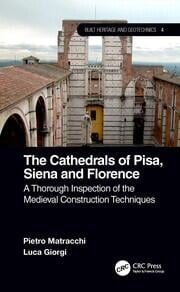
245 14|aThe cathedrals of Pisa, Siena and Florence :|ba thorough inspection of the medieval construction techniques /|cPietro Matracchi, Department of Architecture, University of Florence, Italy; Luca Giorgi, Department of Architecture, University of Florence, Italy ; with the contribution of Silvia Piccirilli.
264 1|aBoca Raton [FL] :|bCRC Press,|c[2022]
300 |a1 online resource (xv, 299 pages) :|bcolor illustrations.
336 |atext|btxt|2rdacontent
337 |acomputer|bc|2rdamedia
338 |aonline resource|bcr|2rdacarrier
490 1 |aBuilt heritage and geotechnics,|x2640-026X
520 |a"The construction techniques and concepts of the cathedrals of Pisa, Siena and Florence are examined in detail, based on new data and using a methodological architectural diagnostics approach. New detailed surveys, carried out using often advanced tools, together with direct and in-depth inspections to examine all parts of the buildings, have enabled us to identify the building phases and the different construction techniques used over time. The information thereby acquired also formed the basis for a new interpretation of the archival documents. Accordingly, the problems encountered and the solutions adopted in the three cathedrals have been understood: in Pisa the construction of the elliptical dome above the rectangular crossing consisting of six thin pillars below; in Siena the design changes from the first system in the 13th century to the 'Duomo Nuovo', and the structural adaptations following earthquakes; the specific construction solutions adopted in Florence during the instability encountered in the construction of the large vaults of the basilican body. The comparison of the three buildings in terms of architectural and construction solutions also revealed unexpected relationships between the construction events of Siena's Duomo Nuovo and the solutions then used in the large basilican body of Santa Maria del Fiore. The methodology employed has led to an understanding of the actual structure of the three cathedrals, an essential basis for a correct evaluation of the state of conservation of the churches for any restoration work. The book is aimed at scholars of architecture and ancient building structures, graduate and postgraduate students, and architects and engineers who plan architectural conservation and strengthening works for historical buildings"--|cProvided by publisher.
588 |aOCLC-licensed vendor bibliographic record.
610 20|aDuomo (Pisa, Italy)
610 20|aSanta Maria del Fiore (Cathedral : Florence, Italy)
610 20|aDuomo di Siena.
650 0|aBuilding|zItaly|yTo 1500.
650 0|aCivil engineering|zItaly|xHistory|yTo 1500.
650 7|aSOCIAL SCIENCE / Archaeology|2bisacsh
650 7|aTECHNOLOGY / Engineering / Civil|2bisacsh
700 1 |aGiorgi, Luca,|eauthor.
700 1 |aPiccirilli, Silvia,|eauthor.
856 40|3Taylor & Francis|uhttps://www.taylorfrancis.com/books/9780429057045
856 42|3OCLC metadata license agreement|uhttp://www.oclc.org/content/dam/oclc/forms/terms/vbrl-201703.pdf
901 |aTaylor & Francis