

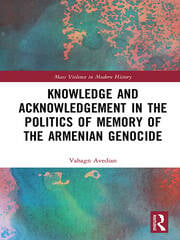
Knowledge and Acknowledgement in the Politics of Memory of the Armenian Genocide / by Vahagn Avedian.
Erişim Adresi
ISBN
9780429454257 (e-book : PDF)
Dil Kodu
İngilizce
İngilizce
İngilizce
Yazar
Basım Bildirimi
First edition.
Yayın Bilgisi
Boca Raton, FL : Routledge, 2018.
Fiziksel Niteleme
1 online resource (312 pages)
Dizi
Mass Violence in Modern History
Bibliyografi, vb. Notu
Includes bibliographical references and index.
İçindekiler Notu
Contents -- --Acknowledgements -- Introduction -- The Vitality of the Armenian Genocide: Why is it Still Topical? -- Genocide Studies: A True Interdisciplinary Field and its Challenges -- -- Politics of Memory: An Intricate Perpetual Process -- Politics of Memory Explained through its Constituent Parts -- Memory and History in the Politics of Memory -- Creating National Narrative and Identity -- Molding the Memory by Forgetting -- The Reciprocal Relation between Democracy and Memory -- Education: An Example of Auxiliary Means in Politics of Memory -- The Central Role of Law and Justice -- Reconciliation: Synthesis of Recognition, Responsibility and Reparation -- Existing Research -- Outline and Delimitations -- The Armenian Question between History and Politics -- The Entry of the Armenian Question into the International Arena -- Beacons of Hope and Justice: The Svres Treaty -- From Svres to Lausanne: Realpolitik Reigns Supreme -- Genocide in International Law: Nuremberg and the UN Convention -- The Turkish Genocide Denial during the Interwar Period -- The Reawakening: The 50th Commemoration Day on April 24, 1965 -- The Resonance: The Diaspora as Agent of Remembrance and Recognition -- The Rediscovery of the Suppressed Genocide -- The Igniting Spark: The Genocide Survivor Gourgen Yanikian -- The First UN Genocide Study: The Ruhashyankiko Report, 1979 -- The Iron Ladle: Armed Terrorism as Political Leverage -- The Entry into the Academia -- Which Memory to Preserve: The US Holocaust Memorial Museum -- Hearing the Neglected Victim: The Permanent Peoples Tribunal, 1984 -- The UN Genocide Convention Revisited: The Whitaker Report, 1985 -- The Pinnacle of the Recognition Process: European Parliament, 1987 -- Memory, History and Justice: Towards Reconciliation -- The Karabakh Conflict: The Legacy Turned Catalyst for Independence -- Independence and the Genocide as Rule Setter -- Armenian-Turkish Relations and the Old Ghost of Genocide -- Parliamentary Recognitions: Writing History or Confirming the Research? * -- Legal Examination: Law and Politics -- The Unforgotten Genocide: The Centennial Commemoration, 2015 -- Knowledge and (Dis)Acknowledgement: A Century of the Politics of Memory of the Armenian Genocide --Bibliography -- Index.
Özet, vb.
Is the Armenian Genocide a strictly historical matter? If that is the case, why is it still a topical issue, capable of causing diplomatic rows and heated debates? The short answer would be that the century old Armenian Genocide is much more than a historical question. It emerged as a political dilemma on the international arena at the San Stefano peace conference in 1878 and has remained as such into our days. The disparity between knowledge and acknowledgement, mainly ascribable to Turkey’s official denial of the genocide, has only heightened the politicization of the Armenian question. Thus, the memories of the WWI era refuse to be relegated to the pages of history but are rather perceived as a vivid presence. This is the result of the perpetual process of politics of memory. The politics of memory is an intricate and interdisciplinary negotiation, engaging many different actors in the society who have access to a wide range of resources and measures in order to achieve their goals. By following the Armenian question during the past century up to its Centennial Commemoration in 2015, this study aims to explain why and how the politics of memory of the Armenian Genocide has kept it as a topical issue in our days.
Konu
Armenian massacres, 1915-1923.
Collective memory __ Armenia (Republic)
Collective memory __ Turkey.
Genocide (International law)
Collective memory.
HISTORY / Middle East / Turkey & Ottoman Empire. __ bisacsh
Armenian Genocide. __ bisacsh
Armeniska folkmordet. __ bisacsh
Assyrian Genocide. __ bisacsh
Ataturk. __ bisacsh
atrocities. __ bisacsh
Donald Bloxham. __ bisacsh
definition of Genocide. __ bisacsh
Erdogan. __ bisacsh
Fatma Muge Göçek. __ bisacsh
Hannibal Travis. __ bisacsh
INOD. __ bisacsh
Michael Bobelian. __ bisacsh
Ottoman Empire. __ bisacsh
Seyfo. __ bisacsh
Turkish denial. __ bisacsh
Yerevan. __ bisacsh
Electronic books.
Collective memory __ Armenia (Republic)
Collective memory __ Turkey.
Genocide (International law)
Collective memory.
HISTORY / Middle East / Turkey & Ottoman Empire. __ bisacsh
Armenian Genocide. __ bisacsh
Armeniska folkmordet. __ bisacsh
Assyrian Genocide. __ bisacsh
Ataturk. __ bisacsh
atrocities. __ bisacsh
Donald Bloxham. __ bisacsh
definition of Genocide. __ bisacsh
Erdogan. __ bisacsh
Fatma Muge Göçek. __ bisacsh
Hannibal Travis. __ bisacsh
INOD. __ bisacsh
Michael Bobelian. __ bisacsh
Ottoman Empire. __ bisacsh
Seyfo. __ bisacsh
Turkish denial. __ bisacsh
Yerevan. __ bisacsh
Electronic books.
Kurum Adı
Veritabanı
Eseri Alıntıla
Referansları kullanmadan önce gözden geçirmeniz ve varsa gerekli düzeltmeleri yapmanız önerilir.
Dijital Kaynak
MARC Görünümü
LEADER 05884nam a2200685Ii 4500
001 794002
003 TR_AnAIT
005 20260123002551
006 m o d
007 cr
008 181112s2018 flu b ob 001 0 eng d
020 |a9780429454257|q(e-book : PDF)
035 |a(OCoLC)1045641816
040 |aFlBoTFG|cFlBoTFG|erda
041 1 |aeng
041 |aeng
049 |aTürk Tarih Kurumu Kütüphanesi
050 4|aDS195.5
072 7|aHIS|x032000 |2bisacsh
072 7|aHIS|x055000 |2bisacsh
072 7|aHBWN |2bicscc
082 04|a956.6/20154
100 1 |aAvedian, Vahagn,|eauthor.
245 10|aKnowledge and Acknowledgement in the Politics of Memory of the Armenian Genocide /|cby Vahagn Avedian.
250 |aFirst edition.
264 1|aBoca Raton, FL :|bRoutledge,|c2018.
300 |a1 online resource (312 pages)
336 |atext|2rdacontent
337 |acomputer|2rdamedia
338 |aonline resource|2rdacarrier
490 1 |aMass Violence in Modern History
504 |aIncludes bibliographical references and index.
505 00|tContents -- |t--Acknowledgements -- |tIntroduction -- |tThe Vitality of the Armenian Genocide: Why is it Still Topical? -- |tGenocide Studies: A True Interdisciplinary Field and its Challenges -- |t -- |tPolitics of Memory: An Intricate Perpetual Process -- |tPolitics of Memory Explained through its Constituent Parts -- |tMemory and History in the Politics of Memory -- |tCreating National Narrative and Identity -- |tMolding the Memory by Forgetting -- |tThe Reciprocal Relation between Democracy and Memory -- |tEducation: An Example of Auxiliary Means in Politics of Memory -- |tThe Central Role of Law and Justice -- |tReconciliation: Synthesis of Recognition, Responsibility and Reparation -- |tExisting Research -- |tOutline and Delimitations -- |tThe Armenian Question between History and Politics -- |tThe Entry of the Armenian Question into the International Arena -- |tBeacons of Hope and Justice: The Svres Treaty -- |tFrom Svres to Lausanne: Realpolitik Reigns Supreme -- |tGenocide in International Law: Nuremberg and the UN Convention -- |tThe Turkish Genocide Denial during the Interwar Period -- |tThe Reawakening: The 50th Commemoration Day on April 24, 1965 -- |tThe Resonance: The Diaspora as Agent of Remembrance and Recognition -- |tThe Rediscovery of the Suppressed Genocide -- |tThe Igniting Spark: The Genocide Survivor Gourgen Yanikian -- |tThe First UN Genocide Study: The Ruhashyankiko Report, 1979 -- |tThe Iron Ladle: Armed Terrorism as Political Leverage -- |tThe Entry into the Academia -- |tWhich Memory to Preserve: The US Holocaust Memorial Museum -- |tHearing the Neglected Victim: The Permanent Peoples Tribunal, 1984 -- |tThe UN Genocide Convention Revisited: The Whitaker Report, 1985 -- |tThe Pinnacle of the Recognition Process: European Parliament, 1987 -- |tMemory, History and Justice: Towards Reconciliation -- |tThe Karabakh Conflict: The Legacy Turned Catalyst for Independence -- |tIndependence and the Genocide as Rule Setter -- |tArmenian-Turkish Relations and the Old Ghost of Genocide -- |tParliamentary Recognitions: Writing History or Confirming the Research? * -- |tLegal Examination: Law and Politics -- |tThe Unforgotten Genocide: The Centennial Commemoration, 2015 -- |tKnowledge and (Dis)Acknowledgement: A Century of the Politics of Memory of the Armenian Genocide --Bibliography -- |tIndex.
520 3 |aIs the Armenian Genocide a strictly historical matter? If that is the case, why is it still a topical issue, capable of causing diplomatic rows and heated debates? The short answer would be that the century old Armenian Genocide is much more than a historical question. It emerged as a political dilemma on the international arena at the San Stefano peace conference in 1878 and has remained as such into our days. The disparity between knowledge and acknowledgement, mainly ascribable to Turkey’s official denial of the genocide, has only heightened the politicization of the Armenian question. Thus, the memories of the WWI era refuse to be relegated to the pages of history but are rather perceived as a vivid presence. This is the result of the perpetual process of politics of memory. The politics of memory is an intricate and interdisciplinary negotiation, engaging many different actors in the society who have access to a wide range of resources and measures in order to achieve their goals. By following the Armenian question during the past century up to its Centennial Commemoration in 2015, this study aims to explain why and how the politics of memory of the Armenian Genocide has kept it as a topical issue in our days.
530 |aAlso available in print format.
650 0|aArmenian massacres, 1915-1923.
650 0|aCollective memory|xArmenia (Republic)
650 0|aCollective memory|zTurkey.
650 0|aGenocide (International law)
650 0|aCollective memory.
650 7|aHISTORY / Middle East / Turkey & Ottoman Empire.|2bisacsh
650 7|aArmenian Genocide.|2bisacsh
650 7|aArmeniska folkmordet.|2bisacsh
650 7|aAssyrian Genocide.|2bisacsh
650 7|aAtaturk.|2bisacsh
650 7|aatrocities.|2bisacsh
650 7|aDonald Bloxham.|2bisacsh
650 7|adefinition of Genocide.|2bisacsh
650 7|aErdogan.|2bisacsh
650 7|aFatma Muge Göçek.|2bisacsh
650 7|aHannibal Travis.|2bisacsh
650 7|aINOD.|2bisacsh
650 7|aMichael Bobelian.|2bisacsh
650 7|aOttoman Empire.|2bisacsh
650 7|aSeyfo.|2bisacsh
650 7|aTurkish denial.|2bisacsh
650 7|aYerevan.|2bisacsh
655 0|aElectronic books.
710 2 |aTaylor and Francis.
776 08|iPrint version: |z9781138318854
830 0|aMass Violence in Modern History.
856 40|uhttps://www.taylorfrancis.com/books/9780429454257|zClick here to view.
901 |aTaylor & Francis
001 794002
003 TR_AnAIT
005 20260123002551
006 m o d
007 cr
008 181112s2018 flu b ob 001 0 eng d
020 |a9780429454257|q(e-book : PDF)
035 |a(OCoLC)1045641816
040 |aFlBoTFG|cFlBoTFG|erda
041 1 |aeng
041 |aeng
049 |aTürk Tarih Kurumu Kütüphanesi
050 4|aDS195.5
072 7|aHIS|x032000 |2bisacsh
072 7|aHIS|x055000 |2bisacsh
072 7|aHBWN |2bicscc
082 04|a956.6/20154
100 1 |aAvedian, Vahagn,|eauthor.
245 10|aKnowledge and Acknowledgement in the Politics of Memory of the Armenian Genocide /|cby Vahagn Avedian.
250 |aFirst edition.
264 1|aBoca Raton, FL :|bRoutledge,|c2018.
300 |a1 online resource (312 pages)
336 |atext|2rdacontent
337 |acomputer|2rdamedia
338 |aonline resource|2rdacarrier
490 1 |aMass Violence in Modern History
504 |aIncludes bibliographical references and index.
505 00|tContents -- |t--Acknowledgements -- |tIntroduction -- |tThe Vitality of the Armenian Genocide: Why is it Still Topical? -- |tGenocide Studies: A True Interdisciplinary Field and its Challenges -- |t -- |tPolitics of Memory: An Intricate Perpetual Process -- |tPolitics of Memory Explained through its Constituent Parts -- |tMemory and History in the Politics of Memory -- |tCreating National Narrative and Identity -- |tMolding the Memory by Forgetting -- |tThe Reciprocal Relation between Democracy and Memory -- |tEducation: An Example of Auxiliary Means in Politics of Memory -- |tThe Central Role of Law and Justice -- |tReconciliation: Synthesis of Recognition, Responsibility and Reparation -- |tExisting Research -- |tOutline and Delimitations -- |tThe Armenian Question between History and Politics -- |tThe Entry of the Armenian Question into the International Arena -- |tBeacons of Hope and Justice: The Svres Treaty -- |tFrom Svres to Lausanne: Realpolitik Reigns Supreme -- |tGenocide in International Law: Nuremberg and the UN Convention -- |tThe Turkish Genocide Denial during the Interwar Period -- |tThe Reawakening: The 50th Commemoration Day on April 24, 1965 -- |tThe Resonance: The Diaspora as Agent of Remembrance and Recognition -- |tThe Rediscovery of the Suppressed Genocide -- |tThe Igniting Spark: The Genocide Survivor Gourgen Yanikian -- |tThe First UN Genocide Study: The Ruhashyankiko Report, 1979 -- |tThe Iron Ladle: Armed Terrorism as Political Leverage -- |tThe Entry into the Academia -- |tWhich Memory to Preserve: The US Holocaust Memorial Museum -- |tHearing the Neglected Victim: The Permanent Peoples Tribunal, 1984 -- |tThe UN Genocide Convention Revisited: The Whitaker Report, 1985 -- |tThe Pinnacle of the Recognition Process: European Parliament, 1987 -- |tMemory, History and Justice: Towards Reconciliation -- |tThe Karabakh Conflict: The Legacy Turned Catalyst for Independence -- |tIndependence and the Genocide as Rule Setter -- |tArmenian-Turkish Relations and the Old Ghost of Genocide -- |tParliamentary Recognitions: Writing History or Confirming the Research? * -- |tLegal Examination: Law and Politics -- |tThe Unforgotten Genocide: The Centennial Commemoration, 2015 -- |tKnowledge and (Dis)Acknowledgement: A Century of the Politics of Memory of the Armenian Genocide --Bibliography -- |tIndex.
520 3 |aIs the Armenian Genocide a strictly historical matter? If that is the case, why is it still a topical issue, capable of causing diplomatic rows and heated debates? The short answer would be that the century old Armenian Genocide is much more than a historical question. It emerged as a political dilemma on the international arena at the San Stefano peace conference in 1878 and has remained as such into our days. The disparity between knowledge and acknowledgement, mainly ascribable to Turkey’s official denial of the genocide, has only heightened the politicization of the Armenian question. Thus, the memories of the WWI era refuse to be relegated to the pages of history but are rather perceived as a vivid presence. This is the result of the perpetual process of politics of memory. The politics of memory is an intricate and interdisciplinary negotiation, engaging many different actors in the society who have access to a wide range of resources and measures in order to achieve their goals. By following the Armenian question during the past century up to its Centennial Commemoration in 2015, this study aims to explain why and how the politics of memory of the Armenian Genocide has kept it as a topical issue in our days.
530 |aAlso available in print format.
650 0|aArmenian massacres, 1915-1923.
650 0|aCollective memory|xArmenia (Republic)
650 0|aCollective memory|zTurkey.
650 0|aGenocide (International law)
650 0|aCollective memory.
650 7|aHISTORY / Middle East / Turkey & Ottoman Empire.|2bisacsh
650 7|aArmenian Genocide.|2bisacsh
650 7|aArmeniska folkmordet.|2bisacsh
650 7|aAssyrian Genocide.|2bisacsh
650 7|aAtaturk.|2bisacsh
650 7|aatrocities.|2bisacsh
650 7|aDonald Bloxham.|2bisacsh
650 7|adefinition of Genocide.|2bisacsh
650 7|aErdogan.|2bisacsh
650 7|aFatma Muge Göçek.|2bisacsh
650 7|aHannibal Travis.|2bisacsh
650 7|aINOD.|2bisacsh
650 7|aMichael Bobelian.|2bisacsh
650 7|aOttoman Empire.|2bisacsh
650 7|aSeyfo.|2bisacsh
650 7|aTurkish denial.|2bisacsh
650 7|aYerevan.|2bisacsh
655 0|aElectronic books.
710 2 |aTaylor and Francis.
776 08|iPrint version: |z9781138318854
830 0|aMass Violence in Modern History.
856 40|uhttps://www.taylorfrancis.com/books/9780429454257|zClick here to view.
901 |aTaylor & Francis
Materyaller
Depodan talep edilen materyal sadece kütüphane içerisinde kullanılmaktadır.
Materyal dışarıya ödünç verilmemektedir.
Materyal dışarıya ödünç verilmemektedir.
