LEADER 03357cam a22005298i 4500
001 794049
003 TR_AnAIT
005 20260123002642
006 m o d
007 cr |||||||||||
008 250909s2026 enk o 000 0 eng d
020 |a9781040379141|qePub ebook
020 |a1040379141
020 |a9781003032779|q(electronic bk.)
020 |a100303277X|q(electronic bk.)
020 |a9781040379110|q(electronic bk. : PDF)
020 |a1040379117|q(electronic bk. : PDF)
020 |z9780367470036
024 8 |aCIPO000291066
024 7 |a10.4324/9781003032779|2doi
035 |a(OCoLC)1545082630
035 |a(OCoLC-P)1545082630
040 |aOCoLC-P|beng|erda|epn|cOCoLC-P
041 |aeng
049 |aTürk Tarih Kurumu Kütüphanesi
050 4|aQL85
072 7|aHBTB|2bicssc
072 7|aHIS000000|2bisacsh
072 7|aPSVS|2bicssc
072 7|aHBJD1|2bicssc
072 7|aGBC|2bicssc
072 7|aHBJK|2bicssc
072 7|aHRAX|2bicssc
072 7|aHIS037060|2bisacsh
082 04|a304.2097309034|223/eng/20260112
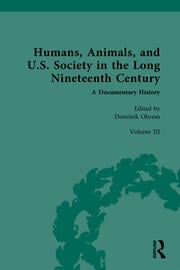
245 00|aHumans, animals, and U.S. society in the long nineteenth century :|ba documentary history.|nVolume III,|pDomesticated and companion animals /|cedited by Dominik Ohrem.
264 1|aLondon :|bRoutledge,|c2026.
300 |a1 online resource (480 pages)
336 |atext|2rdacontent
337 |acomputer|2rdamedia
338 |aonline resource|2rdacarrier
520 |aVolume III hones in on the relations between humans and domesticated animals in U.S. society, illuminating how these relations were integral to key developments of the long nineteenth century. A first section explores the role of domesticated animals in what for most of the nineteenth century remained a predominantly agrarian world (albeit one undergoing significant change), focussing on the labour and products that could be extracted from animal bodies, the "education" of working animals, contemporary attempts at "improving" animal breeds to increase agricultural productivity and market value, the rise of veterinary medicine, and other topics. The second section demonstrates that, the "transportation revolution" of the antebellum decades notwithstanding, animals remained essential for moving around goods and people in both rural areas and the growing U.S. cityscapes, where horses powered everything from carriages to streetcars, as well as in other nineteenth-century contexts that relied on equine, bovine, and, sometimes, canine traction. A third and final section is centred on domesticated animals in entertainment and competitive settings, ranging from the prestigious if embattled sport of Thoroughbred horse racing to pigeon fancying and the brutal spectacles of dog- and cockfighting, which quickly became the target of a spirited post-Civil War anticruelty movement.
588 |aOCLC-licensed vendor bibliographic record.
650 0|aDomestic animals|zUnited States|xHistory|y19th century.
650 0|aHuman-animal relationships|zUnited States|xHistory|y19th century.
650 0|aPets|zUnited States|xHistory|y19th century.
700 1 |aOhrem, Dominik,|eeditor.|1https://isni.org/isni/0000000495943705.
856 40|3Taylor & Francis|uhttps://www.taylorfrancis.com/books/9781003032779
856 42|3OCLC metadata license agreement|uhttp://www.oclc.org/content/dam/oclc/forms/terms/vbrl-201703.pdf
901 |aTaylor & Francis