

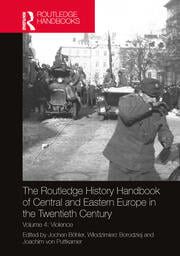
The Routledge History Handbook of Central and Eastern Europe in the Twentieth Century. Volume 4, Violence.
ISBN
9781003055518 (electronic bk.)
1003055516 (electronic bk.)
9781138301672
9781000538007 (electronic bk. : PDF)
1000538001 (electronic bk. : PDF)
9780367518646
9781000538045 (electronic bk. : EPUB)
1000538044 (electronic bk. : EPUB)
1003055516 (electronic bk.)
9781138301672
9781000538007 (electronic bk. : PDF)
1000538001 (electronic bk. : PDF)
9780367518646
9781000538045 (electronic bk. : EPUB)
1000538044 (electronic bk. : EPUB)
Dil Kodu
İngilizce
Basım Bildirimi
First edition.
Yayın Bilgisi
[Place of publication not identified] : Routledge, 2022.
Fiziksel Niteleme
1 online resource (384 pages).
Dizi
Routledge twentieth century history handbooks
İçindekiler Notu
Volume IntroductionJochen Böhler, Włodzimierz Borodziej and Joachim von Puttkamer1. The Balkan Wars: Patterns of Violence in the Balkans Leading up to the First World WarMark Biondich2. The War in the East, 1914-1916Włodzimierz Borodziej3. The Radicalization of Violence and Intermarium's InterwarJochen Böhler4. Mass Violence and its Immediate Aftermath in Central and Eastern Europe during the Second World War, 1939-1947Alexander Korb and Dieter Pohl5. State Socialism: Violence, Oppression and SurveillanceWłodzimierz Borodziej and Dragos Petrescu6. The Violent Dissolution of Yugoslavia, 1989-2001Mark Biondich
Özet, vb.
Violence analyses both the violence exerted on the societies of Central and Eastern Europe during the twentieth century by belligerent powers and authoritarian and/or totalitarian regimes and armed conflicts between ethnic, social and national groups, as well as the interaction between these two phenomena. Throughout the twentieth century, Central and Eastern Europe was particularly hard hit by war, violence and repression, with armed conflicts in the Balkans at the start and end of the period and two world wars in between. In the shadow of these full-scale wars, ethnic, social and national conflicts were intensified, found new forms and were violently played out. The interwar period witnessed the emergence of authoritarian states who enforced their claim to power through continued violence against political opponents, stigmatized ethnic, national, and social groups, and were themselves fought with subversive or terrorist techniques. This volume focuses specifically on physical violence: war and civil war, ethnic cleansing, systematic starvation policies, deportations and expulsions, forced labour and prison camps, persecution by state security - such as intensive surveillance, which had enormous impact on the lives of those it affected - and other forms of government oppression and militant resistance. Geographically, it considers the western regions of Belarus and Ukraine as sites of extreme violence that had noticeable impact on neighbouring Central and Eastern European countries as well. The concluding volume in a four-volume set on Central and Eastern Europe in the twentieth century, it is the go-to resource for those interested in violence in this complex region.
Konu
HISTORY / Europe / Eastern __ bisacsh
HISTORY / Modern / 20th Century __ bisacsh
HISTORY / Europe / Former Soviet Republics __ bisacsh
Post-communism __ Europe, Central __ History __ 20th century.
Post-communism __ Europe, Eastern __ History __ 20th century.
Europe, Central __ Politics and government __ 1989-
Europe, Eastern __ Politics and government __ 1989-
HISTORY / Modern / 20th Century __ bisacsh
HISTORY / Europe / Former Soviet Republics __ bisacsh
Post-communism __ Europe, Central __ History __ 20th century.
Post-communism __ Europe, Eastern __ History __ 20th century.
Europe, Central __ Politics and government __ 1989-
Europe, Eastern __ Politics and government __ 1989-
Veritabanı
Eseri Alıntıla
Referansları kullanmadan önce gözden geçirmeniz ve varsa gerekli düzeltmeleri yapmanız önerilir.
Dijital Kaynak
MARC Görünümü
LEADER 04561cam a2200577Ki 4500
001 794067
003 TR_AnAIT
005 20260123002706
006 m o d
007 cr cnu|||unuuu
008 211007s2022 xx eo 000 0 eng d
020 |a9781003055518|q(electronic bk.)
020 |a1003055516|q(electronic bk.)
020 |z9781138301672
020 |a9781000538007|q(electronic bk. : PDF)
020 |a1000538001|q(electronic bk. : PDF)
020 |z9780367518646
020 |a9781000538045|q(electronic bk. : EPUB)
020 |a1000538044|q(electronic bk. : EPUB)
035 |a(OCoLC)1273727007
035 |a(OCoLC-P)1273727007
040 |aOCoLC-P|beng|erda|epn|cOCoLC-P
041 |aeng
049 |aTürk Tarih Kurumu Kütüphanesi
050 4|aDAW1051
072 7|aHIS|x010010|2bisacsh
072 7|aHIS|x037070|2bisacsh
072 7|aHIS|x012000|2bisacsh
072 7|aHBJD|2bicssc
082 04|a943.009/04|223
245 04|aThe Routledge History Handbook of Central and Eastern Europe in the Twentieth Century.|nVolume 4,|pViolence.
250 |aFirst edition.
264 1|a[Place of publication not identified] :|bRoutledge,|c2022.
300 |a1 online resource (384 pages).
336 |atext|btxt|2rdacontent
337 |acomputer|bc|2rdamedia
338 |aonline resource|bcr|2rdacarrier
490 0 |aRoutledge twentieth century history handbooks
505 0 |aVolume IntroductionJochen Böhler, Włodzimierz Borodziej and Joachim von Puttkamer1. The Balkan Wars: Patterns of Violence in the Balkans Leading up to the First World WarMark Biondich2. The War in the East, 1914-1916Włodzimierz Borodziej3. The Radicalization of Violence and Intermarium's InterwarJochen Böhler4. Mass Violence and its Immediate Aftermath in Central and Eastern Europe during the Second World War, 1939-1947Alexander Korb and Dieter Pohl5. State Socialism: Violence, Oppression and SurveillanceWłodzimierz Borodziej and Dragos Petrescu6. The Violent Dissolution of Yugoslavia, 1989-2001Mark Biondich
520 |aViolence analyses both the violence exerted on the societies of Central and Eastern Europe during the twentieth century by belligerent powers and authoritarian and/or totalitarian regimes and armed conflicts between ethnic, social and national groups, as well as the interaction between these two phenomena. Throughout the twentieth century, Central and Eastern Europe was particularly hard hit by war, violence and repression, with armed conflicts in the Balkans at the start and end of the period and two world wars in between. In the shadow of these full-scale wars, ethnic, social and national conflicts were intensified, found new forms and were violently played out. The interwar period witnessed the emergence of authoritarian states who enforced their claim to power through continued violence against political opponents, stigmatized ethnic, national, and social groups, and were themselves fought with subversive or terrorist techniques. This volume focuses specifically on physical violence: war and civil war, ethnic cleansing, systematic starvation policies, deportations and expulsions, forced labour and prison camps, persecution by state security - such as intensive surveillance, which had enormous impact on the lives of those it affected - and other forms of government oppression and militant resistance. Geographically, it considers the western regions of Belarus and Ukraine as sites of extreme violence that had noticeable impact on neighbouring Central and Eastern European countries as well. The concluding volume in a four-volume set on Central and Eastern Europe in the twentieth century, it is the go-to resource for those interested in violence in this complex region.
588 |aOCLC-licensed vendor bibliographic record.
650 7|aHISTORY / Europe / Eastern|2bisacsh
650 7|aHISTORY / Modern / 20th Century|2bisacsh
650 7|aHISTORY / Europe / Former Soviet Republics|2bisacsh
650 0|aPost-communism|zEurope, Central|xHistory|y20th century.
650 0|aPost-communism|zEurope, Eastern|xHistory|y20th century.
651 0|aEurope, Central|xPolitics and government|y1989-
651 0|aEurope, Eastern|xPolitics and government|y1989-
700 1 |aBöhler, Jochen,|d1969-|eeditor.
700 1 |aBorodziej, Włodzimierz,|eeditor.
700 1 |aPuttkamer, Joachim von,|eeditor.
856 40|3Taylor & Francis|uhttps://www.taylorfrancis.com/books/9781003055518
856 42|3OCLC metadata license agreement|uhttp://www.oclc.org/content/dam/oclc/forms/terms/vbrl-201703.pdf
901 |aTaylor & Francis
001 794067
003 TR_AnAIT
005 20260123002706
006 m o d
007 cr cnu|||unuuu
008 211007s2022 xx eo 000 0 eng d
020 |a9781003055518|q(electronic bk.)
020 |a1003055516|q(electronic bk.)
020 |z9781138301672
020 |a9781000538007|q(electronic bk. : PDF)
020 |a1000538001|q(electronic bk. : PDF)
020 |z9780367518646
020 |a9781000538045|q(electronic bk. : EPUB)
020 |a1000538044|q(electronic bk. : EPUB)
035 |a(OCoLC)1273727007
035 |a(OCoLC-P)1273727007
040 |aOCoLC-P|beng|erda|epn|cOCoLC-P
041 |aeng
049 |aTürk Tarih Kurumu Kütüphanesi
050 4|aDAW1051
072 7|aHIS|x010010|2bisacsh
072 7|aHIS|x037070|2bisacsh
072 7|aHIS|x012000|2bisacsh
072 7|aHBJD|2bicssc
082 04|a943.009/04|223
245 04|aThe Routledge History Handbook of Central and Eastern Europe in the Twentieth Century.|nVolume 4,|pViolence.
250 |aFirst edition.
264 1|a[Place of publication not identified] :|bRoutledge,|c2022.
300 |a1 online resource (384 pages).
336 |atext|btxt|2rdacontent
337 |acomputer|bc|2rdamedia
338 |aonline resource|bcr|2rdacarrier
490 0 |aRoutledge twentieth century history handbooks
505 0 |aVolume IntroductionJochen Böhler, Włodzimierz Borodziej and Joachim von Puttkamer1. The Balkan Wars: Patterns of Violence in the Balkans Leading up to the First World WarMark Biondich2. The War in the East, 1914-1916Włodzimierz Borodziej3. The Radicalization of Violence and Intermarium's InterwarJochen Böhler4. Mass Violence and its Immediate Aftermath in Central and Eastern Europe during the Second World War, 1939-1947Alexander Korb and Dieter Pohl5. State Socialism: Violence, Oppression and SurveillanceWłodzimierz Borodziej and Dragos Petrescu6. The Violent Dissolution of Yugoslavia, 1989-2001Mark Biondich
520 |aViolence analyses both the violence exerted on the societies of Central and Eastern Europe during the twentieth century by belligerent powers and authoritarian and/or totalitarian regimes and armed conflicts between ethnic, social and national groups, as well as the interaction between these two phenomena. Throughout the twentieth century, Central and Eastern Europe was particularly hard hit by war, violence and repression, with armed conflicts in the Balkans at the start and end of the period and two world wars in between. In the shadow of these full-scale wars, ethnic, social and national conflicts were intensified, found new forms and were violently played out. The interwar period witnessed the emergence of authoritarian states who enforced their claim to power through continued violence against political opponents, stigmatized ethnic, national, and social groups, and were themselves fought with subversive or terrorist techniques. This volume focuses specifically on physical violence: war and civil war, ethnic cleansing, systematic starvation policies, deportations and expulsions, forced labour and prison camps, persecution by state security - such as intensive surveillance, which had enormous impact on the lives of those it affected - and other forms of government oppression and militant resistance. Geographically, it considers the western regions of Belarus and Ukraine as sites of extreme violence that had noticeable impact on neighbouring Central and Eastern European countries as well. The concluding volume in a four-volume set on Central and Eastern Europe in the twentieth century, it is the go-to resource for those interested in violence in this complex region.
588 |aOCLC-licensed vendor bibliographic record.
650 7|aHISTORY / Europe / Eastern|2bisacsh
650 7|aHISTORY / Modern / 20th Century|2bisacsh
650 7|aHISTORY / Europe / Former Soviet Republics|2bisacsh
650 0|aPost-communism|zEurope, Central|xHistory|y20th century.
650 0|aPost-communism|zEurope, Eastern|xHistory|y20th century.
651 0|aEurope, Central|xPolitics and government|y1989-
651 0|aEurope, Eastern|xPolitics and government|y1989-
700 1 |aBöhler, Jochen,|d1969-|eeditor.
700 1 |aBorodziej, Włodzimierz,|eeditor.
700 1 |aPuttkamer, Joachim von,|eeditor.
856 40|3Taylor & Francis|uhttps://www.taylorfrancis.com/books/9781003055518
856 42|3OCLC metadata license agreement|uhttp://www.oclc.org/content/dam/oclc/forms/terms/vbrl-201703.pdf
901 |aTaylor & Francis
Materyaller
Depodan talep edilen materyal sadece kütüphane içerisinde kullanılmaktadır.
Materyal dışarıya ödünç verilmemektedir.
Materyal dışarıya ödünç verilmemektedir.
