

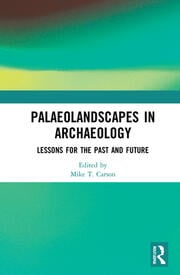
PALAEOLANDSCAPES IN ARCHAEOLOGY [electronic resource] : lessons for the past and future.
ISBN
9781000484823 (electronic bk.)
1000484823 (electronic bk.)
1000484904
9781003139553 (ebook)
1003139558
9781000484908 (electronic bk.)
0367689030
9780367689032
1000484823 (electronic bk.)
1000484904
9781003139553 (ebook)
1003139558
9781000484908 (electronic bk.)
0367689030
9780367689032
Dil Kodu
İngilizce
Fiziksel Niteleme
1 online resource
Özet, vb.
What can we learn about the ancient landscapes of our world, and how can those lessons improve our future in the landscapes that we all inhabit? Those questions are addressed in this book, through a practical framework of concepts and methods, combined with detailed case studies around the world. The chapters explore the range of physical and social attributes that have shaped and re-shaped our landscapes through time. International authors contributed the latest results of investigating ancient landscapes (or "palaeolandscapes") in diverse settings of tropical forests, deserts, river deltas, remote islands, coastal zones, and continental interiors. The case studies embrace abroadly accommodatingapproach of combining archaeological evidence with other avenues of research in earth sciences, biology, and social relations. Individually and in concert, the chapters offer new perspectives on what the world's palaeolandscapes looked like, how people lived in these places, and how communities have engaged with long-term change in their natural and cultural environments through successive centuries and millennia. The lessons are paramount for building responsible strategies and policies today and into the future, noting that many of these issues from the past have gained more urgency today. This book reaches across archaeology, ecology, geography, andother studies of human-environment relations that will appeal to general readers. Specialists and students in these fields will find extra value in the primary datasets and in the new ideas and perspectives. Furthermore, this book provides unique examples from the past, toward understanding the workings of sustainable landscape systems.
Konu
Landscape archaeology __ Case studies.
Landscape assessment __ Case studies.
Paleolithic period.
Prehistoric peoples __ Case studies.
Human ecology __ Case studies.
SCIENCE / Earth Sciences / Geography __ bisacsh
SCIENCE / Earth Sciences / Meteorology & Climatology __ bisacsh
Landscape assessment __ Case studies.
Paleolithic period.
Prehistoric peoples __ Case studies.
Human ecology __ Case studies.
SCIENCE / Earth Sciences / Geography __ bisacsh
SCIENCE / Earth Sciences / Meteorology & Climatology __ bisacsh
Diğer Yazarlar
Veritabanı
