

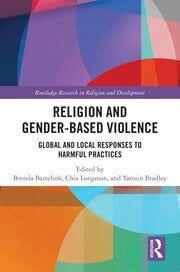
RELIGION AND GENDER-BASED VIOLENCE [electronic resource] : global and local responses to harmful practices.
ISBN
9781000653489 (electronic bk.)
100065348X (electronic bk.)
9781003246046 (electronic bk.)
1003246044 (electronic bk.)
9781000653519 (electronic bk. : EPUB)
100065351X (electronic bk. : EPUB)
1032158700
9781032158709
100065348X (electronic bk.)
9781003246046 (electronic bk.)
1003246044 (electronic bk.)
9781000653519 (electronic bk. : EPUB)
100065351X (electronic bk. : EPUB)
1032158700
9781032158709
Dil Kodu
İngilizce
Fiziksel Niteleme
1 online resource
Dizi
Routledge research in religion and development
Özet, vb.
This book takes religion as an entry point for a deeper exploration into why practices of gender-based violence continue and what possible actions might help to contribute to their eradication. International donors are committed to reducing and ending gender-related harm, particularly violence against women, but clear answers as to why harmful practices persist are often slow to emerge. Theological research struggles to find strong links, yet religion is often referred to by local people as the reason for practices such as female cutting, male circumcision, early and forced marriage, nutritional taboos and birth practices, mandatory (un)veiling, harmful spiritual practices, polygamy, gender unequal marital and inheritance rights and so-called honour crimes. This book presents empirical cases of religious, non-religious and secular actors, including local and international governmental and non-governmental agencies in the fields of development, health and equality policies. Tracing their different understandings of how religion is entangled with gender-based violence both contextually as well as historically, the book sheds light on helpful and unhelpful as well as erroneous and harmful understandings of such practices in local and global perspectives. Centralising the perspectives of women themselves, this book will be an important read for development practitioners and policy makers, as well as for researchers across religious studies, gender studies, and global development.
Konu
SOCIAL SCIENCE / Gender Studies __ bisacsh
SOCIAL SCIENCE / Sociology of Religion __ bisacsh
SOCIAL SCIENCE / Third World Development __ bisacsh
Women __ Violence against __ Religious aspects.
Women __ Crimes against __ Religious aspects.
SOCIAL SCIENCE / Sociology of Religion __ bisacsh
SOCIAL SCIENCE / Third World Development __ bisacsh
Women __ Violence against __ Religious aspects.
Women __ Crimes against __ Religious aspects.
Diğer Yazarlar
Veritabanı
