LEADER 03773cam a22005898i 4500
001 794190
003 TR_AnAIT
005 20260123002921
006 m o d
007 cr |||||||||||
008 240625s2024 enk ob 001 0 eng
020 |a9781003272311|q(ebk)
020 |a1003272312
020 |a9781040108697|q(electronic bk.)
020 |a1040108695|q(electronic bk.)
020 |a9781040108819|q(electronic bk. : EPUB)
020 |a1040108814|q(electronic bk. : EPUB)
020 |z9781032223728|q(hbk)
020 |z9781032223742|q(pbk)
020 |z1032223723
024 7 |a10.4324/9781003272311|2doi
035 |a(OCoLC)1450430984
035 |a(OCoLC-P)1450430984
040 |aOCoLC-P|beng|erda|cOCoLC-P
041 |aeng
049 |aTürk Tarih Kurumu Kütüphanesi
050 00|aCC137.P6
072 7|aSOC|x003000|2bisacsh
072 7|aHD|2bicssc
082 00|a930.1|223/eng/20240729
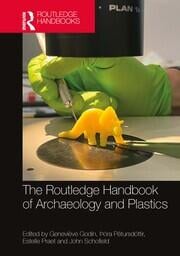
245 04|aThe Routledge handbook of archaeology and plastics /|cedited by Geneviève Godin, Þóra Pétursdóttir, Estelle Praet, and John Schofield.
264 1|aAbingdon, Oxon ;|aNew York, NY :|bRoutledge,|c2024.
300 |a1 online resource
336 |atext|btxt|2rdacontent
337 |acomputer|bc|2rdamedia
338 |aonline resource|bcr|2rdacarrier
500 |aCollection of essays by Cassie Newland and others.
505 2 |aFrameworks -- Perspectives -- Production -- Use -- Waste -- Future Prospects.
520 |a"The Routledge Handbook of Archaeology and Plastics investigates the archaeology of the contemporary world through the lens of its most distinguishing and problematic material. Plastics are ubiquitous and have been so for nearly three generations since they became widely used in the early 1950s. Plastics will persist for millennia, their legacies as toxic heritage being felt deep into the future. In this book--comprising 32 original, at times disturbing, and critically engaged contributions--scholars from archaeology and other cognate disciplines explore plastics from a number of different angles and perspectives. Together these contributions highlight the dilemma that plastics present: their usefulness on the one hand, and the threats they present to environmental health on the other. The volume also explores the lessons that archaeologists can learn from plastics, about episodes of mass production, consumption and toxicity in the past, and also--importantly--about the future. This important and timely collection will therefore be of interest to all archaeologists irrespective of their period of study, or their geographical focus, and to students of archaeology and cultural heritage. It will also be relevant for researchers and students in other fields of study that focus on plastics and their environmental and social impacts. Ultimately, this book concerns the contemporary world and the impact of people upon it, through the archaeological lens"--|cProvided by publisher.
588 |aOCLC-licensed vendor bibliographic record.
650 0|aArchaeology|xMethodology.
650 0|aPlastics|xConservation.
650 0|aMaterial culture.
650 0|aPlastics|xHistory.
650 0|aPlastics|xEnvironmental aspects.
650 0|aPlastics|xSocial aspects.
650 0|aExcavations (Archaeology)
650 7|aSOCIAL SCIENCE / Archaeology|2bisacsh
700 1 |aGodin, Geneviève,|eeditor.
700 0 |aÞóra Pétursdóttir,|d1978-|eeditor.
700 1 |aPraet, Estelle,|eeditor.
700 1 |aSchofield, John,|d1948-|eeditor.|1https://id.oclc.org/worldcat/entity/E39PBJr3ykDm8dprXHwYfrdmh3
856 40|3Taylor & Francis|uhttps://www.taylorfrancis.com/books/9781003272311
856 42|3OCLC metadata license agreement|uhttp://www.oclc.org/content/dam/oclc/forms/terms/vbrl-201703.pdf
901 |aTaylor & Francis