LEADER 03947cam a2200577Mi 4500
001 794228
003 TR_AnAIT
005 20260123003000
006 m o d
007 cr |n|||||||||
008 221227s2023 enk ob 001 0 eng d
020 |a9781000832815|q(electronic bk.)
020 |a1000832813|q(electronic bk.)
020 |a9781003313366|q(electronic bk.)
020 |a1003313361|q(electronic bk.)
020 |a1000832848|q(electronic bk. : EPUB)
020 |a9781000832846|q(electronic bk.)
020 |z9781032322018
020 |z1032322012
020 |z9781032322056
020 |z1032322055
024 7 |a10.4324/9781003313366|2doi
035 |a(OCoLC)1355267110
035 |a(OCoLC-P)1355267110
040 |aOCoLC-P|beng|cOCoLC-P
041 |aeng
049 |aTürk Tarih Kurumu Kütüphanesi
050 4|aKSV12.3
072 7|aLAW|x060000|2bisacsh
072 7|aLAW|x016000|2bisacsh
072 7|aLAM|2bicssc
082 04|a342.6982087|223/eng/20220811
100 1 |aBoodia-Canoo, Nandini S.,|eauthor.
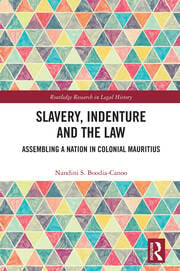
245 10|aSlavery, indenture and the law|h[electronic resource] :|bassembling a nation in colonial Mauritius /|cNandini S. Boodia-Canoo.
264 1|aAbingdon, Oxon ;|aNew York :|bRoutledge,|c2023.
300 |a1 online resource.
336 |atext|2rdacontent
337 |acomputer|2rdamedia
338 |aonline resource|2rdacarrier
490 1 |aRoutledge research in legal history
505 0 |aIntroduction -- Historical background -- The abolition of the slave trade -- The abolition of slavery -- Informal indentiture and apprenticeships -- State-regulated indenture and the emergence of an Indian peasantry -- Conclusion.
520 |aThis book addresses historical issues of colonialism and race, which influenced the formation of multicultural society in Mauritius. During the 19th century, Mauritius was Britain's prime sugar-producing colony, yet, unlike the West Indies, its history has remained significantly under-researched. The modern demographic of multi-ethnic Mauritius is unusual as, in the absence of an indigenous people, descendants of colonists, slaves and indentured labourers constitute the majority of the island's population today. Thus, it may be said that the Mauritian nation was "assembled" during the period in question. This work draws on an in-depth examination of the two labour systems through which the island came to be populated: slavery and indenture. In studying the relevant laws, four legal events of historical importance within the context of these two labour systems are identified: the abolition of the slave trade, the abolition of slavery, private indentured labour migration and state-regulated indenture. This book is notable in that it presents a legal analysis of core historical events, thus straddling the line between two disciplines, and covers both slavery and indentured labour in Mauritian history. Mauritius, as an originally uninhabited island, presents a rare case study for inquiries into colonial legacies, multiculturalism and race consciousness. The book will be a valuable resource to scholars worldwide in the fields of slavery, indenture and the legal apparatus of forced labour.
588 |aOCLC-licensed vendor bibliographic record.
650 0|aLaw|xSocial aspects|zMauritius|xHistory|y19th century.
650 0|aSlavery|xLaw and legislation|zMauritius|xHistory|y19th century.
650 0|aIndentured servants|xLegal status, laws, etc.|zMauritius|xHistory|y19th century.
650 0|aLabor laws and legislation|zMauritius|xHistory|y19th century.
650 7|aLAW / Legal History|2bisacsh
650 7|aLAW / Comparative|2bisacsh
651 0|aMauritius|xSocial conditions|y19th century.
830 0|aRoutledge research in legal history.
856 40|3Taylor & Francis|uhttps://www.taylorfrancis.com/books/9781003313366
856 42|3OCLC metadata license agreement|uhttp://www.oclc.org/content/dam/oclc/forms/terms/vbrl-201703.pdf
901 |aTaylor & Francis