LEADER 03166cam a22004818i 4500
001 794232
003 TR_AnAIT
005 20260123003005
006 m o d
007 cr |||||||||||
008 220417s2023 nyu ob 001 0 eng
020 |a9781003314790|q(ebook)
020 |a1003314791
020 |a9781000641974|q(electronic bk. : PDF)
020 |a100064197X|q(electronic bk. : PDF)
020 |a9781000642001|q(electronic bk. : EPUB)
020 |a1000642003|q(electronic bk. : EPUB)
020 |z9780367001063|q(hardback)
020 |z9780367429041|q(paperback)
024 7 |a10.4324/9781003314790|2doi
035 |a(OCoLC)1315574862
035 |a(OCoLC-P)1315574862
040 |aOCoLC-P|beng|erda|cOCoLC-P
041 |aeng
049 |aTürk Tarih Kurumu Kütüphanesi
050 00|aE159
072 7|aHIS|x000000|2bisacsh
072 7|aGM|2bicssc
082 00|a363.6/90973|223/eng/20220509
100 1 |aSprinkle, John H.,|eauthor.
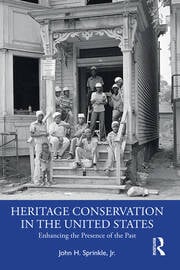
245 10|aHeritage conservation in the United States :|benhancing the presence of the past /|cJohn H. Sprinkle, Jr.
264 1|aNew York, NY :|bRoutledge,|c2023.
300 |a1 online resource
336 |atext|btxt|2rdacontent
337 |acomputer|bc|2rdamedia
338 |aonline resource|bcr|2rdacarrier
505 0 |aIntroduction: Like Saul on the road to Damarcus -- The new preservation -- Visibility and representation -- Drifting away from the truth -- Districts and displacement -- Planning and process, awakening and reaction -- Heritage conservation as a civil right.
520 |a"Heritage Conservation in the United States traces the growth of the American historic preservation movement over the last 50 years, viewed from the context of the civil rights and environmental movements. The first generation of the New Preservation (1966-1991) in the United States was characterized by the establishment of the bureaucratic structures that continue to shape the practice of heritage conservation in the United States. The National Register of Historic Places began with less than a thousand historic properties and grew to over 50,000 listings. Official recognition programs expanded, causing sites that would never have been considered as either significant or physically representative in 1966 now being regularly considered as part of a historic preservation planning process. The book uses the story of how sites associated with African American history came to be officially recognized and valued, and how that process challenged the conventions and criteria that governed American preservation practice. This book is designed for the historic preservation community and students engaged in the study of historic preservation"--|cProvided by publisher.
588 |aOCLC-licensed vendor bibliographic record.
650 0|aHistoric preservation|zUnited States.
650 0|aCultural property|xProtection|zUnited States.
650 7|aHISTORY / General|2bisacsh
651 0|aUnited States|xCultural policy.
856 40|3Taylor & Francis|uhttps://www.taylorfrancis.com/books/9781003314790
856 42|3OCLC metadata license agreement|uhttp://www.oclc.org/content/dam/oclc/forms/terms/vbrl-201703.pdf
901 |aTaylor & Francis