LEADER 03972cam a2200613 i 4500
001 794319
003 TR_AnAIT
005 20260123003142
006 m o d
007 cr cnu|||unuuu
008 250619t20252026enk eob 001 0 eng d
020 |a9781003458487|q(electronic bk.)
020 |a1003458483|q(electronic bk.)
020 |a9781040396124|q(electronic bk. : EPUB)
020 |a1040396127|q(electronic bk. : EPUB)
020 |a9781040396100|q(electronic bk. : PDF)
020 |a1040396100|q(electronic bk. : PDF)
020 |z9781032583587
020 |z9781032602851
024 7 |a10.4324/9781003458487|2doi
035 |a(OCoLC)1524193481
035 |a(OCoLC-P)1524193481
040 |aOCoLC-P|beng|erda|epn|cOCoLC-P
041 |aeng
049 |aTürk Tarih Kurumu Kütüphanesi
050 4|aBT825
072 7|aHRAX|2bicssc
072 7|aHIS000000|2bisacsh
072 7|aHBLC1|2bicssc
072 7|aHRCS|2bicssc
072 7|aHBJD|2bicssc
072 7|aHBTB|2bicssc
072 7|aHIS037010|2bisacsh
072 7|aREL108020|2bisacsh
082 04|a236/.1|223/eng/20250701
100 1 |aMutie, Jeremiah,|eauthor.|1https://id.oclc.org/worldcat/entity/E39PCjFMQ7wdwgdCvtfGjjjgrq
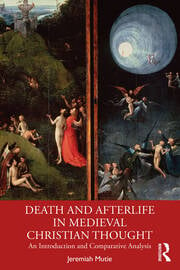
245 10|aDeath and afterlife in Medieval Christian thought :|ban introduction and comparative analysis /|cJeremiah Mutie.
264 1|aOxford :|bRoutledge,|c[2025]
264 4|c©2026.
300 |a1 online resource.
336 |atext|btxt|2rdacontent
337 |acomputer|bc|2rdamedia
338 |aonline resource|bcr|2rdacarrier
505 0 |aPrefaceAcknowledgementsIntroductionChapter 1: Backgrounds of Conceptions of Death in Medieval Christian Thought: The Forming of the CloudsChapter 2: The Rise of the Cult of the Saints and the Doctrine of PurgatoryChapter 3: Death and Afterlife in Medieval Western Christian Thought: Attitudes, Beliefs, Practices and Remembrance of the DeadChapter 4: Death and Afterlife in Medieval Eastern Christian Thought: Beliefs, Practices, Comparisons and Contrasts with the WestConclusionIndex
520 |aDeath and Afterlife in Medieval Christian Thought explores how medieval Christians conceived the changing ideas of death and what happens thereafter to both the material and immaterial aspects of a person.Where much scholarship has addressed this topic from a Western point of view, this book asks how these ideas emerged and progressed over this long period of time in both Western and Eastern medieval Christianities. The work examines the two leading motifs of death and the afterlife in Western medieval Christian thought: Purgatory and the cult of the saints. It then proceeds to shift the spotlight to conceptions of death in Eastern Christianity, all the while maintaining a comparative approach. This book not only delves into the theoretical, but draws on archaeological evidence, such as artefacts, to provide a broader view of the evidence. Ultimately, it finds that medieval Christians continued the process that started in Christianity's earliest days of borrowing and modifying existing ideas of death and the afterlife in order to produce a distinctive and sophisticated Christian set of beliefs.As an accessible introduction, this book stands as a valuable resource to students, scholars and all readers interested in early medieval Christianity, the history of ideas, and the history of death.
588 |aOCLC-licensed vendor bibliographic record.
630 00|aBible|xInfluence|xMedieval civilization.
650 0|aDeath|xReligious aspects|xChristianity.
650 0|aDeath|xBiblical teaching.
650 0|aDeath|xReligious aspects.
650 0|aBurial.
650 0|aFuneral rites and ceremonies.
650 0|aFathers of the church.
650 0|aChristian literature, Early|xHistory and criticism.
856 40|3Taylor & Francis|uhttps://www.taylorfrancis.com/books/9781003458487
856 42|3OCLC metadata license agreement|uhttp://www.oclc.org/content/dam/oclc/forms/terms/vbrl-201703.pdf
901 |aTaylor & Francis