

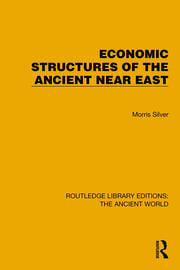
ECONOMIC STRUCTURES OF THE ANCIENT NEAR EAST [electronic resource].
ISBN
9781040035900 (electronic bk.)
1040035906 (electronic bk.)
9781003483502 (electronic bk.)
100348350X (electronic bk.)
9781040035801 (electronic bk. : PDF)
1040035809 (electronic bk. : PDF)
1032765348
9781032765341
1040035906 (electronic bk.)
9781003483502 (electronic bk.)
100348350X (electronic bk.)
9781040035801 (electronic bk. : PDF)
1040035809 (electronic bk. : PDF)
1032765348
9781032765341
Dil Kodu
İngilizce
Yazar
Fiziksel Niteleme
1 online resource
Dizi
Routledge library editions: The ancient world ; v. 13
Özet, vb.
Economic Structures of the Ancient Near East (1985) is a political economy of antiquity which applies the universal conclusions of theoretical economics to the interpretation of economic life. The first part of the book shows that the analysis of transaction costs - that is, the resources used up in exchanging ownership rights including costs of communication and of designing and enforcing contracts - provides numerous insights into the structure of the ancient economy. The role of temples as centres of commerce, inculcation of professional standards by gods, elevation of technology to the status of divine gift, religious syncretism and fetishism and many more seemingly exotic practices are comprehended as elements in a strategy to cope with high transaction costs by increasing the stock of what might be called trust capital. It is shown that similar considerations lie behind the ubiquity of diversified, multinational family firms, the prominent entrepreneurial role of high-born women, the prominence within the contractual process of publicly performed conventional gestures and recitations, and the intrusion of gifts, friendship, and other manifestations of personal economics into exchange relationships. The book goes on to examine carefully, and then reject, the view of economic historian Karl Polanyi and others that the ancient Near East lacked true markets for consumer goods and productive factors. The direct evidence of market exchange (local and long distance), occupational specialisation, supply-demand determined prices, investment in material and human capital, production for the market, and other modern' traits is uneven with respect to place and time, but nevertheless abundant. The requisite market functions demanded by Polanyi, including a market for labour (slave and free) and elaborate credit and investment markets, can be seen plainly from very early times. Finally, the book deals with the impact on the ancient Near Eastern economy of changes in economic incentives and of changes in economic policy. It becomes evident that ancient economies were capable of making profound alterations in order to take advantage of new economic opportunities. It is also shown that the ancient Near East was not static, as is usually asserted: periods of pervasive economic regulation by the state are interspersed with lengthy periods of relatively unfettered market activity and growth.
Konu
HISTORY / General __ bisacsh
Middle East __ Economic conditions.
Middle East __ History __ To 622.
Middle East __ Commerce __ History.
Middle East __ Economic conditions.
Middle East __ History __ To 622.
Middle East __ Commerce __ History.
Veritabanı
Eseri Alıntıla
Referansları kullanmadan önce gözden geçirmeniz ve varsa gerekli düzeltmeleri yapmanız önerilir.
Dijital Kaynak
MARC Görünümü
LEADER 04055cam a2200445M 4500
001 794346
003 TR_AnAIT
005 20260123003214
006 m o d
007 cr |n|||||||||
008 240710s2024 xx o 0|| 0 eng d
020 |a9781040035900|q(electronic bk.)
020 |a1040035906|q(electronic bk.)
020 |a9781003483502|q(electronic bk.)
020 |a100348350X|q(electronic bk.)
020 |a9781040035801|q(electronic bk. : PDF)
020 |a1040035809|q(electronic bk. : PDF)
020 |z1032765348
020 |z9781032765341
024 7 |a10.4324/9781003483502|2doi
035 |a(OCoLC)1444152133
035 |a(OCoLC-P)1444152133
040 |aOCoLC-P|beng|cOCoLC-P
041 |aeng
049 |aTürk Tarih Kurumu Kütüphanesi
050 4|aHF3756
072 7|aHIS|x000000|2bisacsh
072 7|aHBLA1|2bicssc
082 04|a330.939/4|223/eng/20240718
100 1 |aSilver, Morris.|1https://id.oclc.org/worldcat/entity/E39PCjrRDQyVWF8CJFM4JyMkWC
245 10|aECONOMIC STRUCTURES OF THE ANCIENT NEAR EAST|h[electronic resource].
260 |a[S.l.] :|bROUTLEDGE,|c2024.
300 |a1 online resource
490 0 |aRoutledge library editions: The ancient world ;|vv. 13
520 |aEconomic Structures of the Ancient Near East (1985) is a political economy of antiquity which applies the universal conclusions of theoretical economics to the interpretation of economic life. The first part of the book shows that the analysis of transaction costs - that is, the resources used up in exchanging ownership rights including costs of communication and of designing and enforcing contracts - provides numerous insights into the structure of the ancient economy. The role of temples as centres of commerce, inculcation of professional standards by gods, elevation of technology to the status of divine gift, religious syncretism and fetishism and many more seemingly exotic practices are comprehended as elements in a strategy to cope with high transaction costs by increasing the stock of what might be called trust capital. It is shown that similar considerations lie behind the ubiquity of diversified, multinational family firms, the prominent entrepreneurial role of high-born women, the prominence within the contractual process of publicly performed conventional gestures and recitations, and the intrusion of gifts, friendship, and other manifestations of personal economics into exchange relationships. The book goes on to examine carefully, and then reject, the view of economic historian Karl Polanyi and others that the ancient Near East lacked true markets for consumer goods and productive factors. The direct evidence of market exchange (local and long distance), occupational specialisation, supply-demand determined prices, investment in material and human capital, production for the market, and other modern' traits is uneven with respect to place and time, but nevertheless abundant. The requisite market functions demanded by Polanyi, including a market for labour (slave and free) and elaborate credit and investment markets, can be seen plainly from very early times. Finally, the book deals with the impact on the ancient Near Eastern economy of changes in economic incentives and of changes in economic policy. It becomes evident that ancient economies were capable of making profound alterations in order to take advantage of new economic opportunities. It is also shown that the ancient Near East was not static, as is usually asserted: periods of pervasive economic regulation by the state are interspersed with lengthy periods of relatively unfettered market activity and growth.
588 |aOCLC-licensed vendor bibliographic record.
650 7|aHISTORY / General|2bisacsh
651 0|aMiddle East|xEconomic conditions.
651 0|aMiddle East|xHistory|yTo 622.
651 0|aMiddle East|xCommerce|xHistory.
856 40|3Taylor & Francis|uhttps://www.taylorfrancis.com/books/9781003483502
856 42|3OCLC metadata license agreement|uhttp://www.oclc.org/content/dam/oclc/forms/terms/vbrl-201703.pdf
901 |aTaylor & Francis
001 794346
003 TR_AnAIT
005 20260123003214
006 m o d
007 cr |n|||||||||
008 240710s2024 xx o 0|| 0 eng d
020 |a9781040035900|q(electronic bk.)
020 |a1040035906|q(electronic bk.)
020 |a9781003483502|q(electronic bk.)
020 |a100348350X|q(electronic bk.)
020 |a9781040035801|q(electronic bk. : PDF)
020 |a1040035809|q(electronic bk. : PDF)
020 |z1032765348
020 |z9781032765341
024 7 |a10.4324/9781003483502|2doi
035 |a(OCoLC)1444152133
035 |a(OCoLC-P)1444152133
040 |aOCoLC-P|beng|cOCoLC-P
041 |aeng
049 |aTürk Tarih Kurumu Kütüphanesi
050 4|aHF3756
072 7|aHIS|x000000|2bisacsh
072 7|aHBLA1|2bicssc
082 04|a330.939/4|223/eng/20240718
100 1 |aSilver, Morris.|1https://id.oclc.org/worldcat/entity/E39PCjrRDQyVWF8CJFM4JyMkWC
245 10|aECONOMIC STRUCTURES OF THE ANCIENT NEAR EAST|h[electronic resource].
260 |a[S.l.] :|bROUTLEDGE,|c2024.
300 |a1 online resource
490 0 |aRoutledge library editions: The ancient world ;|vv. 13
520 |aEconomic Structures of the Ancient Near East (1985) is a political economy of antiquity which applies the universal conclusions of theoretical economics to the interpretation of economic life. The first part of the book shows that the analysis of transaction costs - that is, the resources used up in exchanging ownership rights including costs of communication and of designing and enforcing contracts - provides numerous insights into the structure of the ancient economy. The role of temples as centres of commerce, inculcation of professional standards by gods, elevation of technology to the status of divine gift, religious syncretism and fetishism and many more seemingly exotic practices are comprehended as elements in a strategy to cope with high transaction costs by increasing the stock of what might be called trust capital. It is shown that similar considerations lie behind the ubiquity of diversified, multinational family firms, the prominent entrepreneurial role of high-born women, the prominence within the contractual process of publicly performed conventional gestures and recitations, and the intrusion of gifts, friendship, and other manifestations of personal economics into exchange relationships. The book goes on to examine carefully, and then reject, the view of economic historian Karl Polanyi and others that the ancient Near East lacked true markets for consumer goods and productive factors. The direct evidence of market exchange (local and long distance), occupational specialisation, supply-demand determined prices, investment in material and human capital, production for the market, and other modern' traits is uneven with respect to place and time, but nevertheless abundant. The requisite market functions demanded by Polanyi, including a market for labour (slave and free) and elaborate credit and investment markets, can be seen plainly from very early times. Finally, the book deals with the impact on the ancient Near Eastern economy of changes in economic incentives and of changes in economic policy. It becomes evident that ancient economies were capable of making profound alterations in order to take advantage of new economic opportunities. It is also shown that the ancient Near East was not static, as is usually asserted: periods of pervasive economic regulation by the state are interspersed with lengthy periods of relatively unfettered market activity and growth.
588 |aOCLC-licensed vendor bibliographic record.
650 7|aHISTORY / General|2bisacsh
651 0|aMiddle East|xEconomic conditions.
651 0|aMiddle East|xHistory|yTo 622.
651 0|aMiddle East|xCommerce|xHistory.
856 40|3Taylor & Francis|uhttps://www.taylorfrancis.com/books/9781003483502
856 42|3OCLC metadata license agreement|uhttp://www.oclc.org/content/dam/oclc/forms/terms/vbrl-201703.pdf
901 |aTaylor & Francis
Materyaller
Depodan talep edilen materyal sadece kütüphane içerisinde kullanılmaktadır.
Materyal dışarıya ödünç verilmemektedir.
Materyal dışarıya ödünç verilmemektedir.
