

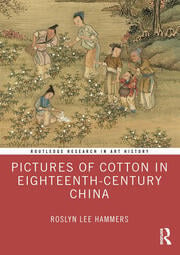
Pictures of cotton in eighteenth-century China / Roslyn Lee Hammers.
ISBN
9781003544791 ebook
1003544797
9781032888019 hardback
9781032898315 paperback
9781040391860 electronic book
1040391869 electronic book
9781040391853 electronic book
1040391850 electronic book
1032888016 hardcover
1003544797
9781032888019 hardback
9781032898315 paperback
9781040391860 electronic book
1040391869 electronic book
9781040391853 electronic book
1040391850 electronic book
1032888016 hardcover
Dil Kodu
İngilizce
Yazar
Yayın Bilgisi
New York, NY : Routledge, 2026.
Fiziksel Niteleme
1 online resource.
Dizi
Routledge research in art history
Özet, vb.
"Pictures of Cotton in Eighteenth-Century China narrates cotton's journey from a little understand material to a cherished commodity ennobled by associations with the classical heritage of China. In the 12th century, cotton, an imported crop, was plucked from the fields and entered the margins of agricultural treatises. The material was eventually "acknowledged" as cotton, an object distinct from silk, worthy of representation. By the late 16th century, representations of the plant and of the labor used to process it were incorporated into agricultural publications. During the 18th century, cotton imagery and discussions were situated in imperial encyclopaedias, further consolidating its classical legacy. The Governor-general Fang Guancheng (1696/8-1768) deemed cotton a worthy subject for ambitious painting. In 1765, he designed the Pictures of Cotton, a series of sixteen paintings complete with commentary that delineated the processes of growing cotton and manufacturing fabric. He presented the Pictures of Cotton to the Qianlong emperor (r. 1735-96) who inscribed his imperial verse on each scene. Knowledge about the fiber became a means to collaborate at the highest level of the court and bureaucracy. Fang replicated the series, complete with imperial verses into carved stone to enable replication. The Jiaqing emperor (r.1796-1821) likewise published the series as woodblock prints. Upon domestication, cotton advanced political legitimacy, a commodity that attained canonical status. Cotton was represented in a scopic regime formulated by the Qing imperium, and in the process, the Imperially Inscribed Pictures of Cotton became the authoritative vision of cotton"-- Provided by publisher.
Konu
Veritabanı
Eseri Alıntıla
Referansları kullanmadan önce gözden geçirmeniz ve varsa gerekli düzeltmeleri yapmanız önerilir.
Dijital Kaynak
MARC Görünümü
LEADER 05283cam a22006738i 4500
001 794383
003 TR_AnAIT
005 20260123003250
006 m o d
007 cr |||||||||||
008 250404s2026 nyu ob 001 0 eng
020 |a9781003544791|qebook
020 |a1003544797
020 |z9781032888019|qhardback
020 |z9781032898315|qpaperback
020 |a9781040391860|qelectronic book
020 |a1040391869|qelectronic book
020 |a9781040391853|qelectronic book
020 |a1040391850|qelectronic book
020 |z1032888016|qhardcover
024 7 |a10.4324/9781003544791|2doi
035 |a(OCoLC)1524961358
035 |a(OCoLC-P)1524961358
040 |aOCoLC-P|beng|erda|cOCoLC-P
041 |aeng
049 |aTürk Tarih Kurumu Kütüphanesi
050 00|aN8251.T4
072 7|aAC|2bicssc
072 7|aPDX|2bicssc
072 7|aHBJF|2bicssc
072 7|aAB|2bicssc
072 7|aGTB|2bicssc
072 7|aART015000|2bisacsh
072 7|aART019000|2bisacsh
072 7|aHIS008000|2bisacsh
082 00|a758/.963351095109033|223/eng/20250619
100 1 |aHammers, Roslyn Lee|eauthor|4aut|4http://id.loc.gov/vocabulary/relators/aut|0http://id.loc.gov/authorities/names/no2003077927|1http://id.loc.gov/rwo/agents/no2003077927.
245 10|aPictures of cotton in eighteenth-century China /|cRoslyn Lee Hammers.
264 1|aNew York, NY :|bRoutledge,|c2026.
300 |a1 online resource.
334 |asingle unit|bmono|0http://id.loc.gov/vocabulary/issuance/mono
336 |atext|btxt|2rdacontent
337 |acomputer|bc|2rdamedia
338 |aonline resource|bcr|2rdacarrier
341 0 |atextual|2sapdv|3Taylor & Francis
353 |abibliography|bbibliography|0http://id.loc.gov/vocabulary/msupplcont/bibliography
353 |aindex|bindex|0http://id.loc.gov/vocabulary/msupplcont/index
490 1 |aRoutledge research in art history
520 |a"Pictures of Cotton in Eighteenth-Century China narrates cotton's journey from a little understand material to a cherished commodity ennobled by associations with the classical heritage of China. In the 12th century, cotton, an imported crop, was plucked from the fields and entered the margins of agricultural treatises. The material was eventually "acknowledged" as cotton, an object distinct from silk, worthy of representation. By the late 16th century, representations of the plant and of the labor used to process it were incorporated into agricultural publications. During the 18th century, cotton imagery and discussions were situated in imperial encyclopaedias, further consolidating its classical legacy. The Governor-general Fang Guancheng (1696/8-1768) deemed cotton a worthy subject for ambitious painting. In 1765, he designed the Pictures of Cotton, a series of sixteen paintings complete with commentary that delineated the processes of growing cotton and manufacturing fabric. He presented the Pictures of Cotton to the Qianlong emperor (r. 1735-96) who inscribed his imperial verse on each scene. Knowledge about the fiber became a means to collaborate at the highest level of the court and bureaucracy. Fang replicated the series, complete with imperial verses into carved stone to enable replication. The Jiaqing emperor (r.1796-1821) likewise published the series as woodblock prints. Upon domestication, cotton advanced political legitimacy, a commodity that attained canonical status. Cotton was represented in a scopic regime formulated by the Qing imperium, and in the process, the Imperially Inscribed Pictures of Cotton became the authoritative vision of cotton"-- Provided by publisher.
532 1 |3Taylor & Francis|a"We are committed to complying with the W3C???s Web Content Accessibility Guidelines (WCAG) 2.2 AA Standard to ensure compliance with the following legislation and standards: European Accessibility Act (June 2025), Americans with Disabilities Act of 1990, US Government Section 508 Standards, EPUB Accessibility 1.1 (w3.org), EN 301 549 ??? European Union Accessibility requirements suitable for public procurement of ICT products and services in Europe (V3.2.1),The Public Sector Bodies (Websites and Mobile Applications) (No. 2) Accessibility Regulations 2018 (PSBAR)." Source: https://taylorandfrancis.com/about/corporate-responsibility/accessibility-at-taylor-francis/. Last accessed April 22, 2025.
588 |aOCLC-licensed vendor bibliographic record.
600 10|aFang, Guancheng,|d1698-1768.|tMian hua tu|1http://id.loc.gov/resources/hubs/4a353911-91f9-7325-7b45-3653384e0d96.
650 0|aCotton in art.|0http://id.loc.gov/authorities/subjects/sh2017003651
650 0|aCotton|xSocial aspects|zChina|xHistory.
650 0|aTechnological innovations|xSocial aspects|zChina.
650 0|aTextile fabrics in art.
758 |1http://id.loc.gov/resources/instances/24139635
758 |4http://id.loc.gov/ontologies/bibframe/instanceOf|1http://id.loc.gov/resources/works/24139635
830 0|aRoutledge research in art history|1http://id.loc.gov/resources/hubs/1be7adfb-3dd5-98e7-d0bb-ff716dfa783e.
856 40|3Taylor & Francis|uhttps://www.taylorfrancis.com/books/9781003544791
856 42|3OCLC metadata license agreement|uhttp://www.oclc.org/content/dam/oclc/forms/terms/vbrl-201703.pdf
901 |aTaylor & Francis
001 794383
003 TR_AnAIT
005 20260123003250
006 m o d
007 cr |||||||||||
008 250404s2026 nyu ob 001 0 eng
020 |a9781003544791|qebook
020 |a1003544797
020 |z9781032888019|qhardback
020 |z9781032898315|qpaperback
020 |a9781040391860|qelectronic book
020 |a1040391869|qelectronic book
020 |a9781040391853|qelectronic book
020 |a1040391850|qelectronic book
020 |z1032888016|qhardcover
024 7 |a10.4324/9781003544791|2doi
035 |a(OCoLC)1524961358
035 |a(OCoLC-P)1524961358
040 |aOCoLC-P|beng|erda|cOCoLC-P
041 |aeng
049 |aTürk Tarih Kurumu Kütüphanesi
050 00|aN8251.T4
072 7|aAC|2bicssc
072 7|aPDX|2bicssc
072 7|aHBJF|2bicssc
072 7|aAB|2bicssc
072 7|aGTB|2bicssc
072 7|aART015000|2bisacsh
072 7|aART019000|2bisacsh
072 7|aHIS008000|2bisacsh
082 00|a758/.963351095109033|223/eng/20250619
100 1 |aHammers, Roslyn Lee|eauthor|4aut|4http://id.loc.gov/vocabulary/relators/aut|0http://id.loc.gov/authorities/names/no2003077927|1http://id.loc.gov/rwo/agents/no2003077927.
245 10|aPictures of cotton in eighteenth-century China /|cRoslyn Lee Hammers.
264 1|aNew York, NY :|bRoutledge,|c2026.
300 |a1 online resource.
334 |asingle unit|bmono|0http://id.loc.gov/vocabulary/issuance/mono
336 |atext|btxt|2rdacontent
337 |acomputer|bc|2rdamedia
338 |aonline resource|bcr|2rdacarrier
341 0 |atextual|2sapdv|3Taylor & Francis
353 |abibliography|bbibliography|0http://id.loc.gov/vocabulary/msupplcont/bibliography
353 |aindex|bindex|0http://id.loc.gov/vocabulary/msupplcont/index
490 1 |aRoutledge research in art history
520 |a"Pictures of Cotton in Eighteenth-Century China narrates cotton's journey from a little understand material to a cherished commodity ennobled by associations with the classical heritage of China. In the 12th century, cotton, an imported crop, was plucked from the fields and entered the margins of agricultural treatises. The material was eventually "acknowledged" as cotton, an object distinct from silk, worthy of representation. By the late 16th century, representations of the plant and of the labor used to process it were incorporated into agricultural publications. During the 18th century, cotton imagery and discussions were situated in imperial encyclopaedias, further consolidating its classical legacy. The Governor-general Fang Guancheng (1696/8-1768) deemed cotton a worthy subject for ambitious painting. In 1765, he designed the Pictures of Cotton, a series of sixteen paintings complete with commentary that delineated the processes of growing cotton and manufacturing fabric. He presented the Pictures of Cotton to the Qianlong emperor (r. 1735-96) who inscribed his imperial verse on each scene. Knowledge about the fiber became a means to collaborate at the highest level of the court and bureaucracy. Fang replicated the series, complete with imperial verses into carved stone to enable replication. The Jiaqing emperor (r.1796-1821) likewise published the series as woodblock prints. Upon domestication, cotton advanced political legitimacy, a commodity that attained canonical status. Cotton was represented in a scopic regime formulated by the Qing imperium, and in the process, the Imperially Inscribed Pictures of Cotton became the authoritative vision of cotton"-- Provided by publisher.
532 1 |3Taylor & Francis|a"We are committed to complying with the W3C???s Web Content Accessibility Guidelines (WCAG) 2.2 AA Standard to ensure compliance with the following legislation and standards: European Accessibility Act (June 2025), Americans with Disabilities Act of 1990, US Government Section 508 Standards, EPUB Accessibility 1.1 (w3.org), EN 301 549 ??? European Union Accessibility requirements suitable for public procurement of ICT products and services in Europe (V3.2.1),The Public Sector Bodies (Websites and Mobile Applications) (No. 2) Accessibility Regulations 2018 (PSBAR)." Source: https://taylorandfrancis.com/about/corporate-responsibility/accessibility-at-taylor-francis/. Last accessed April 22, 2025.
588 |aOCLC-licensed vendor bibliographic record.
600 10|aFang, Guancheng,|d1698-1768.|tMian hua tu|1http://id.loc.gov/resources/hubs/4a353911-91f9-7325-7b45-3653384e0d96.
650 0|aCotton in art.|0http://id.loc.gov/authorities/subjects/sh2017003651
650 0|aCotton|xSocial aspects|zChina|xHistory.
650 0|aTechnological innovations|xSocial aspects|zChina.
650 0|aTextile fabrics in art.
758 |1http://id.loc.gov/resources/instances/24139635
758 |4http://id.loc.gov/ontologies/bibframe/instanceOf|1http://id.loc.gov/resources/works/24139635
830 0|aRoutledge research in art history|1http://id.loc.gov/resources/hubs/1be7adfb-3dd5-98e7-d0bb-ff716dfa783e.
856 40|3Taylor & Francis|uhttps://www.taylorfrancis.com/books/9781003544791
856 42|3OCLC metadata license agreement|uhttp://www.oclc.org/content/dam/oclc/forms/terms/vbrl-201703.pdf
901 |aTaylor & Francis
Materyaller
Depodan talep edilen materyal sadece kütüphane içerisinde kullanılmaktadır.
Materyal dışarıya ödünç verilmemektedir.
Materyal dışarıya ödünç verilmemektedir.
