

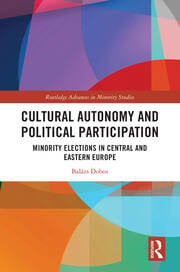
Cultural autonomy and political participation : minority elections in Central and Eastern Europe / Bala??zs Dobos.
ISBN
1003649165
9781003649168 (electronic bk.)
9781040447185 (electronic bk. : EPUB)
104044718X (electronic bk. : EPUB)
9781040447130 (electronic bk. : PDF)
1040447139 (electronic bk. : PDF)
9781041091608 (hardback)
9781041092520 (paperback)
9781003649168 (electronic bk.)
9781040447185 (electronic bk. : EPUB)
104044718X (electronic bk. : EPUB)
9781040447130 (electronic bk. : PDF)
1040447139 (electronic bk. : PDF)
9781041091608 (hardback)
9781041092520 (paperback)
Dil Kodu
İngilizce
Yazar
Yayın Bilgisi
Abingdon, Oxon [UK] ; New York, NY : Routledge, 2026.
Fiziksel Niteleme
1 online resource.
Dizi
Routledge advances in minority studies
İçindekiler Notu
Theoretical foundations -- National-cultural autonomy from historical and regional perspectives -- The main features and elections of national-cultural autonomies in Croatia, Estonia, Hungary, Serbia, and Slovenia -- The minorities and national-cultural autonomies -- The elections of national-cultural autonomies in practice.
Özet, vb.
"This book provides a comparative, theoretical and empirical understanding of the possible role of elections to minority councils and self-governments, local variants of national-cultural autonomy bodies in five East-Central European countries. The functions and effects of elections serve as analytical tools that enable the book to provide a realistic overview of minority political participation in this particular institutional channel and empirical evidence on the extent to which existing normative expectations towards national-cultural autonomy are met within these arrangements. Using the elections of cultural autonomous bodies in Croatia, Estonia, Hungary, Serbia and Slovenia as examples, the book examines how these rather understudied institutions specific to minority councils and self-governments affect the lives of national and ethnic minorities, how they approach them and how they are established in each country. In the post-Communist environment that fundamentally rejects autonomy, these organizations are still officially referred to as autonomies, whereas they often function more like consultative-advisory bodies. The book traces this process from the adoption of autonomy, through the polling booth, to the operational level, without avoiding sensitive issues raised by these autonomies, such as what is commonly known as ethno-business. Focusing on topical issues such as minority representation and participation, the book will be of interest to a broad group of international academics, researchers and policy-makers working in the areas of Minority Studies, Legal Studies, Political Science and Anthropology"-- Provided by publisher.
Konu
Minorities __ Legal status, laws, etc. __ Europe, Central.
Minorities __ Legal status, laws, etc. __ Europe, Eastern.
Election law __ Europe, Central.
Election law __ Europe, Eastern.
Local government __ Law and legislation __ Europe, Central.
Local government __ Law and legislation __ Europe, Eastern.
Minorities __ Legal status, laws, etc. __ Europe, Eastern.
Election law __ Europe, Central.
Election law __ Europe, Eastern.
Local government __ Law and legislation __ Europe, Central.
Local government __ Law and legislation __ Europe, Eastern.
Veritabanı
Eseri Alıntıla
Referansları kullanmadan önce gözden geçirmeniz ve varsa gerekli düzeltmeleri yapmanız önerilir.
Dijital Kaynak
MARC Görünümü
LEADER 04518cam a22006858i 4500
001 794412
003 TR_AnAIT
005 20260123003318
006 m o d
007 cr |||||||||||
008 250604s2026 enk ob 001 0 eng
020 |a1003649165
020 |a9781003649168|q(electronic bk.)
020 |a9781040447185|q(electronic bk. : EPUB)
020 |a104044718X|q(electronic bk. : EPUB)
020 |a9781040447130|q(electronic bk. : PDF)
020 |a1040447139|q(electronic bk. : PDF)
020 |z9781041091608|q(hardback)
020 |z9781041092520|q(paperback)
024 7 |a10.4324/9781003649168|2doi
035 |a(OCoLC)1528565371
035 |a(OCoLC-P)1528565371
040 |aOCoLC-P|beng|erda|cOCoLC-P
041 |aeng
049 |aTürk Tarih Kurumu Kütüphanesi
050 00|aKJC5144.M56
072 7|aLBBR|2bicssc
072 7|aLAW013000|2bisacsh
072 7|aJP|2bicssc
072 7|aJHMC|2bicssc
072 7|aGTB|2bicssc
072 7|aLND|2bicssc
072 7|aLAM|2bicssc
072 7|aJHB|2bicssc
072 7|aJFSL|2bicssc
072 7|aSOC020000|2bisacsh
072 7|aPOL035010|2bisacsh
072 7|aLAW000000|2bisacsh
072 7|aLAW016000|2bisacsh
072 7|aLAW018000|2bisacsh
072 7|aSOC002010|2bisacsh
072 7|aSOC008060|2bisacsh
082 00|a342.497/072089|223/eng/20260106
100 1 |aDobos, Bala??zs,|d1980-|eauthor.|1https://id.oclc.org/worldcat/entity/E39PCjxwpCjdr4yDD9HgqyvyV3
245 10|aCultural autonomy and political participation :|bminority elections in Central and Eastern Europe /|cBala??zs Dobos.
264 1|aAbingdon, Oxon [UK] ;|aNew York, NY :|bRoutledge,|c2026.
300 |a1 online resource.
336 |atext|btxt|2rdacontent
337 |acomputer|bc|2rdamedia
338 |aonline resource|bcr|2rdacarrier
490 0 |aRoutledge advances in minority studies
505 0 |aTheoretical foundations -- National-cultural autonomy from historical and regional perspectives -- The main features and elections of national-cultural autonomies in Croatia, Estonia, Hungary, Serbia, and Slovenia -- The minorities and national-cultural autonomies -- The elections of national-cultural autonomies in practice.
520 |a"This book provides a comparative, theoretical and empirical understanding of the possible role of elections to minority councils and self-governments, local variants of national-cultural autonomy bodies in five East-Central European countries. The functions and effects of elections serve as analytical tools that enable the book to provide a realistic overview of minority political participation in this particular institutional channel and empirical evidence on the extent to which existing normative expectations towards national-cultural autonomy are met within these arrangements. Using the elections of cultural autonomous bodies in Croatia, Estonia, Hungary, Serbia and Slovenia as examples, the book examines how these rather understudied institutions specific to minority councils and self-governments affect the lives of national and ethnic minorities, how they approach them and how they are established in each country. In the post-Communist environment that fundamentally rejects autonomy, these organizations are still officially referred to as autonomies, whereas they often function more like consultative-advisory bodies. The book traces this process from the adoption of autonomy, through the polling booth, to the operational level, without avoiding sensitive issues raised by these autonomies, such as what is commonly known as ethno-business. Focusing on topical issues such as minority representation and participation, the book will be of interest to a broad group of international academics, researchers and policy-makers working in the areas of Minority Studies, Legal Studies, Political Science and Anthropology"--|cProvided by publisher.
588 |aOCLC-licensed vendor bibliographic record.
650 0|aMinorities|xLegal status, laws, etc.|zEurope, Central.
650 0|aMinorities|xLegal status, laws, etc.|zEurope, Eastern.
650 0|aElection law|zEurope, Central.
650 0|aElection law|zEurope, Eastern.
650 0|aLocal government|xLaw and legislation|zEurope, Central.
650 0|aLocal government|xLaw and legislation|zEurope, Eastern.
856 40|3Taylor & Francis|uhttps://www.taylorfrancis.com/books/9781003649168
856 42|3OCLC metadata license agreement|uhttp://www.oclc.org/content/dam/oclc/forms/terms/vbrl-201703.pdf
901 |aTaylor & Francis
001 794412
003 TR_AnAIT
005 20260123003318
006 m o d
007 cr |||||||||||
008 250604s2026 enk ob 001 0 eng
020 |a1003649165
020 |a9781003649168|q(electronic bk.)
020 |a9781040447185|q(electronic bk. : EPUB)
020 |a104044718X|q(electronic bk. : EPUB)
020 |a9781040447130|q(electronic bk. : PDF)
020 |a1040447139|q(electronic bk. : PDF)
020 |z9781041091608|q(hardback)
020 |z9781041092520|q(paperback)
024 7 |a10.4324/9781003649168|2doi
035 |a(OCoLC)1528565371
035 |a(OCoLC-P)1528565371
040 |aOCoLC-P|beng|erda|cOCoLC-P
041 |aeng
049 |aTürk Tarih Kurumu Kütüphanesi
050 00|aKJC5144.M56
072 7|aLBBR|2bicssc
072 7|aLAW013000|2bisacsh
072 7|aJP|2bicssc
072 7|aJHMC|2bicssc
072 7|aGTB|2bicssc
072 7|aLND|2bicssc
072 7|aLAM|2bicssc
072 7|aJHB|2bicssc
072 7|aJFSL|2bicssc
072 7|aSOC020000|2bisacsh
072 7|aPOL035010|2bisacsh
072 7|aLAW000000|2bisacsh
072 7|aLAW016000|2bisacsh
072 7|aLAW018000|2bisacsh
072 7|aSOC002010|2bisacsh
072 7|aSOC008060|2bisacsh
082 00|a342.497/072089|223/eng/20260106
100 1 |aDobos, Bala??zs,|d1980-|eauthor.|1https://id.oclc.org/worldcat/entity/E39PCjxwpCjdr4yDD9HgqyvyV3
245 10|aCultural autonomy and political participation :|bminority elections in Central and Eastern Europe /|cBala??zs Dobos.
264 1|aAbingdon, Oxon [UK] ;|aNew York, NY :|bRoutledge,|c2026.
300 |a1 online resource.
336 |atext|btxt|2rdacontent
337 |acomputer|bc|2rdamedia
338 |aonline resource|bcr|2rdacarrier
490 0 |aRoutledge advances in minority studies
505 0 |aTheoretical foundations -- National-cultural autonomy from historical and regional perspectives -- The main features and elections of national-cultural autonomies in Croatia, Estonia, Hungary, Serbia, and Slovenia -- The minorities and national-cultural autonomies -- The elections of national-cultural autonomies in practice.
520 |a"This book provides a comparative, theoretical and empirical understanding of the possible role of elections to minority councils and self-governments, local variants of national-cultural autonomy bodies in five East-Central European countries. The functions and effects of elections serve as analytical tools that enable the book to provide a realistic overview of minority political participation in this particular institutional channel and empirical evidence on the extent to which existing normative expectations towards national-cultural autonomy are met within these arrangements. Using the elections of cultural autonomous bodies in Croatia, Estonia, Hungary, Serbia and Slovenia as examples, the book examines how these rather understudied institutions specific to minority councils and self-governments affect the lives of national and ethnic minorities, how they approach them and how they are established in each country. In the post-Communist environment that fundamentally rejects autonomy, these organizations are still officially referred to as autonomies, whereas they often function more like consultative-advisory bodies. The book traces this process from the adoption of autonomy, through the polling booth, to the operational level, without avoiding sensitive issues raised by these autonomies, such as what is commonly known as ethno-business. Focusing on topical issues such as minority representation and participation, the book will be of interest to a broad group of international academics, researchers and policy-makers working in the areas of Minority Studies, Legal Studies, Political Science and Anthropology"--|cProvided by publisher.
588 |aOCLC-licensed vendor bibliographic record.
650 0|aMinorities|xLegal status, laws, etc.|zEurope, Central.
650 0|aMinorities|xLegal status, laws, etc.|zEurope, Eastern.
650 0|aElection law|zEurope, Central.
650 0|aElection law|zEurope, Eastern.
650 0|aLocal government|xLaw and legislation|zEurope, Central.
650 0|aLocal government|xLaw and legislation|zEurope, Eastern.
856 40|3Taylor & Francis|uhttps://www.taylorfrancis.com/books/9781003649168
856 42|3OCLC metadata license agreement|uhttp://www.oclc.org/content/dam/oclc/forms/terms/vbrl-201703.pdf
901 |aTaylor & Francis
Materyaller
Depodan talep edilen materyal sadece kütüphane içerisinde kullanılmaktadır.
Materyal dışarıya ödünç verilmemektedir.
Materyal dışarıya ödünç verilmemektedir.
