LEADER 03759nam a2200469Ii 4500
001 794678
003 TR_AnAIT
005 20260123003712
006 m d
007 cr un||||uuuuu
008 200324s2020 enk ob 001 0 eng d
020 |a9781315625911|q(electronic bk.)
020 |a1315625911|q(electronic bk.)
020 |a9781317233428|q(electronic bk. : EPUB)
020 |a1317233425|q(electronic bk. : EPUB)
020 |z9781138649224
020 |a9781317233411|q(electronic bk. : Mobipocket)
020 |a1317233417|q(electronic bk. : Mobipocket)
020 |a9781317233435|q(electronic bk. : PDF)
020 |a1317233433|q(electronic bk. : PDF)
020 |z9781138649231
024 3 |a9781315625911
035 |a(OCoLC)1145887480
035 |a(OCoLC-P)1145887480
040 |aOCoLC-P|beng|erda|epn|cOCoLC-P
041 |aeng
049 |aTürk Tarih Kurumu Kütüphanesi
050 4|aHQ767.9
082 04|a305.231|223
100 1 |aGreene, Sheila,|d1946-|eauthor.
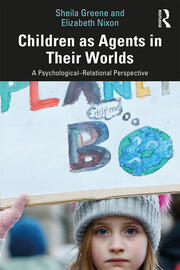
245 10|aChildren as agents in their worlds :|ba psychological-relational perspective /|cSheila Greene and Elizabeth Nixon.
264 1|aAbingdon, Oxon :|bRoutledge,|c2020.
300 |a1 online resource (viii, 238 pages)
336 |atext|btxt|2rdacontent
337 |acomputer|bc|2rdamedia
338 |aonline resource|bcr|2rdacarrier
505 0 |aChapter 1. Introduction Chapter 2. The Concept of Agency in Childhood Studies Chapter 3. Theorising Agency Chapter 4. The Development of Children⁰́₉s Agency Chapter 5. Children⁰́₉s Agency Within Families Chapter 6. Children⁰́₉s Agency in School and with Peers Chapter 7. Children⁰́₉s Agency in the Public Sphere: Rights and Participation Chapter 8. Agency and Diversity: Variation in the Expression of Agency by Children Chapter 9. A Theoretical Synthesis References Index
520 |aAre children the passive recipients of influence from their parents and from society? Is their development determined by their genes and their neurons, or do they have the capacity to think about and influence their own lives and the world around them? How does their interaction with their social and material worlds support or hinder agency? Arechildren agents, and what do we mean by agency? Children as Agents in Their Worlds aims to answer these questions through a critical psychological and relational approach, while referencing and critiquing a wide range of perspectives from otherdisciplinesincludingsociology, anthropology and education. Greene and Nixon review the pioneering work of scholars of childhood studies and current post-human theories of agency and offer a developmental perspective on the emergence of the sense ofagency and the exercise of agencyin children. They discuss key themes includingagency in families, agency within the school context and with peers, and children as agents in the wider public sphere. They explore agency and diversity, examining sex, age, genetic inheritance and contextual sources of difference, such as social class and geographical location. Offering a stronger theoretical base for research and policy, through a synthesis of both psychological and relational theories,Children as Agents in Their Worlds will be essential reading for students and professionals in developmental psychology, sociology and anthropology, as well as education, childhood studies, children⁰́₉s rights and related fields.
588 |aOCLC-licensed vendor bibliographic record.
650 0|aChild development.
650 0|aAgent (Philosophy)
700 1 |aNixon, Elizabeth,|eauthor.
856 40|3Taylor & Francis|uhttps://www.taylorfrancis.com/books/9781315625911
856 42|3OCLC metadata license agreement|uhttp://www.oclc.org/content/dam/oclc/forms/terms/vbrl-201703.pdf
901 |aTaylor & Francis