LEADER 03343cam a22005537i 4500
001 794761
003 TR_AnAIT
005 20260123003835
006 m d
007 cr |||||||||||
008 251008r20252020enk ob 000 0 eng d
020 |a1040773486|q(electronic bk.)
020 |a9781040773482|q(electronic bk.)
020 |a9781003706137|q(electronic bk.)
020 |a1003706134|q(electronic bk.)
020 |a9781040782194|q(electronic bk. : EPUB)
020 |a1040782191|q(electronic bk. : EPUB)
024 7 |a10.5117/9789463721431|2doi
035 |a(OCoLC)1544661000
035 |a(OCoLC-P)1544661000
040 |aOCoLC-P|beng|erda|cOCoLC-P
041 |aeng
049 |aTürk Tarih Kurumu Kütüphanesi
050 4|aPR421
072 7|aDSBD|2bicssc
072 7|aHIS015040|2bisacsh
072 7|aHBJD1|2bicssc
072 7|aHIS015050|2bisacsh
072 7|aHIS037040|2bisacsh
072 7|aHIS054000|2bisacsh
072 7|aLIT024020|2bisacsh
082 04|a820.9003|223/eng/20260109
100 1 |aWaller, Gary F.|q(Gary Fredric),|d1945-|eauthor.|1https://id.oclc.org/worldcat/entity/E39PBJghqvwTCRT3DTTHFQ3G73
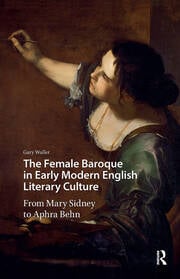
245 14|aThe female baroque in early modern English literary culture :|bfrom Mary Sidney to Aphra Behn /|cGary Waller.
264 1|aAbingdon, Oxon ;|aNew York, NY :|bRoutledge, Taylor & Francis Group,|c2025.
300 |a1 online resource.
336 |atext|btxt|2rdacontent
337 |acomputer|bc|2rdamedia
338 |aonline resource|bcr|2rdacarrier
490 1 |aGendering the late medieval and early modern world ;|v9
500 |aFirst published in 2020 by Amsterdam University Press Ltd.
520 |aThe Female Baroque in Early Modern English Literary Culture is a contribution to the revival of early modern women's writings and cultural production in English that began in the 1980s. Its originality is twofold: it links women's writing in English with the wider context of Baroque culture, and it introduces the issue of gender into discussion of the Baroque. The title comes from Julia Kristeva's study of Teresa of Avila, that 'the secrets of Baroque civilization are female'. The book is built on a schema of recurring Baroque characteristics - narrativity, hyperbole, melancholia, kitsch, and plateauing, pointing less to surface manifestations and more to underlying ideological tensions. The crucial concept of the book is developed in detail. Particular attention is given to Gertrude More, Mary Ward, Aemilia Lanyer, The Ferrar/Collet women, Mary Wroth, the Cavendish sisters, Hester Pulter, Anne Hutchinson, and finally Margaret Cavendish and Aphra Behn, whose lives and writings point to the developing cultural transition to the Enlightenment.
588 |aOCLC-licensed vendor bibliographic record.
600 10|aPembroke, Mary Sidney Herbert,|cCountess of,|d1561-1621.
600 10|aBehn, Aphra,|d1640-1689.
650 0|aEnglish literature|yEarly modern, 1500-1700|xHistory and criticism.
650 0|aBaroque literature|xHistory and criticism.
650 0|aWomen and literature|zEngland|xHistory|y17th century.
830 0|aGendering the late medieval and early modern world ;|v9.
856 40|3Taylor & Francis|uhttps://www.taylorfrancis.com/books/9781003706137
856 42|3OCLC metadata license agreement|uhttp://www.oclc.org/content/dam/oclc/forms/terms/vbrl-201703.pdf
901 |aTaylor & Francis