LEADER 03756cam a2200565Ii 4500
001 795068
003 TR_AnAIT
005 20260123004352
008 180727t20182019flu b ob 001 0 eng d
020 |a9780429959912 (e-book: Mobi)|q(e-book : PDF)
035 |a(OCoLC)1044734116
040 |aFlBoTFG|cFlBoTFG|erda
041 |aeng
049 |aTürk Tarih Kurumu Kütüphanesi
050 4|aBX8337
072 7|aREL|x044000 |2bisacsh
072 7|aREL|x055020 |2bisacsh
072 7|aREL|x033000 |2bisacsh
072 7|aHRCC9 |2bicscc
082 04|a264/.07|223
100 1 |aSigler, R. Matthew,|eauthor.
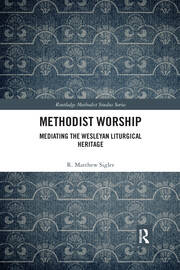
245 10|aMethodist worship :|bmediating the wesleyan liturgical heritage /|cby R. Matthew Sigler.
250 |aFirst edition.
264 1|aBoca Raton, FL :|bRoutledge, an imprint of Taylor and Francis,|c[2018].
264 4|c©2019.
300 |a1 online resource (248 pages).
336 |atext|2rdacontent
337 |acomputer|2rdamedia
338 |aonline resource|2rdacarrier
490 1 |aRoutledge Methodist studies series
505 0 |achapter Introduction: form and freedom -- distinction and inculturation -- part PART I Thomas Osmund Summers -- chapter 1 The first American Methodist liturgical historian -- chapter 2 Between the extremes: form and freedom -- part PART II Nolan Bailey Harmon -- chapter 3 The unlikely liturgist -- chapter 4 The other side of the pendulum -- part PART III James Floyd White -- chapter 5 The consummate academic -- chapter 6 Methodist worship in a pluralistic age.
520 3 |aWhat makes Methodist worship "Methodist" or "Wesleyan?" How do Methodists evaluate emerging forms of worship in light of their own liturgical heritage? This book considers these questions by bringing to light the work and significance of three Methodist liturgists who have until now received precious little scholarly focus: Thomas O. Summers (1812-1882), Nolan B. Harmon (1892-1993), and James F. White (1932-2004) Exploring each one’s contribution to the Methodist movement, it evaluates their continuing legacies as scholars and practitioners of Methodist worship. Evaluating historic and emerging trends in Methodist liturgical praxis, this is a book that will be of great interest to scholars of Methodism, the History of Religion, Liturgical Studies and Theology.Importantly, the work of all these men occurred during times of cultural change, which gave rise to new ways of worship within the landscape of American Methodism. Addressing them in chronological order, this study shows how each figure enacted liturgical reform and renewal by drawing from the liturgical textual tradition inherited directly from John Wesley’s Sunday Service of the Methodist in North America as well as the hymnody of Charles Wesley. It also demonstrates how they sought to inculturate the Wesleyan liturgical tradition in the midst of these significant changes.
650 0|aLiturgics.
650 0|aPublic worship|vmethodist Church.
650 7|aRELIGION / Christian Rituals & Practice / Worship & Liturgy.|2bisacsh
650 7|aRELIGION / Institutions & Organizations.|2bisacsh
650 7|aRELIGION / Christian Rituals & Practice / Worship & Liturgy.|2bisacsh
650 7|aRELIGION / History.|2bisacsh
650 0|aCharles Wesley.
650 0|aJames F White.
650 0|aJohn Wesley.
650 0|aLiturgical.
650 0|aLiturgist.
650 0|aMatthew Sigler.
650 0|aMediating The Wesleyan Liturgical Heritage.
650 0|aMethodism.
650 0|aMethodist.
650 0|aNolan B Harmon.
650 0|aThomas O Summers.
650 0|aWorship.
710 2 |aTaylor and Francis.
776 08|iPrint version: |z9781138588721
830 0|aRoutledge Methodist studies series.
856 40|uhttps://www.taylorfrancis.com/books/9780429959936|zClick here to view.
901 |aTaylor & Francis