

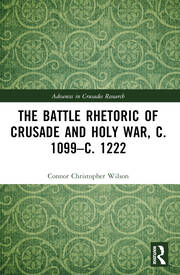
The battle rhetoric of crusade and holy war, c. 1099-c. 1222 / Connor Christopher Wilson.
ISBN
9781003044611 electronic book
1003044611 electronic book
9781000800081 electronic book
1000800083 electronic book
9781000800142 electronic book
1000800148 electronic book
9780367491185 hardcover
9781032365305 paperback
0367491184
1003044611 electronic book
9781000800081 electronic book
1000800083 electronic book
9781000800142 electronic book
1000800148 electronic book
9780367491185 hardcover
9781032365305 paperback
0367491184
Dil Kodu
İngilizce
Yayın Bilgisi
Abingdon, Oxon ; New York, NY : Routledge, 2022.
©2023
©2023
Fiziksel Niteleme
1 online resource (xii, 260 pages).
Dizi
Advances in crusades research
İçindekiler Notu
Acknowledgements -- Abbreviations -- Note on translations -- Introduction -- Chapter One: The battle oration and Classical rhetoric -- Chapter Two: 'No war of the flesh, but of the spirit': the battle rhetoric of penitential pilgrimage -- Chapter Three: The victory of the familia Christi and the development of crusade ideology -- Chapter Four: Justice, authority and legitimate violence in holy war -- Chapter Five: Vengeance, martyrdom and heroic failure in military service to Christ -- Conclusions -- Bibliography.
Özet, vb.
"This book examines Latin narratives produced in the aftermath of the First Crusade and challenges the narrative of supposed brutality and amorality of warfare in this period - instead focusing on the moral and didactic concerns surrounding warfare and violence with which medieval authors wrestled. The battle oration, a rousing harangue exhorting warriors to deeds of valour, has been regarded as a significant aspect of warfare since the age of Xenophon, and has continued to influence conceptions of campaigning and combat to the present day. While its cultural and chronological pervasiveness attests to the power of this trope, scholarly engagement with the literary phenomenon of the pre-battle speech has been limited. Moreover, previous work on medieval battle rhetoric has only served to reinforce the supposed brutality and amorality of warfare in this period, highlighting appeals to martial prowess, a hatred for 'the enemy' and promises of wealth and glory. This book, through an examination of Latin narratives produced in the aftermath of the First Crusade and the decades that followed, challenges this understanding and illuminates the moral and didactic concerns surrounding warfare and violence with which medieval authors wrestled. Furthermore, while battle orations form a clear mechanism by which the fledgling crusading movement could be explored ideologically, this comparative study reveals how non-crusading warfare in this period was also being reconceptualised in light of changing ideas about just war, authority and righteousness in Christian society. This volume is perfect for researchers, students and scholars alike interested in medieval history and military studies"-- Provided by publisher.
Konu
Crusades __ History __ Sources.
Latin literature, Medieval and modern __ History and criticism.
Oratory __ History __ Sources.
War and literature __ History __ To 1500.
HISTORY / General __ bisacsh
Latin literature, Medieval and modern __ History and criticism.
Oratory __ History __ Sources.
War and literature __ History __ To 1500.
HISTORY / General __ bisacsh
Veritabanı
Eseri Alıntıla
Referansları kullanmadan önce gözden geçirmeniz ve varsa gerekli düzeltmeleri yapmanız önerilir.
Dijital Kaynak
MARC Görünümü
LEADER 04210cam a2200541 i 4500
001 795119
003 TR_AnAIT
005 20260123004444
006 m o d
007 cr cnu---unuuu
008 220713t20222023nyu ob 001 0 eng
020 |a9781003044611|qelectronic book
020 |a1003044611|qelectronic book
020 |a9781000800081|qelectronic book
020 |a1000800083|qelectronic book
020 |a9781000800142|qelectronic book
020 |a1000800148|qelectronic book
020 |z9780367491185|qhardcover
020 |z9781032365305|qpaperback
020 |z0367491184
024 7 |a10.4324/9781003044611|2doi
035 |a(OCoLC)1337408539
035 |a(OCoLC-P)1337408539
040 |aOCoLC-P|beng|erda|cOCoLC-P
041 |aeng
049 |aTürk Tarih Kurumu Kütüphanesi
050 04|aD160|b.W55 2022
072 7|aHIS|x000000|2bisacsh
072 7|aHBLC1|2bicssc
082 00|a909.07|223/eng/20220726
100 1 |aWilson, Connor Christopher,|eauthor.
245 14|aThe battle rhetoric of crusade and holy war, c. 1099-c. 1222 /|cConnor Christopher Wilson.
264 1|aAbingdon, Oxon ;|aNew York, NY :|bRoutledge,|c2022.
264 4|c©2023
300 |a1 online resource (xii, 260 pages).
336 |atext|btxt|2rdacontent
337 |acomputer|bc|2rdamedia
338 |aonline resource|bcr|2rdacarrier
490 1 |aAdvances in crusades research
505 0 |aAcknowledgements -- Abbreviations -- Note on translations -- Introduction -- Chapter One: The battle oration and Classical rhetoric -- Chapter Two: 'No war of the flesh, but of the spirit': the battle rhetoric of penitential pilgrimage -- Chapter Three: The victory of the familia Christi and the development of crusade ideology -- Chapter Four: Justice, authority and legitimate violence in holy war -- Chapter Five: Vengeance, martyrdom and heroic failure in military service to Christ -- Conclusions -- Bibliography.
520 |a"This book examines Latin narratives produced in the aftermath of the First Crusade and challenges the narrative of supposed brutality and amorality of warfare in this period - instead focusing on the moral and didactic concerns surrounding warfare and violence with which medieval authors wrestled. The battle oration, a rousing harangue exhorting warriors to deeds of valour, has been regarded as a significant aspect of warfare since the age of Xenophon, and has continued to influence conceptions of campaigning and combat to the present day. While its cultural and chronological pervasiveness attests to the power of this trope, scholarly engagement with the literary phenomenon of the pre-battle speech has been limited. Moreover, previous work on medieval battle rhetoric has only served to reinforce the supposed brutality and amorality of warfare in this period, highlighting appeals to martial prowess, a hatred for 'the enemy' and promises of wealth and glory. This book, through an examination of Latin narratives produced in the aftermath of the First Crusade and the decades that followed, challenges this understanding and illuminates the moral and didactic concerns surrounding warfare and violence with which medieval authors wrestled. Furthermore, while battle orations form a clear mechanism by which the fledgling crusading movement could be explored ideologically, this comparative study reveals how non-crusading warfare in this period was also being reconceptualised in light of changing ideas about just war, authority and righteousness in Christian society. This volume is perfect for researchers, students and scholars alike interested in medieval history and military studies"--|cProvided by publisher.
588 |aOCLC-licensed vendor bibliographic record.
650 0|aCrusades|xHistory|xSources.
650 0|aLatin literature, Medieval and modern|xHistory and criticism.
650 0|aOratory|xHistory|xSources.
650 0|aWar and literature|xHistory|yTo 1500.
650 7|aHISTORY / General|2bisacsh
830 0|aAdvances in crusades research.
856 40|3Taylor & Francis|uhttps://www.taylorfrancis.com/books/9781003044611
856 42|3OCLC metadata license agreement|uhttp://www.oclc.org/content/dam/oclc/forms/terms/vbrl-201703.pdf
901 |aTaylor & Francis
001 795119
003 TR_AnAIT
005 20260123004444
006 m o d
007 cr cnu---unuuu
008 220713t20222023nyu ob 001 0 eng
020 |a9781003044611|qelectronic book
020 |a1003044611|qelectronic book
020 |a9781000800081|qelectronic book
020 |a1000800083|qelectronic book
020 |a9781000800142|qelectronic book
020 |a1000800148|qelectronic book
020 |z9780367491185|qhardcover
020 |z9781032365305|qpaperback
020 |z0367491184
024 7 |a10.4324/9781003044611|2doi
035 |a(OCoLC)1337408539
035 |a(OCoLC-P)1337408539
040 |aOCoLC-P|beng|erda|cOCoLC-P
041 |aeng
049 |aTürk Tarih Kurumu Kütüphanesi
050 04|aD160|b.W55 2022
072 7|aHIS|x000000|2bisacsh
072 7|aHBLC1|2bicssc
082 00|a909.07|223/eng/20220726
100 1 |aWilson, Connor Christopher,|eauthor.
245 14|aThe battle rhetoric of crusade and holy war, c. 1099-c. 1222 /|cConnor Christopher Wilson.
264 1|aAbingdon, Oxon ;|aNew York, NY :|bRoutledge,|c2022.
264 4|c©2023
300 |a1 online resource (xii, 260 pages).
336 |atext|btxt|2rdacontent
337 |acomputer|bc|2rdamedia
338 |aonline resource|bcr|2rdacarrier
490 1 |aAdvances in crusades research
505 0 |aAcknowledgements -- Abbreviations -- Note on translations -- Introduction -- Chapter One: The battle oration and Classical rhetoric -- Chapter Two: 'No war of the flesh, but of the spirit': the battle rhetoric of penitential pilgrimage -- Chapter Three: The victory of the familia Christi and the development of crusade ideology -- Chapter Four: Justice, authority and legitimate violence in holy war -- Chapter Five: Vengeance, martyrdom and heroic failure in military service to Christ -- Conclusions -- Bibliography.
520 |a"This book examines Latin narratives produced in the aftermath of the First Crusade and challenges the narrative of supposed brutality and amorality of warfare in this period - instead focusing on the moral and didactic concerns surrounding warfare and violence with which medieval authors wrestled. The battle oration, a rousing harangue exhorting warriors to deeds of valour, has been regarded as a significant aspect of warfare since the age of Xenophon, and has continued to influence conceptions of campaigning and combat to the present day. While its cultural and chronological pervasiveness attests to the power of this trope, scholarly engagement with the literary phenomenon of the pre-battle speech has been limited. Moreover, previous work on medieval battle rhetoric has only served to reinforce the supposed brutality and amorality of warfare in this period, highlighting appeals to martial prowess, a hatred for 'the enemy' and promises of wealth and glory. This book, through an examination of Latin narratives produced in the aftermath of the First Crusade and the decades that followed, challenges this understanding and illuminates the moral and didactic concerns surrounding warfare and violence with which medieval authors wrestled. Furthermore, while battle orations form a clear mechanism by which the fledgling crusading movement could be explored ideologically, this comparative study reveals how non-crusading warfare in this period was also being reconceptualised in light of changing ideas about just war, authority and righteousness in Christian society. This volume is perfect for researchers, students and scholars alike interested in medieval history and military studies"--|cProvided by publisher.
588 |aOCLC-licensed vendor bibliographic record.
650 0|aCrusades|xHistory|xSources.
650 0|aLatin literature, Medieval and modern|xHistory and criticism.
650 0|aOratory|xHistory|xSources.
650 0|aWar and literature|xHistory|yTo 1500.
650 7|aHISTORY / General|2bisacsh
830 0|aAdvances in crusades research.
856 40|3Taylor & Francis|uhttps://www.taylorfrancis.com/books/9781003044611
856 42|3OCLC metadata license agreement|uhttp://www.oclc.org/content/dam/oclc/forms/terms/vbrl-201703.pdf
901 |aTaylor & Francis
Materyaller
Depodan talep edilen materyal sadece kütüphane içerisinde kullanılmaktadır.
Materyal dışarıya ödünç verilmemektedir.
Materyal dışarıya ödünç verilmemektedir.
